

It seems backward at first. Why would someone who’s already made it still be burning candles, carrying charms, or setting intentions before a big meeting? If money rituals were only for people trying to get by, the wealthy would have dropped them the moment the bank account stopped being a worry. Instead, the opposite happens — the more successful someone becomes, the more deliberate they often get about their rituals, not less.
It Was Never Really About Desperation
People assume money rituals exist to fix a lack — to summon cash that isn’t there. That’s how beginners usually approach them, and it’s the mistake behind most rituals that fizzle out. But practitioners who’ve been doing this a long time, including plenty of financially comfortable ones, use rituals for something different: focus, discipline, and a clear signal to themselves that they’re entering “money mode” with intention.
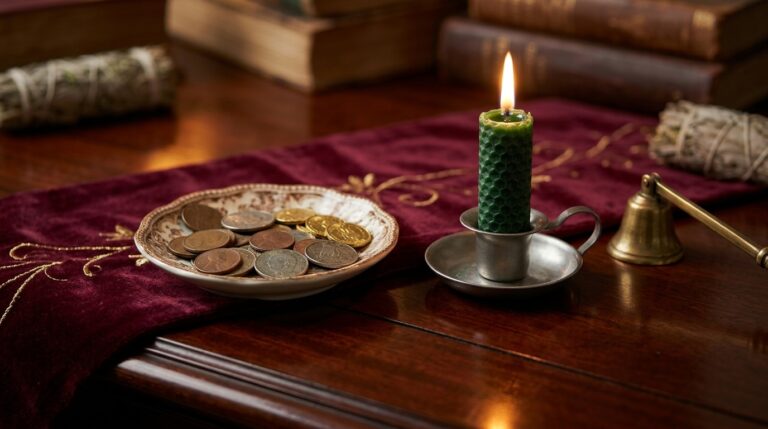
A wealthy client isn’t lighting a green candle because they’re worried about rent. They’re doing it because the ritual sharpens their attention before something that actually matters — a negotiation, a launch, a high-stakes decision. The magic isn’t replacing effort. It’s preparing the person to bring their full effort forward.
I’ve watched this pattern repeat across very different clients. The ones with the least on the line often want the biggest, most elaborate ritual, hoping scale will compensate for uncertainty. The ones with real assets at stake want something short, consistent, and almost boring in its repetition — because what they’re after isn’t a bigger spell, it’s a reliable one.
The Research Backs This Up
This isn’t just anecdotal. Research on ritual behavior — summarized in Scientific American’s overview of the science behind rituals — found that performing a ritual before a high-pressure task reduces anxiety, restores a sense of control, and measurably improves performance, even among people who don’t fully believe the ritual itself is doing anything. The act of doing something deliberate and repeatable, right before something uncertain, changes how the brain handles that uncertainty.
That’s a large part of why money rituals persist among people who could easily dismiss them. They’re not chasing a miracle. They’re managing their own nervous system before doing something that requires steady nerves. And a calm nervous system negotiates better, reads a room better, and doesn’t rush a decision it should have slept on.
What Changes Once Money Isn’t the Emergency
Once someone isn’t casting from panic, the ritual itself tends to get more precise. Instead of a general “bring me money” working, it becomes targeted — a ritual before a specific deal, a specific investment, a specific conversation about a raise. The intention narrows because the stakes have shifted from survival to growth.
This is worth noticing if you’re just starting out. Money and prosperity rituals don’t stop mattering once the immediate crisis passes — if anything, that’s when they become more effective, because you’re finally working from steadiness instead of fear.
It also explains why “one-and-done” money spells rarely satisfy people long-term. A single working can pull you out of a hole. But the practitioners who keep building wealth treat the ritual as ongoing maintenance, not a one-time fix — closer to a habit than a rescue mission.

Ritual as a Habit of Attention, Not a Shortcut
The people who keep using money rituals after they’ve succeeded tend to describe them the same way: as a habit that keeps their attention where it belongs. A short ritual before opening a laptop, before walking into an office, before signing something significant — it’s a pause that forces presence in a moment that would otherwise get rushed through on autopilot.
Autopilot is where most costly mistakes happen — the email sent too fast, the number agreed to without a second thought, the opportunity skimmed past because attention was already somewhere else. A ritual interrupts that drift on purpose, at a moment the practitioner chose in advance rather than one that catches them off guard.
That pause matters more than most people expect. Wealth doesn’t remove decision fatigue or distraction. If anything, it multiplies the number of decisions a person has to make well. A ritual that takes ninety seconds and resets focus is a small cost for a real return.
It also removes a subtler problem: the temptation to treat every decision as equally urgent. A short ritual before a specific, chosen moment draws a line around that moment and says, this one matters more than the noise around it. That kind of discernment is worth more than most people give it credit for, and it’s part of why the habit sticks once someone experiences it working.
Starting Your Own, Without Waiting for a Crisis
You don’t need to be wealthy to use rituals this way — you just need to stop waiting for a financial emergency to try one. Start small. Pick one recurring moment in your week that carries real stakes: a client call, a budget review, an invoice you’ve been avoiding. Build a two-minute ritual around it. Light something, say something, ground yourself, then begin.
Do it from steadiness, not panic, and do it before the stakes get high rather than after things have already gone wrong. That single shift — treating the ritual as preparation instead of rescue — is the actual difference between the money spells that work and the ones that don’t.
Give it a few weeks before judging whether it’s working. The value shows up less as a sudden windfall and more as a pattern: fewer rushed decisions, steadier negotiations, a calmer read on situations that used to rattle you. That pattern compounds, and it’s the same one the wealthiest practitioners describe when they explain why they never stopped.

Not sure where to start? You don’t have to do this alone.
Madame Celestine offers guided spellwork for beginners — real support for your first working, not just another guide to read.
Related reading: The Money Spell Mistake That Keeps You Broke · The Money Spell Mistake That Keeps You Broke

About Madame Celestine
Madame Celestine has practiced and taught spellwork, divination, and seasonal ritual for over two decades, helping newcomers build a grounded, confident practice from their very first spell.