
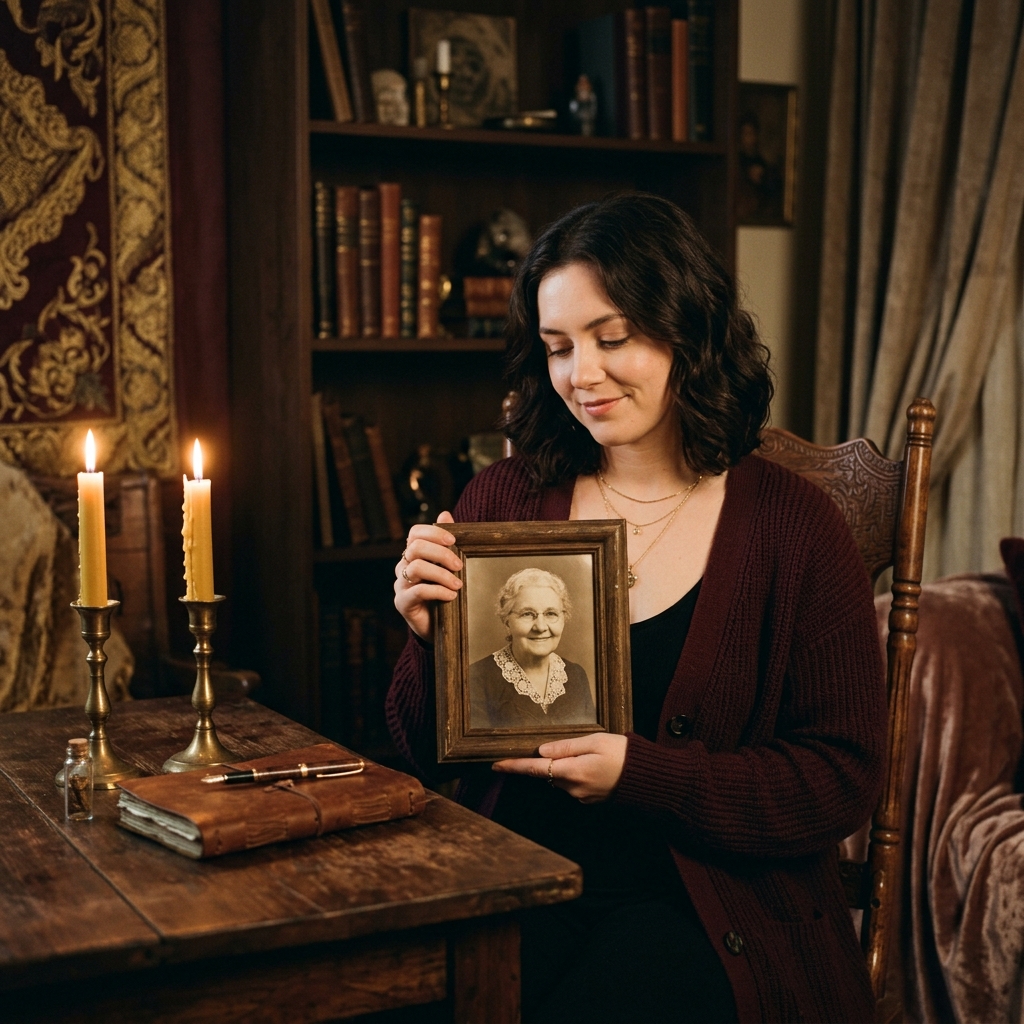
Many people feel that a deceased grandmother is still guiding them. It might be her perfume in an empty room, a dream that arrives the night before a hard choice, or a quiet sense of “she would say this.” If that has happened to you, you are in good company. In this article, you will follow an illustrative story of one granddaughter’s experience. You will also learn what grief experts now say about lasting bonds and how humans have kept ancestors close for thousands of years. Finally, you will find a simple altar ritual for seeking her guidance.
- Meet Rosa: An Illustrative Story of a Deceased Grandmother’s Guidance
- Grief Experts Now Say the Bond Doesn’t Have to End
- Humans Have Kept Ancestors Close Since the Stone Age
- Signs People Link With a Deceased Grandmother
- A Simple Altar Ritual to Seek a Grandmother’s Guidance
- When Grief for a Deceased Grandmother Feels Too Heavy
- Frequently Asked Questions
- References
Meet Rosa: An Illustrative Story of a Deceased Grandmother’s Guidance
Rosa is not a real client. Instead, she is a composite drawn from experiences many grandchildren describe, and we use her story to show how this kind of guidance often feels.
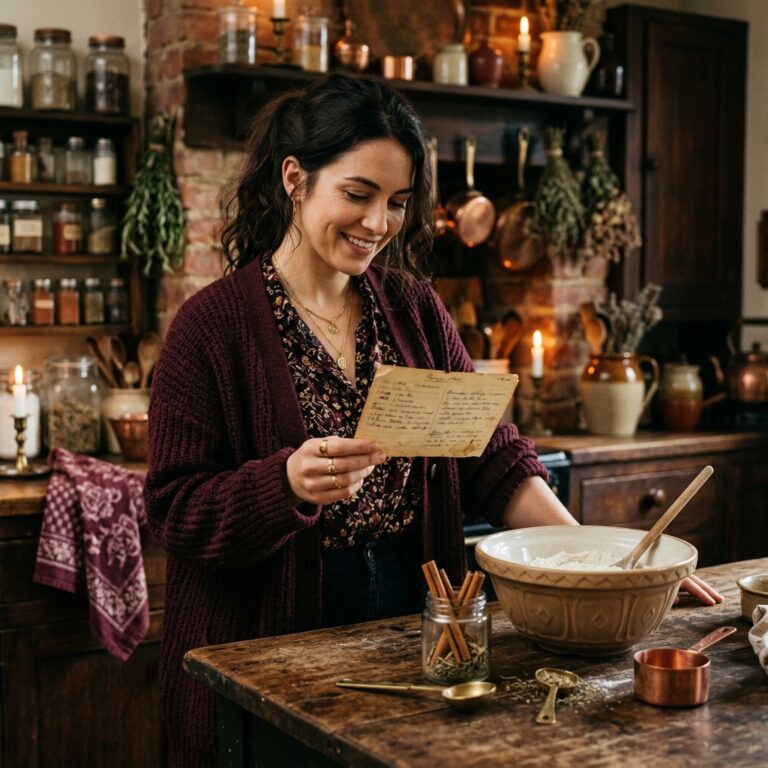
Rosa’s grandmother taught her to cook, to pray and to speak her mind. When her grandmother died, Rosa expected the grief. What surprised her was the company. On stressful mornings, she would catch the smell of cinnamon, the spice her grandmother put in everything. Before a big job decision, she dreamed of her grandmother tapping the kitchen table, the way she did when Rosa was stalling.
Even so, Rosa never heard a voice. Still, she felt steadied, as if someone who knew her well was nearby. So she began to wonder whether she was imagining it or whether the bond was simply continuing in a new form.
Grief Experts Now Say the Bond Doesn’t Have to End
For much of the twentieth century, grief advice leaned on the idea of letting go. That view, rooted in Freudian psychology, treated detachment from the dead as the goal of mourning[1].
In 1996, however, researchers Dennis Klass, Phyllis Silverman and Steven Nickman proposed a different model called continuing bonds. Their view is that the relationship does not end at death. Instead, it changes[1]. Keeping a connection through memories, rituals or treasured objects is seen as a healthy part of grieving, not a failure to move on[1].
That shift matters for anyone who feels guided by a deceased grandmother. You do not have to choose between healing and holding on. In fact, for many people, the two go together.
Humans Have Kept Ancestors Close Since the Stone Age
The instinct to stay connected with the dead is ancient. Britannica notes that archaeological evidence of ancestor practices at Jericho dates to the seventh millennium BCE[2]. Across China, Africa, Polynesia and many other regions, families have long seen ancestors as guides and guardians who can offer spiritual help to the living[2].
Interestingly, in many African traditions, not everyone who dies becomes an ancestor. That status is reserved for those who lived a full life and held strong moral values[2]. In other words, the people we turn to for guidance are the ones whose lives earned our trust. For many of us, that is exactly who a grandmother was.
Signs People Link With a Deceased Grandmother
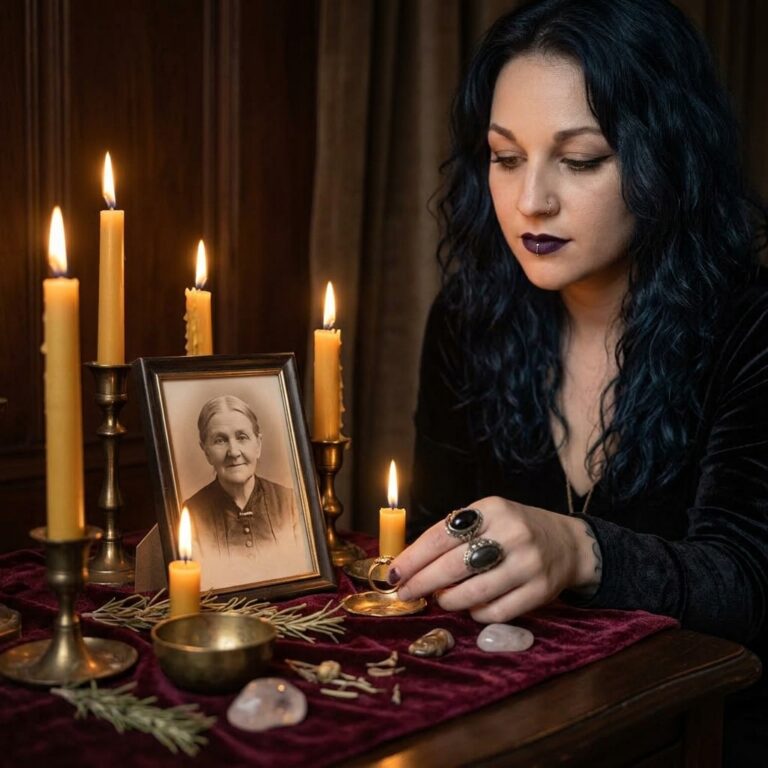
Over the years, practitioners and grieving families have described many small signs. None of them proves anything, and you do not need proof to find comfort in them. Common examples include:
- A familiar scent, such as her perfume, her cooking or her garden, with no clear source.
- Vivid dreams, especially ones that arrive before a decision or on a meaningful date.
- Her words in your head, a saying or a warning that surfaces at just the right time.
- Found objects, such as a button, a coin or a note of hers turning up unexpectedly.
What matters most is how the sign feels. If it steadies you, many practitioners would say it is doing its work.
A Simple Altar Ritual to Seek a Grandmother’s Guidance
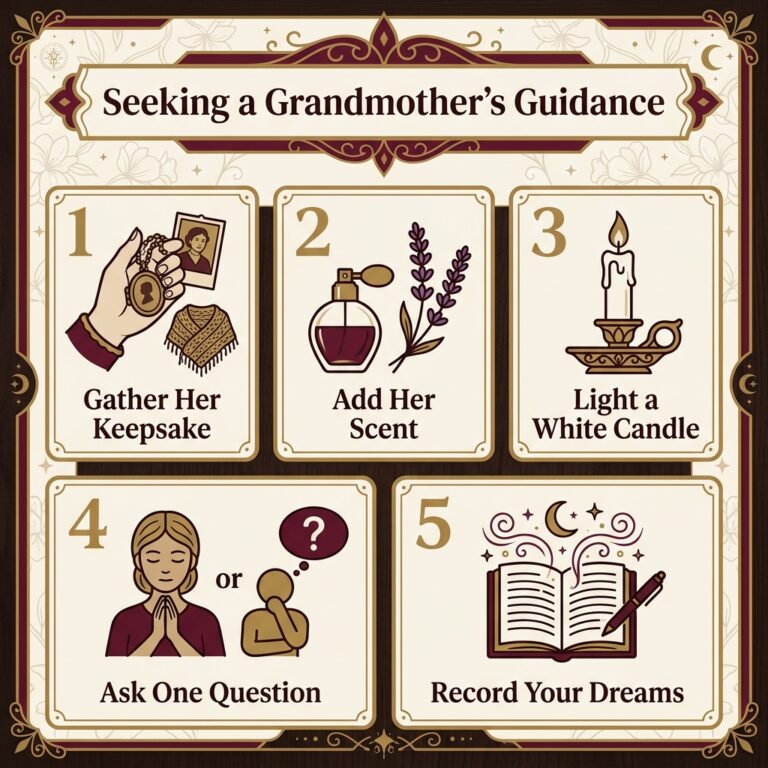
Keepsakes have always been part of staying close. According to the Victoria and Albert Museum, wealthy people from the sixteenth century onward left money in their wills to buy mourning rings for loved ones[3]. This ritual uses a keepsake in the same spirit.
- Gather her keepsake. Choose a ring, a scarf, a recipe card or a photo. Place it at the center of a small table.
- Add her scent. Set out the spice, flower or perfume you link with her. After all, scent is often the fastest path to memory.
- Light a white candle. Say her name aloud and thank her for one specific thing she taught you.
- Ask one question. Keep it simple and honest, such as “What would you tell me to do?”
- Record your dreams for three nights. Keep a notebook by the bed and write down anything that feels like her.
Belief, Intention & The Power of Magic
Witchcraft, spells, and manifestation are deeply rooted in belief, intention, and spiritual practice. If these practices do not resonate with you, this may not be the path for you, and that’s perfectly okay. But if you believe in divine powers, trust your intentions, and feel drawn to the mysteries of the unseen, we invite you to continue exploring with Madame Celestine and discover the magic that speaks to your soul.
When Grief for a Deceased Grandmother Feels Too Heavy
Feeling guided is usually a comfort. However, if grief keeps you from sleeping, working or enjoying life months after a loss, it is worth talking to a doctor or grief counselor. Ritual can sit alongside that support rather than replace it.
If you want to explore spirit connection more deeply, our guide to how to talk to spirits looks at mediumship and psychic connection.
Frequently Asked Questions
Is it normal to feel guided by a deceased grandmother?
Yes. Many grieving people describe a continued sense of connection, and grief experts now see ongoing bonds with loved ones as a healthy part of mourning.
Is Rosa a real person?
No. Rosa is an illustrative composite based on experiences many grandchildren describe. We use her story to show how this kind of guidance often feels.
What are common signs from a deceased grandmother?
People often mention a familiar scent, vivid dreams, her sayings coming to mind at the right moment, or finding small objects connected to her.
Do I need her belongings for the altar ritual?
No. A photo, a handwritten name or an item that reminds you of her works just as well if you do not have her belongings.
What if I do not feel anything after the ritual?
That is common and does not mean the bond is gone. Many people notice small signs days or weeks later, often when they are not looking for them.
References
- Continuing Bonds Theory (Klass, Silverman & Nickman). The Loss Foundation. https://thelossfoundation.org/stages-of-grief/continuing-bonds-theory-klass-silverman-nickman-overview/
- Ancestor Worship. Encyclopaedia Britannica. https://www.britannica.com/topic/ancestor-worship
- Jones, Catrin. Pandemic Objects: Mourning Jewellery. Victoria and Albert Museum, July 2, 2020. https://www.vam.ac.uk/blog/projects/pandemic-objects-mourning-jewellery
Not sure where to start? You don’t have to do this alone.
Madame Celestine offers guided spellwork for beginners — real support for your first working, not just another guide to read.
Related reading: Ancestral Ritual or Peace Ritual: Which Quiets Your Mind · The Family Pattern You Might Be Carrying Without Knowing It
About Madame Celestine
Madame Celestine has practiced and taught spellwork, divination, and seasonal ritual for over two decades, helping newcomers build a grounded, confident practice from their very first spell.