

You’ve got a new candle, a sigil card, or a talisman sitting on your altar, and someone mentioned you should “consecrate” it before use. Nobody explained what that actually involves, or whether skipping it matters. If you’re not sure whether you’re supposed to do a whole ceremony or just light the thing and get started, here’s what infernal consecration actually means and when it’s worth the extra step.
What Consecration Actually Means in Infernal Practice
Consecration is the act of setting an object apart from ordinary use and dedicating it to a specific ritual purpose. A candle from the grocery store is just wax and wick until you deliberately mark it as belonging to your practice — at that point it becomes a tool with intention behind it, not an interchangeable household item.
This isn’t unique to Satanic or Luciferian practice. Britannica describes how ritual traditions broadly set objects apart from the “profane world” through deliberate ceremonial acts that connect them to a specific purpose. Infernal consecration works on the same underlying logic: intentional separation, not magic words alone.
Which Objects Are Worth Consecrating
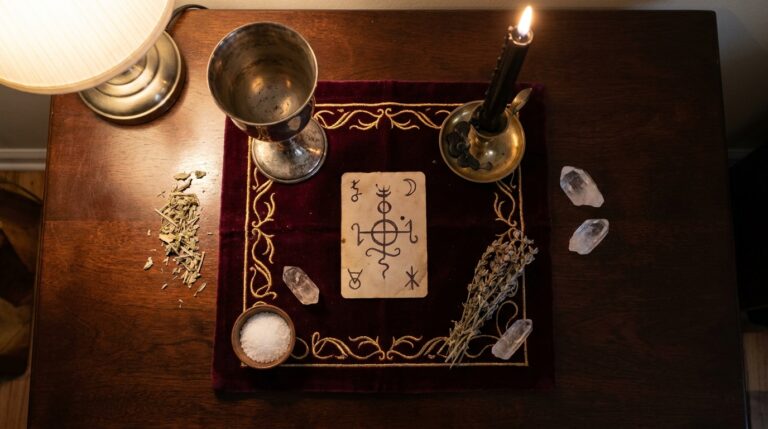
Not everything on your altar needs a formal consecration. Ritual candles, sigils, talismans, and any tool you intend to reuse across multiple workings (an athame, a chalice, a set of stones) benefit most from it, since the point is dedicating something to repeated, deliberate use. A single-use item, like a candle you’ll burn completely in one sitting, can sometimes skip a full consecration in favor of a brief dedication in the moment.
The general rule: the more an object is meant to represent your ongoing practice rather than a one-time act, the more consecration matters.
How to Consecrate an Object for Infernal Ritual Use
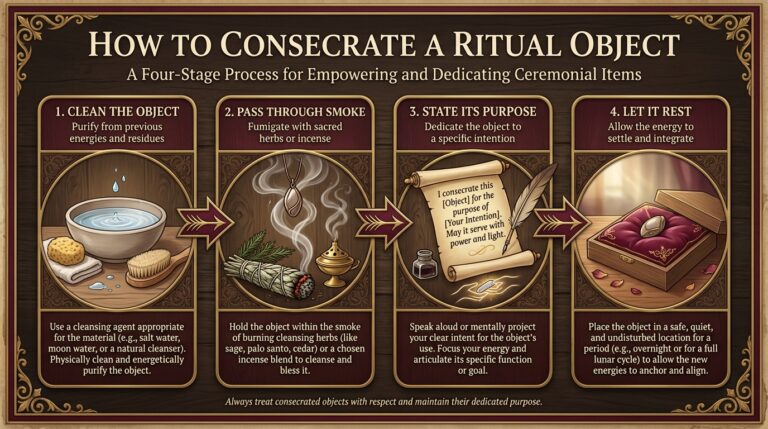
Clean the object physically first — wipe away dust, packaging residue, or fingerprints. This isn’t just hygiene; it’s the practical equivalent of clearing whatever mundane associations the object carries before you assign it a new one.
Pass the object through the smoke of incense or over (not through) a candle flame, and state its purpose aloud: name specifically what it’s for, not just “I consecrate this.” Something like: “I set this candle apart for workings of prosperity, and for that purpose alone.” Let the object rest near your altar for a few hours or overnight before its first use, giving the dedication time to settle rather than using it immediately.
Belief, Intention & The Power of Magic
Witchcraft, spells, and manifestation are deeply rooted in belief, intention, and spiritual practice. If these practices do not resonate with you, this may not be the path for you, and that’s perfectly okay. But if you believe in divine powers, trust your intentions, and feel drawn to the mysteries of the unseen, we invite you to continue exploring with Madame Celestine and discover the magic that speaks to your soul.
How Often You Need to Re-Consecrate
A consecrated object doesn’t need renewal every time you use it, but a few situations call for it: if the object’s purpose changes (you’re repurposing a candle originally set aside for protection into a money working, for example), if it’s been used carelessly or handled by someone outside your practice, or if it’s been in storage untouched for a long stretch and no longer feels connected to your intention. For related guidance on keeping a specific class of ritual objects charged over time, see our piece on charging and activating talismans or amulets.
Trust your own read on this more than a fixed schedule. If an object still feels aligned with its purpose, it likely still is. Some practitioners do a light seasonal check-in, briefly restating an object’s purpose a few times a year, less as a strict requirement and more as a way of staying honest about whether that object still belongs in active use.
Common Mistakes That Undercut a Consecration
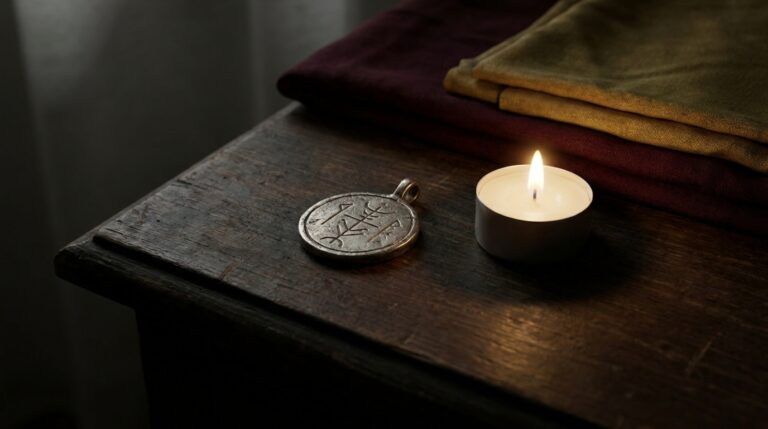
The most common mistake is vagueness — consecrating “for magic in general” instead of naming a specific purpose. A vague dedication produces a vaguely useful object. Another is rushing straight into use without giving the dedication time to settle, treating consecration as a formality to check off rather than a genuine act of intention-setting.
Letting other people handle a consecrated object casually, without acknowledging what it’s dedicated to, can also dilute its focus over time. None of these mistakes are catastrophic, but they’re worth avoiding if you want the practice to actually mean something.
Frequently Asked Questions
Do I need special training to consecrate an object?
No. Consecration is primarily about deliberate intention and a clear ritual structure, not formal credentials.
Can I consecrate more than one object at the same time?
Yes, as long as each object’s purpose is named individually rather than lumped together under one vague intention.
What if I don’t have incense for the smoke step?
A candle flame alone works. The smoke or flame is a physical marker of the transition, not a strict requirement of a specific material.
Does a consecrated object lose its dedication if I move it?
No. Moving an object doesn’t undo its consecration; only a change in purpose or careless handling typically calls for renewal.
Is consecration the same as charging an object with energy?
They’re related but distinct. Consecration sets an object apart and defines its purpose; charging is often an ongoing practice of reinforcing that intention over time.
Not sure where to start? You don’t have to do this alone.
Madame Celestine offers guided spellwork for beginners — real support for your first working, not just another guide to read.
Related reading: Luciferian Alchemy: Reframing Career Failure as a Chance for Transformation

About Madame Celestine
Madame Celestine has practiced and taught spellwork, divination, and seasonal ritual for over two decades, helping newcomers build a grounded, confident practice from their very first spell.