
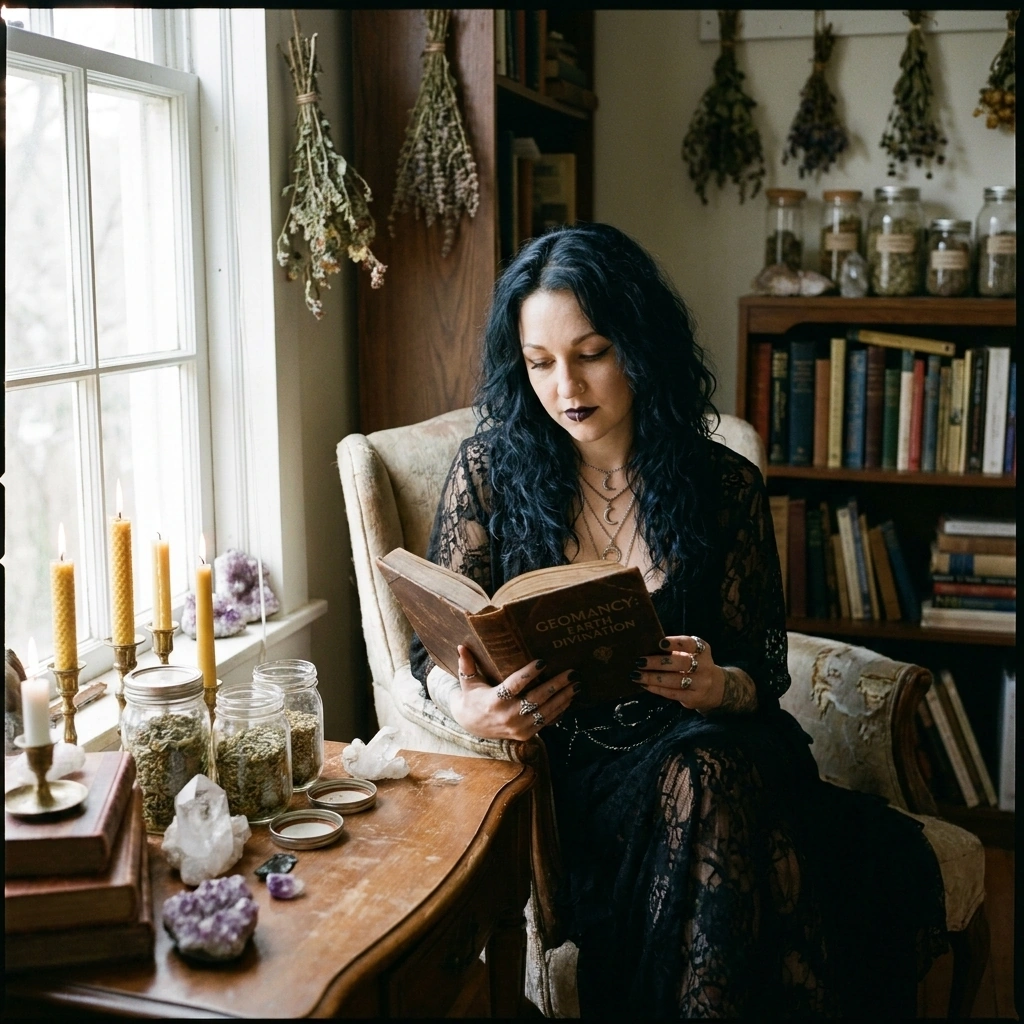
Geomancy is a form of divination built from simple marks: lines of dots, counted as odd or even, that become symbolic figures. From those figures, a practitioner can construct a chart and interpret patterns in relation to a question.
The word is often associated with “earth divination,” reflecting the older practice of making marks in sand or soil. Historically, the system known in Arabic as ilm al-raml (“the science of the sand”) developed in the medieval Islamic world and later entered Latin Europe, where it became part of the wider tradition of astrological and occult practice.
Today, geomancy attracts people who enjoy structured divination. It has rules, calculations, symbols, planetary correspondences, and houses, but it also leaves room for interpretation. This guide explains the basic system without treating divination as a guaranteed method of predicting the future.
What Is Geomancy?
At its core, geomancy generates figures from four rows of points. Each row resolves into either one point or two points, depending on whether the number of marks in that row is odd or even.
Because each of four rows has two possible results, the system produces 16 possible geomantic figures. Each has a name, such as Via, Populus, Fortuna Major, Puer, Puella, or Conjunctio.
The figures are not normally read in isolation. A traditional geomantic reading begins with four primary figures called the Mothers. These are combined according to established rules to produce further figures, including the Daughters, Nieces, Witnesses, and finally the Judge.
That structure is one of geomancy’s defining features. The reading is not simply “draw a symbol and look up its meaning.” The chart is generated through a sequence of relationships.
How a Geomantic Chart Is Built
Traditional geomancy begins with a question.
A practitioner may make four groups of random marks on paper, sand, or another surface without counting them while making the marks. Each group is then counted and reduced to an odd or even result. Those results form the four Mothers.
From there, the remaining figures are derived mathematically.
The resulting layout is often called a Shield Chart. A fuller reading can place figures into twelve houses, borrowing a house structure familiar from astrology. The houses provide context: instead of asking only what a figure means, the practitioner considers where it appears and what area of life the question concerns.
The building blocks are simple, but their relationships create a symbolic system.
The 16 Geomantic Figures
The sixteen figures form the vocabulary of geomancy. Each consists of four rows, with each row containing either one or two points.
Traditional systems give these figures names and associate them with qualities, elements, planets, zodiac signs, and other correspondences.
Some commonly encountered figures include:
- **Via** — associated with movement, roads, change, and transition.
- **Populus** — associated with crowds, receptivity, repetition, and collective conditions.
- **Fortuna Major** — traditionally connected with established or enduring fortune.
- **Fortuna Minor** — associated with temporary or changeable success.
- **Puer** — connected with force, action, competition, and assertive energy.
- **Puella** — traditionally associated with harmony, attraction, balance, and receptivity.
- **Conjunctio** — linked with connection, combination, meetings, and joining.
These meanings are traditional interpretive frameworks rather than scientific measurements. Different historical and modern schools can emphasize correspondences differently.
Why Planets Matter in Geomancy
Geomancy is sometimes described as a completely separate system from astrology, but traditional Western geomancy developed strong astrological relationships.
The sixteen figures became associated with the seven classical planets, while the lunar nodes were also incorporated into the system. For example, Fortuna Major and Fortuna Minor are traditionally connected with the Sun, while Puer and Rubeus are associated with Mars.
Planetary correspondence adds another layer to a reading: a practitioner can consider a figure through both its pattern and the qualities traditionally associated with its planet.
The four rows are commonly associated with Fire, Air, Water, and Earth, creating another symbolic layer.
Geomancy and Prediction
The word “prediction” can make geomancy sound more certain than the practice actually is.
Historically, charts were used for questions about circumstances, decisions, relationships, travel, money, and timing. Modern practitioners may still approach the system as divination, but an interpretation is not a verified forecast of an unavoidable future.
A useful way to work with geomancy is to treat the chart as a structured prompt for reflection.
Instead of asking, “Exactly what will happen?” you might ask:
- What pattern is influencing this situation?
- What information am I overlooking?
- Where is movement or resistance showing up?
- What part of the situation is stable?
- What action would change the conditions I am dealing with?
This keeps the practice focused while leaving room for your own judgment.
A Reflective Geomancy Practice
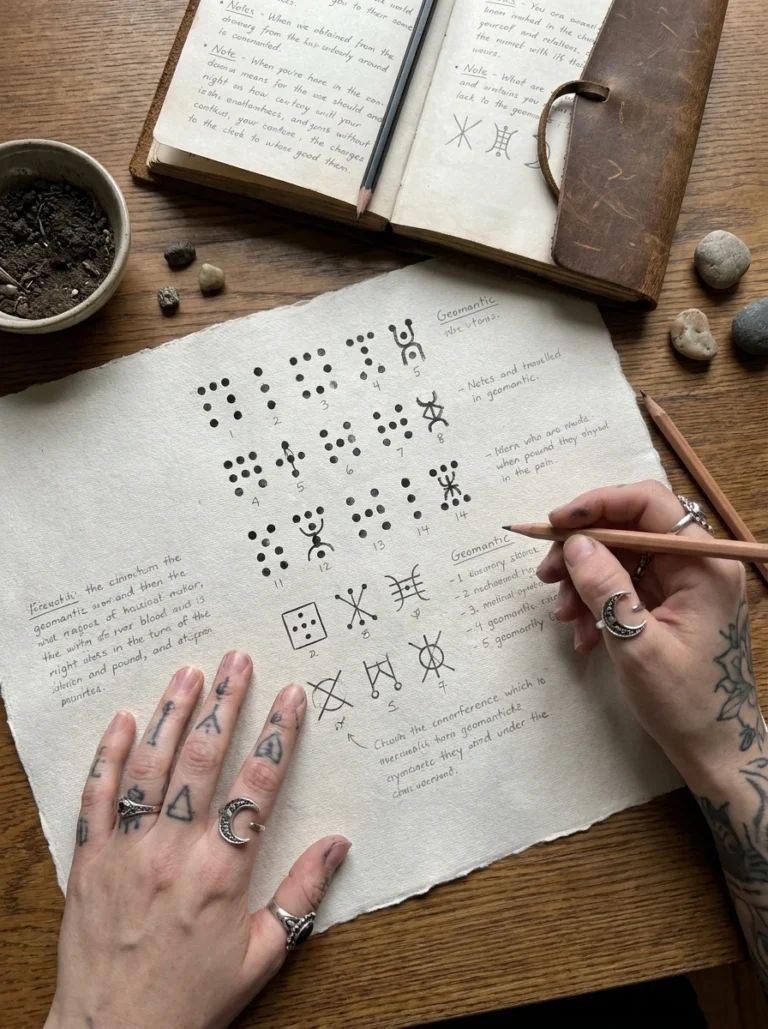
Before working with a chart, take a few breaths and return to your question. Look at completed pattern without rushing to a conclusion, then return to the correspondences.
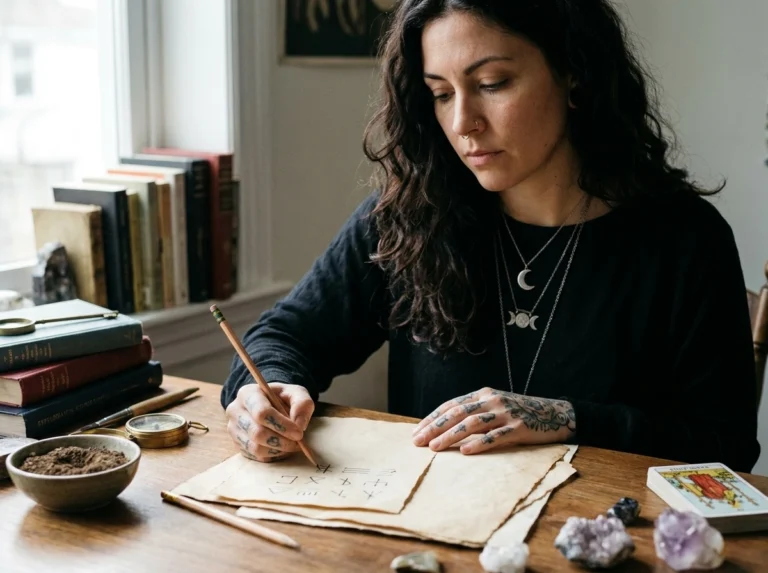
Write down the figure names, houses, planetary associations, and your first impressions separately. Keeping observation and interpretation distinct helps you notice when you are adding your own assumptions.
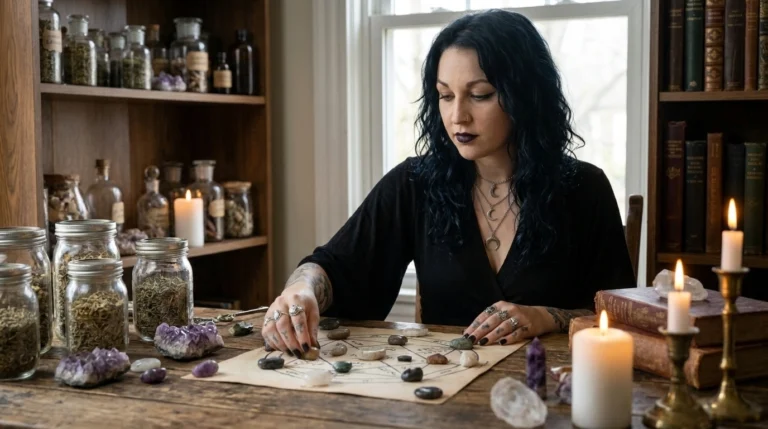
End by writing one practical takeaway. The goal is not to surrender your decisions to the chart. The goal is to use a structured symbolic system to think more carefully about the question you brought to it.
Common Questions About Geomancy
Is geomancy the same as astrology?
No. They are different divinatory systems, although traditional geomancy adopted planetary, zodiacal, and house correspondences that overlap with astrology.
How many geomantic figures are there?
There are 16 possible figures, because each figure contains four rows and each row has two possible states: one point or two points.
Can geomancy predict the future?
Geomancy has historically been used for divination and questions about future circumstances. A modern practitioner can use it as a symbolic or reflective practice, but a chart should not be treated as a guaranteed forecast.
Final Thoughts
Geomancy brings together randomness, mathematics, symbolism, and interpretation. Its figures are simple to learn, while their relationships create a deeper system.
Learn the chart construction, study the sixteen figures, and keep interpretations grounded in the question. Used this way, geomancy becomes a disciplined way to pause, examine a situation from another angle, and decide what to do with the insight you find.
If you want to explore more practical spiritual work, you can explore Madame Celestine’s spells and ritual practice or visit Madame Celestine.