

You’ve cast the spell, followed every step, and nothing’s changed — but before you blame the ritual, ask a harder question: is the spell actually failing, or are you the one standing in its way? Love magic works with your energy, not around it, which means an old pattern of pushing away good things can cancel a working just as easily as bad timing or a rushed intention. Here’s how to tell which one you’re actually dealing with.
What Self-Sabotage in Love Actually Looks Like
Self-sabotage rarely announces itself. It shows up as picking fights right when things start going well, canceling plans you were looking forward to, or convincing yourself someone’s interest is fake before they’ve done anything to earn that doubt. It can also look like passivity: wanting connection deeply while never actually being available for it, staying glued to a phone that never gets used to reach out first.
None of this makes someone broken or unworthy of a working. It usually means some earlier experience taught a nervous system that closeness precedes pain, so it quietly protects against getting close at all. That protection can run underneath a love spell without you noticing it’s there.

The Overlap: Why It’s Easy to Confuse the Two
A stalled love spell and self-sabotage produce the same visible outcome: nothing moves. That’s exactly what makes them hard to tell apart from the outside. Both can look like “the universe isn’t cooperating,” when one is actually about external timing and circumstance, and the other is about an internal pattern quietly steering your choices.
The confusion deepens because ritual failure and self-sabotage can happen at the same time. You might cast with a clear, well-timed working, and still find yourself pulling away the moment an opening appears. In that case, the spell did its job. The block came from you, not the magic.
Signs You’re the One Blocking the Working
A few patterns point toward self-sabotage rather than a failed spell. If chances keep appearing but you keep finding reasons to avoid them, that’s a signal worth sitting with. If you notice yourself testing people, picking small fights to see if they’ll leave, that’s another. And if your inner narrative defaults to “this will fall apart eventually” before anything has actually gone wrong, you’re likely pre-writing the ending rather than watching it unfold.
Physical anxiety at the exact moment things go well, a tight chest, a sudden urge to create distance, is one of the clearer tells. The nervous system reacting to closeness as if it were danger is a well-documented pattern, sometimes discussed under attachment theory, where early relationship experiences shape how safe closeness feels later in life (American Psychological Association).
Another quiet sign is over-functioning your way out of vulnerability: staying so busy planning the relationship’s future that you never sit in the uncertainty of its present. Overanalyzing every text for hidden meaning, instead of simply asking a direct question, often serves the same protective purpose. It keeps you feeling in control while keeping the other person at arm’s length.

Signs the Spell Itself Is the Problem
On the other side, some stalled workings really are about the ritual rather than the person casting it. Rushed timing, a vague or contradictory intention, or a working cast while genuinely uncertain about the outcome you want can all stall a spell without any self-sabotage involved. If you’re showing up, staying open, and taking real steps toward the connection but the external circumstances simply aren’t lining up yet, that points toward timing and technique rather than an internal block.
The clearest test is honesty about your own behavior in the weeks after casting. If you’ve said yes to every opportunity, stayed reachable, and taken visible steps forward, and things are still stuck, the working itself deserves a second look before you look inward again.
How to Separate the Two Before You Cast Again
Before recasting, do a short honesty check. Ask yourself what you actually did the last time an opportunity appeared: did you take it, or did you find a reason not to? Track this for a week or two without judging it, just noticing. Patterns are much easier to spot in writing than in memory, since memory tends to smooth over the moments that don’t fit the story you want to tell about yourself.
If you find real avoidance in that record, a working focused on your own openness and self-worth should come before another attempt at drawing someone specific toward you. Casting toward another person while still guarding against closeness is asking magic to override a wall you’re actively rebuilding by hand.
It also helps to separate the question “did I take the opportunity” from the harsher question “am I a good enough person to deserve this.” The first is behavioral and fixable through small, repeated choices. The second is a belief, and beliefs respond better to steady inner work than to a single ritual. Naming which one you’re actually asking keeps the process from turning into self-blame.
Doing Both at Once: Inner Work Alongside Ritual
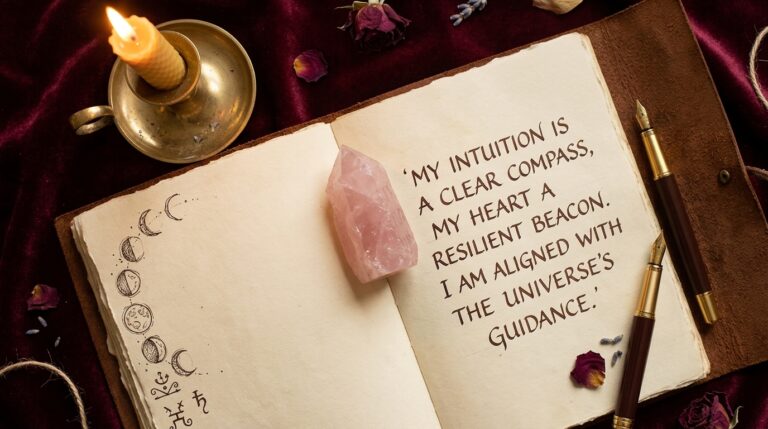
The two aren’t mutually exclusive, and you don’t have to fully resolve one before starting the other. A working aimed at self-worth and openness can run in the same season as a love-drawing ritual, as long as the self-worth piece comes first in sequence, even if only by a few days. Rose quartz, self-blessing rituals, and journaling intentions around “I am safe to receive love” all support this groundwork without requiring years of therapy first, though professional support is worth considering if the pattern feels deeply rooted.
For the ritual side, our love spells guide covers timing and setup for drawing workings, and our broader ritual practice resources include cleansing and grounding rituals that pair well with inner-work spells. Do both, in the right order, and you stop asking the spell to fight a battle that was never really about the ritual at all.
Give the combined work real time before judging either half of it. A self-worth ritual doesn’t announce success the way a drawing spell does; it shows up as small, almost boring changes, staying present for one more uncomfortable conversation, answering a call instead of letting it go to voicemail out of habit. Those quiet wins are the actual measure of whether the block is loosening, and they matter more than any single dramatic sign.
Not sure where to start? You don’t have to do this alone.
Madame Celestine offers guided spellwork for beginners — real support for your first working, not just another guide to read.
Related reading: He Went Quiet for Six Months — Then This Ritual Changed Everything · The One Mistake That Cancels Out a Love Spell

About Madame Celestine
Madame Celestine has practiced and taught spellwork, divination, and seasonal ritual for over two decades, helping newcomers build a grounded, confident practice from their very first spell.