
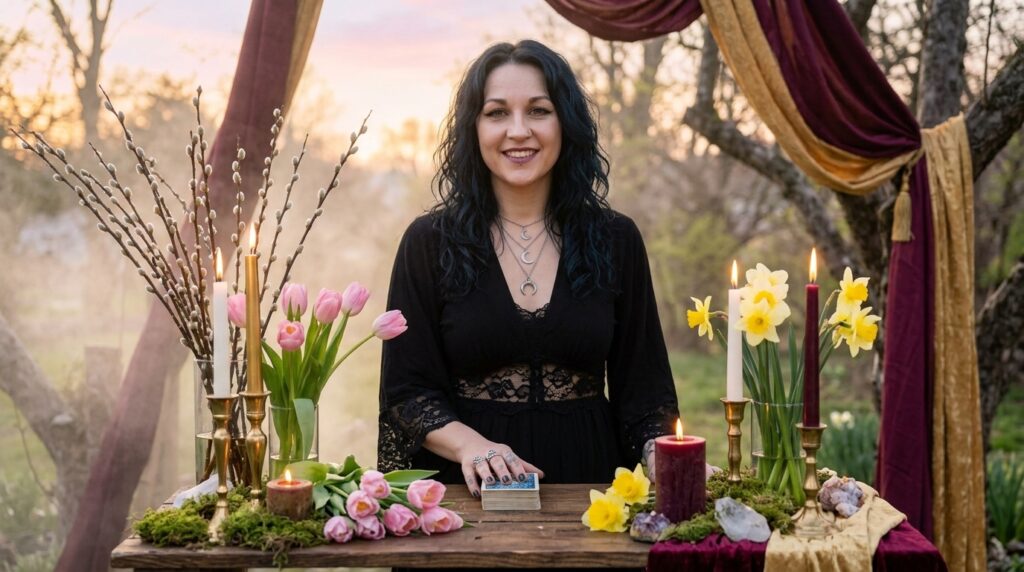
The equinox arrives and you want to mark it. But every “Ostara ritual” you find online feels like a copy-paste checklist with no real meaning behind it. You want something that actually connects you to the season, not another list of props to buy. Ostara doesn’t need a shopping list. It needs intention, a little planning, and a clear sense of what you’re inviting into your life as the light returns.
- What Ostara Actually Celebrates: The Spring Goddess Behind the Sabbat
- Signs It’s Time: Reading the Equinox Before You Set Your Altar
- Building an Ostara Altar That Actually Feels Like Spring
- A Step-by-Step Ostara Ritual for Welcoming the Spring Goddess
- Ostara Correspondences at a Glance: Colors, Herbs, Stones and Foods
- Simple Ways to Honor Ostara Without a Formal Ritual
- Frequently Asked Questions
What Ostara Actually Celebrates: The Spring Goddess Behind the Sabbat
Ostara marks the spring equinox, the day light and dark stand equal before the light takes over. Modern Wiccans link the sabbat to Eostre, a goddess the 8th-century monk Bede mentioned in passing, tied to an April festival. Almost everything else about her, including the now-famous hare imagery, comes from 19th-century scholars building on that single reference rather than from unbroken ancient practice. The Library of Congress traces this history in detail, and it’s worth knowing before you build a ritual around her. That doesn’t make Ostara less real. It means you’re working with a living tradition, still being shaped, rather than a fixed ancient script. You get to bring your own meaning to it.
Signs It’s Time: Reading the Equinox Before You Set Your Altar
Ostara isn’t a fixed calendar date the way a birthday is. The equinox shifts between March 19 and 21 depending on the year, so check the exact date before you plan. Watch for the practical cues too: buds swelling on bare branches, longer daylight, the first returning birds. These signs matter more than the date on a calendar. If your climate runs colder or you live in the Southern Hemisphere, don’t force a Northern Hemisphere timeline onto your own land. Work with what’s actually happening outside your door.
Building an Ostara Altar That Actually Feels Like Spring
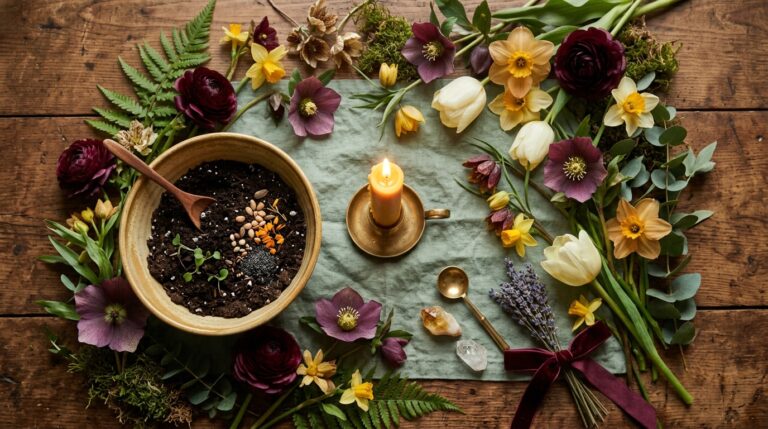
Skip the generic prop list and build around what spring means to you. A simple altar works: a green or pastel cloth, a candle for the returning sun, and a small bowl of soil or seeds. Add fresh flowers if you can find them. Eggs are optional, not required, despite what most articles imply. If eggs don’t resonate with your practice, use sprouting bulbs or a cutting from a budding branch instead. The goal is a space that mirrors what’s actually stirring outside, not a stock photo of spring.
A Step-by-Step Ostara Ritual for Welcoming the Spring Goddess
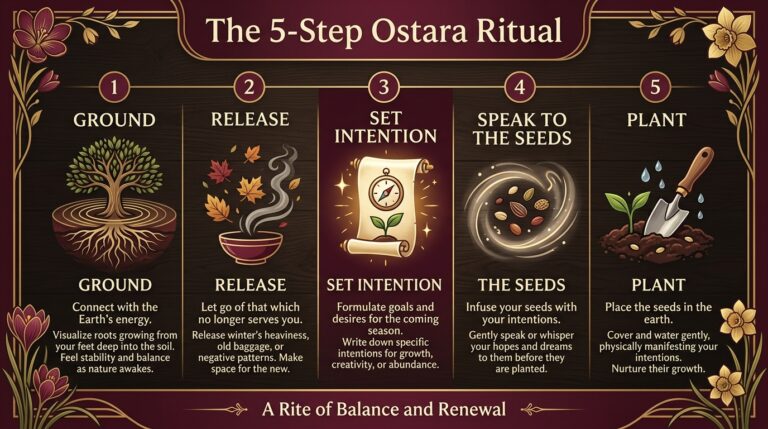
Keep the ritual simple. Complexity doesn’t make it more powerful. Start by grounding: sit at your altar, take a few slow breaths, and let your attention settle. Light your candle and name what you’re releasing from winter, out loud or in writing. Then name what you want to grow this season, one or two intentions rather than a long wish list. Hold the seeds or soil in your hands and speak your intention into them directly. Close by thanking the season for its return, then blow out the candle or let it burn down if you’re staying nearby. Plant the seeds outside or in a pot within the next few days, so the ritual continues past the moment you close it.
Belief, Intention & The Power of Magic
Witchcraft, spells, and manifestation are deeply rooted in belief, intention, and spiritual practice. If these practices do not resonate with you, this may not be the path for you, and that’s perfectly okay. But if you believe in divine powers, trust your intentions, and feel drawn to the mysteries of the unseen, we invite you to continue exploring with Madame Celestine and discover the magic that speaks to your soul.
Ostara Correspondences at a Glance: Colors, Herbs, Stones and Foods
Correspondences give you a shorthand for building rituals without starting from zero. For Ostara, lean into greens, yellows, and soft pastels. Herbs like violet, honeysuckle, and dandelion suit the season, along with fresh mint for clarity. Rose quartz and moonstone both fit the gentle, opening energy of the equinox. On the food side, think early greens, honey, and eggs prepared however you like, from a simple omelet to dyed eggs on your altar. None of this is mandatory. Use correspondences as a starting toolkit, then adjust based on what’s actually growing near you.

Simple Ways to Honor Ostara Without a Formal Ritual
A full ritual isn’t required to mark the sabbat. Open a window and let fresh air move through your home. Clean one space you’ve been avoiding all winter. Plant something, even a single herb in a pot on a windowsill. Take a short walk and notice three signs of new growth. Want to see how Ostara fits the wider seasonal calendar? Our Wheel of the Year guide lays out the full cycle, with dates and themes for every sabbat. Small, consistent gestures often carry more weight than one elaborate ceremony you never repeat.
Frequently Asked Questions
Do I need an altar to celebrate Ostara?
No. A windowsill, a single candle, or even a walk outside can carry the same intention as a full altar setup.
What’s the exact date of Ostara this year?
The spring equinox falls between March 19 and 21 depending on the year, so check an astronomical calendar for the precise date and time.
Is the Ostara hare and egg symbolism ancient?
Not as ancient as commonly believed. Historical research traces most of the hare and egg imagery to 19th-century scholarship rather than unbroken ancient tradition.
Can I celebrate Ostara if I’m in the Southern Hemisphere?
Yes, but adjust the timing. Your spring equinox falls around September, so align the ritual with what’s actually blooming in your own climate.
What if eggs don’t feel right for my practice?
Skip them. Use seeds, sprouting bulbs, or fresh flowers instead. The symbolism matters more than any specific object.
How long should an Ostara ritual take?
As little as ten minutes works well. What matters is your focus during that time, not the length of the ceremony.
Not sure where to start? You don’t have to do this alone.
Madame Celestine offers guided spellwork for beginners — real support for your first working, not just another guide to read.
Related reading: The Wheel of the Year: Wiccan Sabbats Dates & Printable Pages: Ritual Ideas, Meaning & Practical Guidance · Working with Full Moon Correspondences: The Essence of Lunar Energy: Ritual Context, Meaning & Practice

About Madame Celestine
Madame Celestine has practiced and taught spellwork, divination, and seasonal ritual for over two decades, helping newcomers build a grounded, confident practice from their very first spell.