
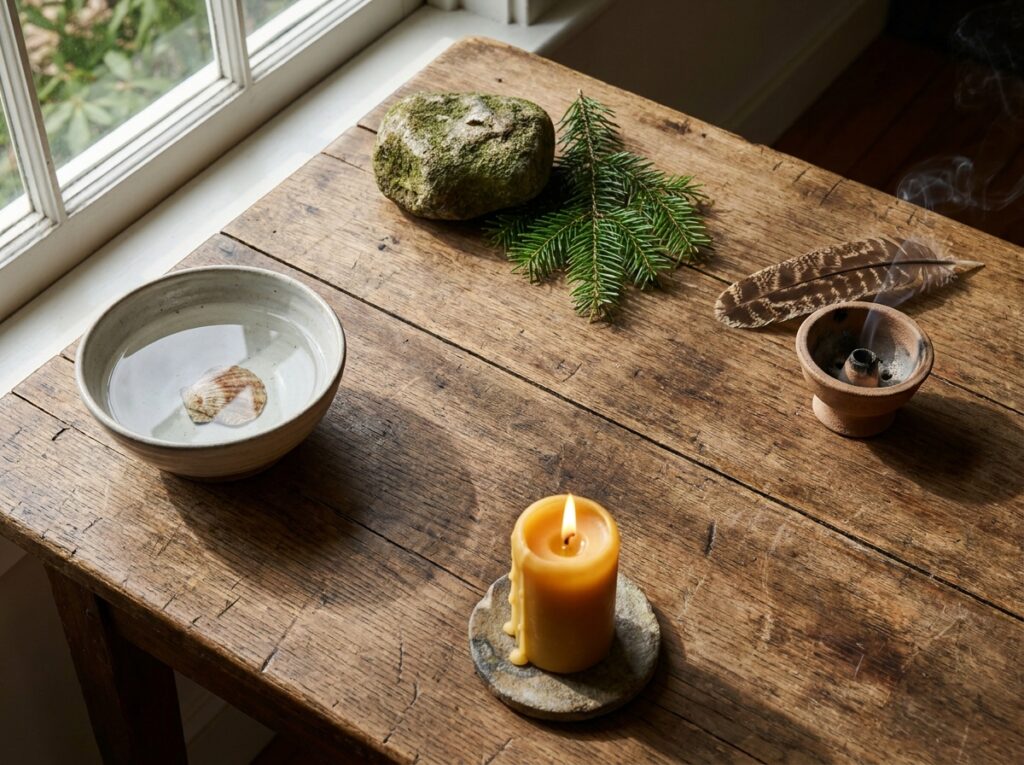
Working with the four directions can give a ritual a clear sense of place. North, East, South, and West become a framework for the qualities traditionally associated with Earth, Air, Fire, and Water. In modern magical practice, these correspondences can help organize an altar, meditation, intention-setting practice, or ceremonial opening.
Elemental spirits add another layer. In Western esoteric traditions, gnomes, sylphs, salamanders, and undines have been associated with the four classical elements. These associations belong to a particular magical tradition, not a universal map shared by every culture. The useful approach is to understand the symbolism, then use it deliberately in your own practice.
What Are Elemental Spirits?
Elementals are spiritual beings or personifications traditionally connected with the classical elements. In the Western elemental framework used here, Earth is linked with gnomes, Water with undines, Fire with salamanders, and Air with sylphs.
You can approach these figures literally, mythically, psychologically, or simply as a way to focus attention. What matters is being clear about the tradition you are drawing from and avoiding the assumption that every spiritual path uses the same correspondences.
The Four Directions and Their Elemental Correspondences
A common modern magical arrangement places Earth in the North, Air in the East, Fire in the South, and Water in the West. Some traditions use different associations, so follow the system you have chosen consistently.
North — Earth and the Gnomes

Earth is associated with steadiness, material life, patience, structure, and embodiment. Gnomes are the elemental beings traditionally linked with Earth in this system.
For North-focused work, use stones, salt, soil, herbs, wood, or another natural object that feels grounding. An intention might center on stability, stronger boundaries, finishing a task, or creating a reliable foundation. Let Earth symbolism lead to tangible action rather than treating the ritual as a substitute for it.
East — Air and the Sylphs
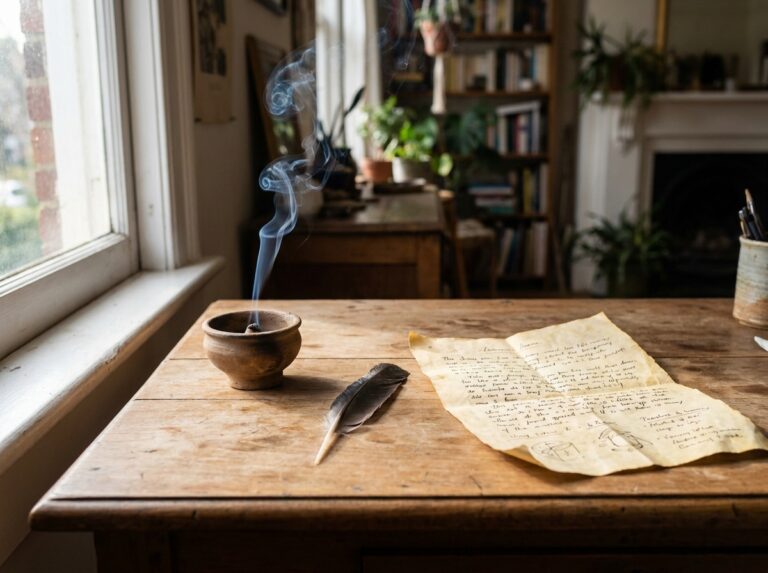
Air is commonly associated with thought, communication, breath, movement, and perspective. Sylphs are the elemental beings traditionally linked with Air.
East-facing work can be useful when you are beginning a project, seeking clarity, or trying to express something difficult to articulate. Write one question before your ritual, breathe slowly for several minutes, and return to the question afterward. The ritual can create space to recognize what you already know.
South — Fire and the Salamanders
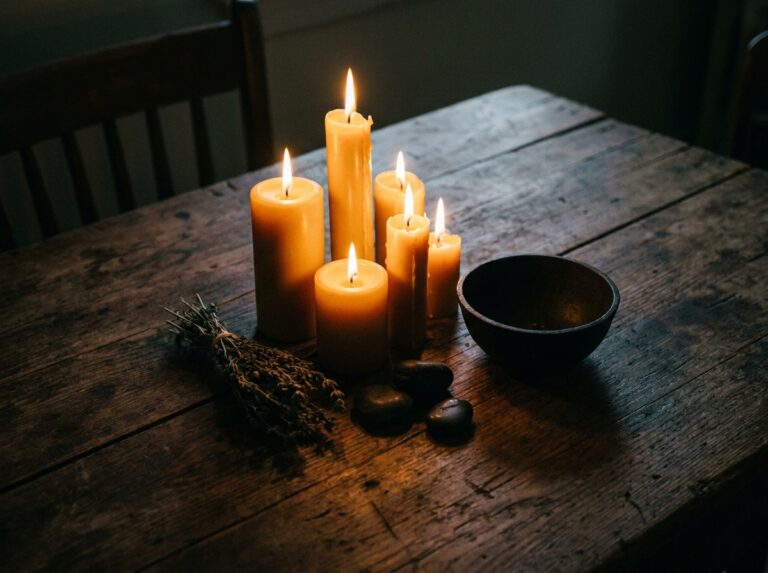
Fire brings associations of energy, courage, action, transformation, and will. Salamanders are traditionally described in Western elemental lore as beings connected with Fire.
A South-focused ritual can mark a decision, motivate change, or symbolize release from hesitation. Candlelight is an accessible representation, with ordinary fire safety observed. End with one concrete commitment: make the call, begin the work, write the plan, or take the first step.
West — Water and the Undines
Water is commonly connected with emotion, intuition, receptivity, memory, and change. Undines are the elemental beings traditionally associated with Water.
West-facing work can support reflection during emotionally changing periods. Place a bowl of clean water on your altar, sit quietly, and name the feeling you are carrying without immediately trying to solve it. The water becomes a visual reminder that emotions can move and that reflection does not require immediate action.
What Is Spirit or Aether?
Some Western magical systems add a fifth principle called Spirit or Aether. It is often treated as the element that connects or completes the four elemental forces rather than as another physical substance.
In practice, Spirit can represent the center of the ritual—the awareness holding Earth, Air, Fire, and Water together. This is an optional correspondence, not a universal feature of every tradition.
A Simple Four Directions Ritual
You can work with the directions without an elaborate ceremonial setup.
1. Prepare the Center
Place one meaningful object in the middle of your working space. Take a few breaths and state your intention in one sentence.
2. Face North
Reflect on what needs stability. Name one practical foundation you want to strengthen.
3. Turn East
Consider communication, ideas, and perspective. Write down one thought you need to express or understand more clearly.
4. Turn South
Consider action and transformation. Choose one step you are willing to take rather than leaving the intention entirely in symbolism.
5. Turn West
Pause with your emotions. Notice what you are feeling and what may need to soften, move, or be released.
6. Return to Center
Bring the four reflections together. Thank the elements or elemental beings according to your chosen tradition, then close the ritual in the manner your practice uses.
How to Work With Elementals Respectfully
If you include elemental spirits in your practice, begin with study rather than assumptions. Learn the magical system behind the names and correspondences you are using. Do not present a modern correspondence as an unchanged belief shared by all cultures.
A simple practice can be enough: a natural object, focused attention, a written intention, and a clear closing. Earth can remind you to build. Air can help you clarify. Fire can prompt action. Water can make room for reflection. The ritual becomes useful when those ideas continue into ordinary life.
Common Questions About Elemental Spirits and the Four Directions
Which element belongs to each direction?
A common modern magical correspondence is Earth–North, Air–East, Fire–South, and Water–West. Other systems may arrange them differently, so follow the tradition you are practicing.
Who are the four elemental beings?
In the Western elemental framework used here, gnomes are associated with Earth, sylphs with Air, salamanders with Fire, and undines with Water.
Is Spirit the fifth element?
Some magical systems use Spirit or Aether as a fifth principle representing unity or the connection among the four elements. It is not universal.
Do I need to believe in elemental spirits?
No single approach is required. You can approach elemental beings literally, symbolically, devotionally, or as a reflective framework. Be clear about which interpretation you are using.
Final Thoughts
The four directions give elemental practice a physical orientation: North grounds, East opens thought, South energizes action, and West invites reflection. The elemental beings associated with those directions add a layer of traditional Western magical symbolism, but they should be understood within that context rather than treated as universal spiritual facts.
Use the framework as a map, not a rulebook. Choose a correspondence system, work with it consistently, and let the ritual point toward something practical in your life. When symbolism, attention, and action meet, a four-direction practice can become a meaningful way to mark change and intention.
If you want to explore more practical spiritual work, you can explore Madame Celestine’s spells and ritual practice or visit Madame Celestine.