
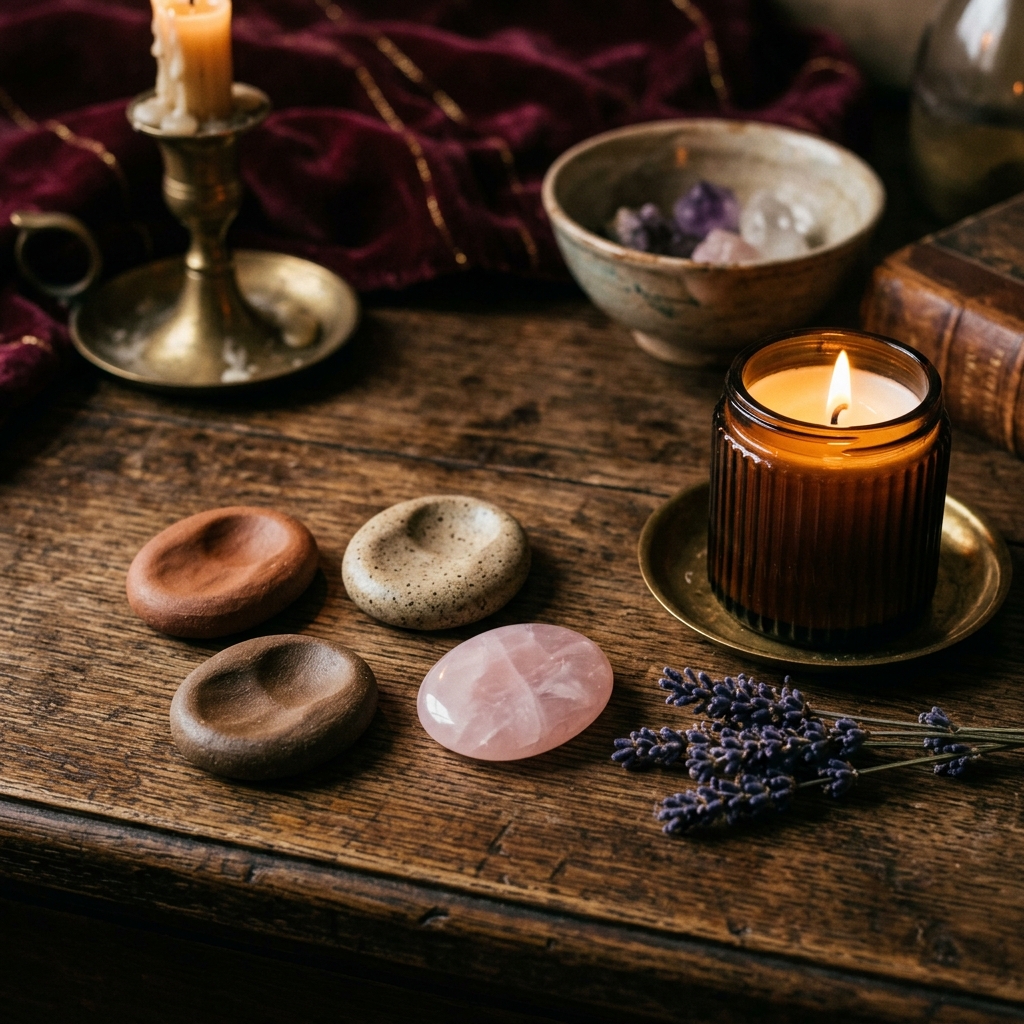
A worry stone is one of the simplest tools in magick: a smooth, palm-sized stone with a shallow groove for your thumb. You rub it when your mind starts to spin. Yet this small object sits at a meeting point of craft, calm and old tradition. In this article, you will learn how worry stones relate to Greek worry beads and how to pick a stone that will not wear away in your pocket. You will also get a DIY clay recipe and a short ritual to charge your finished stone.
What a Worry Stone Is, and Why the Thumb Groove Matters
A worry stone is usually an oval stone, about the length of your thumb, with one dip worn or carved into its face. The groove is the whole point. It invites a slow, repeated stroke, and that rhythm gives restless hands something steady to do.
Worry stones have a close cousin in Greece. The komboloi, or Greek worry beads, grew out of knotted prayer cords used by Orthodox monks on Mount Athos. During the Ottoman period, Greeks turned them into a secular object by letting the beads slide freely[1]. Traditional komboloi usually carry an odd number of beads, often 33, and people flick them simply to feel calm[1]. A worry stone works on the same principle, just with one smooth surface instead of a string of beads.
The Magickal Side of Rubbing a Stone
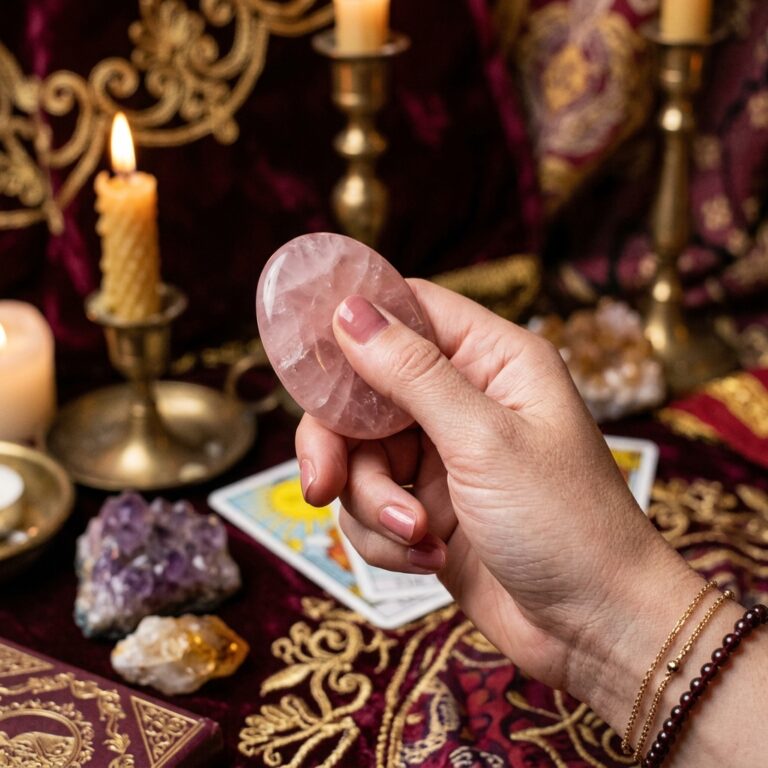
In magickal practice, a worry stone is more than a fidget. Practitioners treat it as a charged object, a small vessel that holds an intention. Some picture the stone soaking up anxious energy each time they rub it. Others see it as a reminder of a promise they made to themselves, such as “I can handle today.”
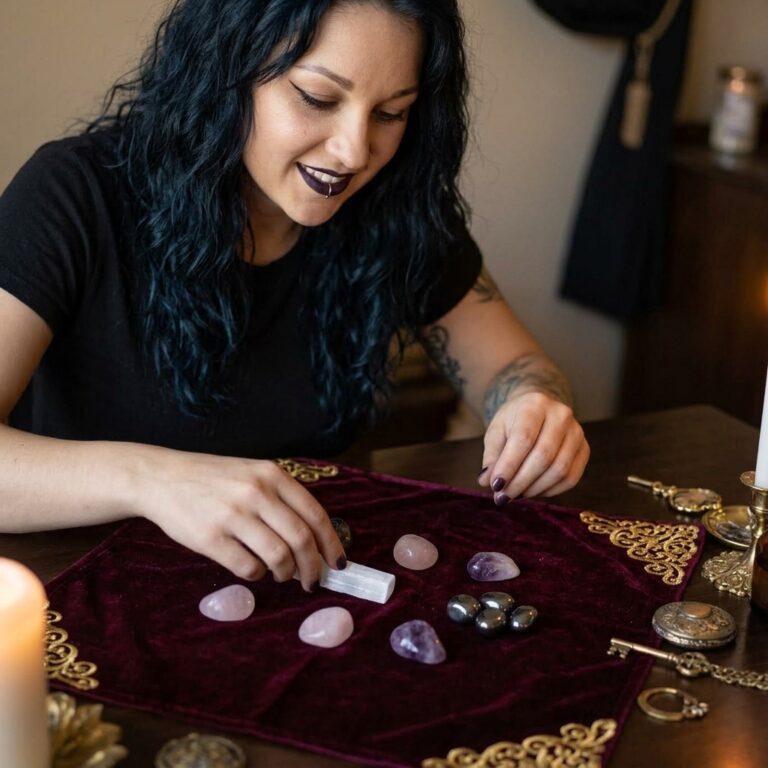
Stone choice often follows traditional correspondences. For example, rose quartz is linked with gentleness, amethyst with calm sleep, and hematite with grounding. Black tourmaline is a favorite for protection. These meanings come from practice and belief, so trust your own response too. If a stone feels soothing in your hand, that matters.
Choosing a Stone That Won’t Wear Away
Here is a practical detail most guides skip. You will rub a worry stone thousands of times, so hardness matters. Mineralogists measure it on the Mohs scale, created by Friedrich Mohs in 1812. It ranks minerals from talc at 1 to diamond at 10 by what can scratch what[2]. Quartz, which includes rose quartz and amethyst, sits at 7[2].
Selenite is a different story. It is a form of gypsum, which has a hardness of 2 and can be scratched by a fingernail. Gypsum is also slightly soluble in water[3]. So a selenite worry stone will slowly lose its polish, and it should never be cleansed in water. For daily handling, choose quartz-family stones or other hard options instead.
DIY Worry Stone Recipe: A Clay Version You Can Make Tonight
Not everyone can find the perfect stone, and a handmade worry stone carries your intention from the start. This clay version takes about thirty minutes of work.
Materials: a walnut-sized piece of polymer or air-dry clay, a pinch of dried lavender or rosemary, fine sandpaper, and a clear varnish or sealant.
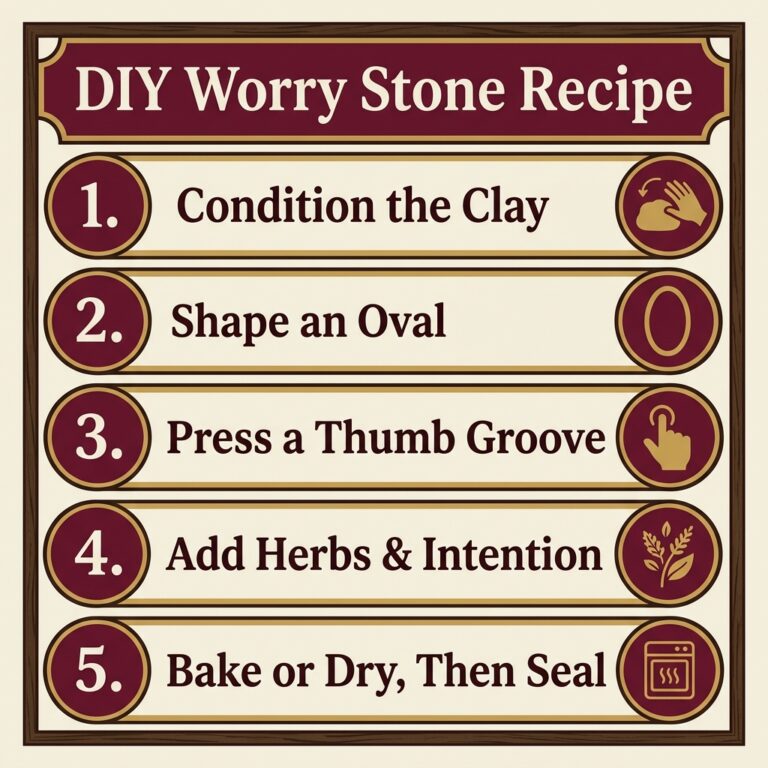
- Condition the clay. Knead it in your hands until soft. As you work, think about what you want the stone to help with.
- Shape an oval. Roll it into a smooth egg shape, roughly the length of your thumb.
- Press a thumb groove. Press your thumb firmly into the center, then rock it gently to widen the dip.
- Add herbs and intention. Press a few crushed herbs into the back, and quietly speak your intention over the clay.
- Bake or dry, then seal. Follow the clay package for baking or drying time. Afterward, sand any rough spots and brush on a thin coat of sealant.
How to Charge and Use Your Worry Stone
Once your stone is ready, give it a simple charging ritual. First, hold it in your dominant hand and take five slow breaths. Then say your intention aloud, in the present tense. Finally, leave the stone on a windowsill overnight, ideally under a full moon. Passing it through incense smoke also works for every stone, including soft ones like selenite.
After that, keep your worry stone in a pocket or by your bed. Rub it whenever worry rises, and repeat your intention silently. Once a week, cleanse it again with smoke or moonlight. For more ways to empower small objects, read our guide to charging talismans and amulets.
Belief, Intention & The Power of Magic
Witchcraft, spells, and manifestation are deeply rooted in belief, intention, and spiritual practice. If these practices do not resonate with you, this may not be the path for you, and that’s perfectly okay. But if you believe in divine powers, trust your intentions, and feel drawn to the mysteries of the unseen, we invite you to continue exploring with Madame Celestine and discover the magic that speaks to your soul.
Frequently Asked Questions
What is a worry stone used for?
People rub a worry stone to feel calmer during stressful moments. In magickal practice, it is also charged with an intention, such as peace or protection.
Which crystal works best for this?
Hard stones such as rose quartz or amethyst work well because they resist wear. Choose one whose feel and traditional meaning suit your intention.
Can I use selenite as a worry stone?
You can, but selenite is very soft and slightly water-soluble. It will lose its polish with heavy handling, and it should never be cleansed in water.
How do I make a worry stone at home?
Shape polymer or air-dry clay into a thumb-length oval, press a groove with your thumb, add herbs and intention, then bake or dry and seal it.
How often should I cleanse it?
Many practitioners cleanse it about once a week, or after a very stressful day, using incense smoke or moonlight.
References
- Komboloi: A Solution at Hand for Worried Times. Garland Magazine. https://garlandmag.com/article/komboloi/
- Mohs Hardness. Encyclopaedia Britannica. https://www.britannica.com/science/Mohs-hardness
- Gypsum. Encyclopaedia Britannica. https://www.britannica.com/science/gypsum
Not sure where to start? You don’t have to do this alone.
Madame Celestine offers guided spellwork for beginners — real support for your first working, not just another guide to read.
Related reading: Sigils of Lilith: Meaning, Origin & How to Work With Them: Symbolism, Interpretation & Ritual Practice · New Beginnings: What a Fertility Ritual Can and Can’t Promise

About Madame Celestine
Madame Celestine has practiced and taught spellwork, divination, and seasonal ritual for over two decades, helping newcomers build a grounded, confident practice from their very first spell.