
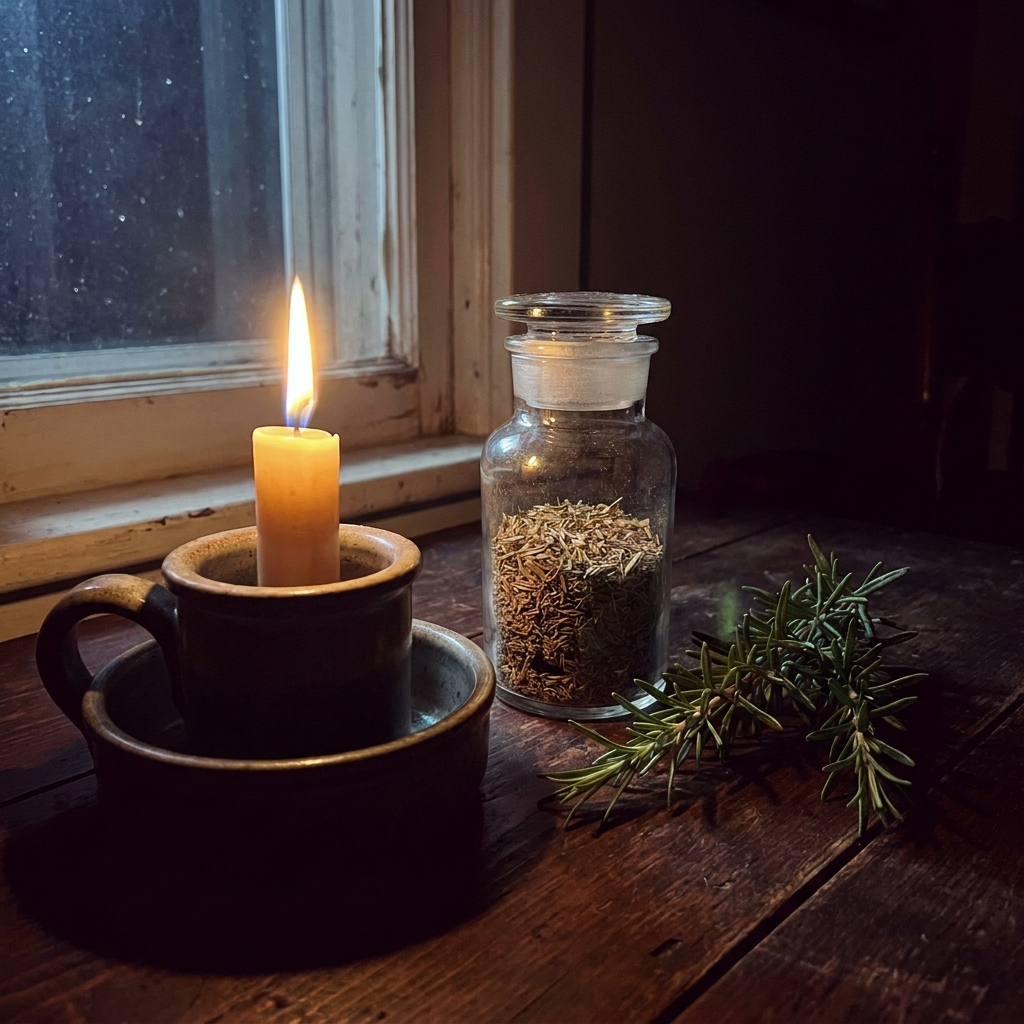
You cast the spell, the candle burned down, and now you’re waiting. So how do you know if your love spell is working? This guide covers the 7 signs a love spell is working that practitioners look for, from the caster’s side. Each one is traced back to real folklore archives, from a 4th-century Egyptian papyrus to spells recorded by university folklorists in Los Angeles. You’ll also learn the one habit old casters had that makes the signs far easier to read, and what to do if nothing changes.
- Signs a Love Spell Is Working: 4 Clues in the Candle, the Fire and Your Dreams
- How to Tell If a Love Spell Is Working in Real Life: 3 More Signs
- 4 False Alarms That Fool Casters Into Thinking a Love Spell Is Working
- The Old Spells Came With Their Own Built-In Deadline
- How Do You Know If a Love Spell Is Working? Choose the Sign Before You Cast
- How Long Before You See Signs of a Love Spell Working?
- No Signs at All? What to Do When a Love Spell Isn’t Working
- Why a Practitioner’s Love Spell Work Is Easier to Read
- Frequently Asked Questions
- References
Signs a Love Spell Is Working: 4 Clues in the Candle, the Fire and Your Dreams
Older traditions read the first signs in the tools, long before anything changed in the other person. These four come straight from the archives.
Sign 1: The glass stays clear
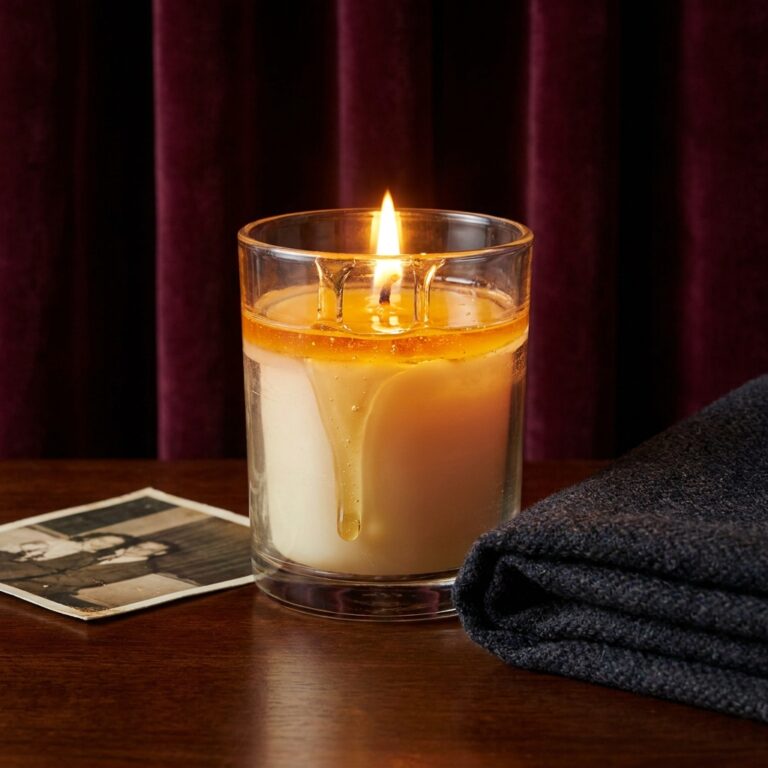
The USC Digital Folklore Archives record a seven-day love spell shared by a Los Angeles student. A candle coated in honey or wax burns in a glass jar, pinned with a photo and a garment of the person. Then comes the reading. If the glass is clear after seven days, the spell worked and you only need to wait. If the inside turns black, the tradition says that person’s heart belongs to someone else.[1]
Sign 2: The wax forms a shape you recognize
Reading melted wax has a name: ceromancy, from the Greek words for “wax” and “divination.” The classic method pours melted wax into cold water and reads the shapes as it hardens. It was widespread in old Russia, and it survives there as a Christmas ritual today.[2] So a heart, a ring or two shapes leaning together are read as good signs. If you’d like to go deeper, see this guide to reading shapes in candle wax.
Sign 3: Fire burns steady, not jumpy
Fire was a favorite test. In 19th-century Halloween customs, a young woman set nuts on the fire grate. If they cracked or jumped, her lover would be unfaithful. If they blazed and burned, he would stay true. Two nuts named for a couple that burned together meant marriage.[3] Many casters read a candle flame the same way today. A tall, steady flame is the hopeful sign.
Sign 4: They appear in your dreams
Dreams have long been used as love oracles. On St Agnes’ Eve, 20 January, young women in England tried to dream of their future husband. A modern version recorded at USC uses a sprig of rosemary under the pillow and a verse from Keats’s 1819 poem The Eve of St. Agnes.[4] In that version, a blurry face is the good sign. So a dream of the person after casting is one of the signs of a love spell working that practitioners take seriously.
How to Tell If a Love Spell Is Working in Real Life: 3 More Signs
After the tool signs, practitioners watch daily life. These three are more about the person than the candle.
Sign 5: Your ears burn and their name keeps turning up
This one is ancient. The Roman writer Pliny reported a common belief that when your ears tingle, someone is talking about you while you’re away.[5] Shakespeare used the same idea in Much Ado About Nothing, when Beatrice cries, “What fire is in mine ears!” Today, casters also notice the person’s name coming up in conversation, songs or chance meetings.
Sign 6: Small contact returns
A message, a like, a mutual friend mentioning you. Practitioners describe a working love spell as moving in small steps first. A big gesture rarely comes before the small ones. So a short “hey, how are you?” after weeks of silence counts. Many casters keep a simple notebook and jot down each contact with the date, because small steps are easy to forget when you’re anxious.
Sign 7: You feel calmer, not more desperate
This is the sign casters overlook most. If you feel lighter after the spell, many practitioners read that as the work settling in. However, if you feel more anxious and keep checking your phone, they’d say the spell is fighting your own fear. That’s also why the old customs above were so short and clear. A single answer on a single night left little room for worry to grow.
4 False Alarms That Fool Casters Into Thinking a Love Spell Is Working
Not every flicker is magic. Before you read a sign, rule out these ordinary causes.
- A draft in the room. An open window or a heating vent makes any flame dance or lean. So place your candle somewhere still before you judge it.
- A long wick. A wick that’s too long burns high and smoky, which can blacken a jar on its own. Trimming it first gives you a fair reading.
- Cheap or scented wax. Some candles drip and pool unevenly whatever you do. A plain, good-quality candle makes the wax easier to read.
- Constant checking. If you check their profile ten times a day, you’ll find “signs” everywhere. Instead, wait for the deadline you set.
The Old Spells Came With Their Own Built-In Deadline
Ancient casters often wrote the sign right into the spell. A love spell in Papyrus 121, a 4th-century magical handbook from Egypt now in the British Library, is a good example. The caster writes the names of seven gods on seven lamp wicks with myrrh. The target is meant to stay sleepless until they reach the caster’s house, by the time the seventh wick flickers.[6]
In other words, the spell named its own sign and its own deadline. The seven-day jar candle from the USC archive does the same thing, with a clear glass on day seven.[1] And the Halloween nuts gave an answer the moment they hit the heat.[3]
How Do You Know If a Love Spell Is Working? Choose the Sign Before You Cast
Put the archives side by side and a clear pattern appears.
- Egypt, 4th century: the sign was set at seven wicks.
- Scotland and the US, 1785 to 1870s: the nuts either burned or jumped.
- England, from 1819: the dream face was blurry or clear.
- Los Angeles, today: the glass was clear or black after seven days.
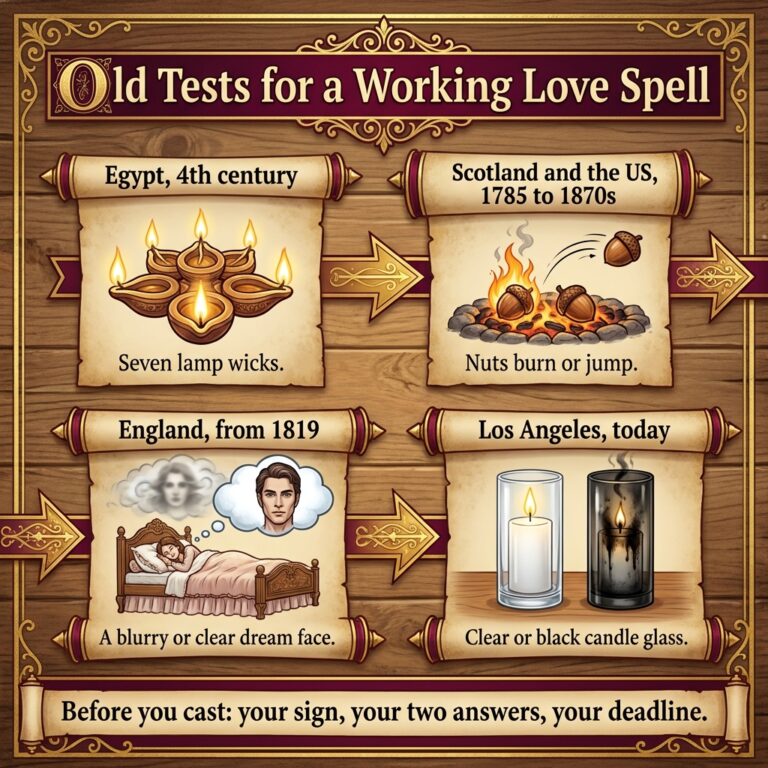
Each tradition picked one sign in advance, gave it two possible answers and set a time limit. That’s the habit modern casters have mostly lost. Instead, many people cast first and then read every text, song and dream as a possible sign. As a result, they swing between hope and panic for weeks.
This is an editorial reading of the archives, not settled scholarship. Still, the lesson is practical. Before you cast, write down three things:
- Your sign. Pick one, such as the candle glass, the flame or a dream.
- Your two answers. Decide what “yes” looks like and what “not yet” looks like.
- Your deadline. Seven days echoes the jar spell and the seven wicks. One full moon cycle is a common modern choice for slower work.
Then stop reading signs until the deadline. That one change makes it far easier to know whether a love spell is working.
How Long Before You See Signs of a Love Spell Working?
There is no fixed answer, and anyone who promises a date is guessing. Even so, the archive spells give a useful frame. Tool signs, like the jar glass or a flame, show during or right after the casting. Dream signs often come within the first week. Real-life signs, such as renewed contact, are usually described as taking longer, often a full moon cycle.
So a quiet first week doesn’t mean failure. It may simply mean you’re looking at the wrong kind of sign for that stage.
No Signs at All? What to Do When a Love Spell Isn’t Working
First, check your deadline. If it hasn’t passed, keep waiting and keep the spell area calm. Next, look at the tools again. A black jar or a jumping flame in the old traditions meant “not this person” or “not yet,” not “try harder.”
Also, avoid recasting every few days. Most practitioners believe repeated recasting scatters the energy rather than building it. If the deadline passes with no signs, step back and look at the bigger picture. This guide on why a love spell stalls walks through the most common causes. It also helps to remember what love magic can and can’t do, so your sign matches a realistic goal.
Belief, Intention & The Power of Magic
Witchcraft, spells, and manifestation are deeply rooted in belief, intention, and spiritual practice. If these practices do not resonate with you, this may not be the path for you, and that’s perfectly okay. But if you believe in divine powers, trust your intentions, and feel drawn to the mysteries of the unseen, we invite you to continue exploring with Madame Celestine and discover the magic that speaks to your soul.
Why a Practitioner’s Love Spell Work Is Easier to Read
Reading your own signs is hard, because you want the answer so badly. That’s the main reason many people hand the work to a practitioner. Someone outside the situation can set the sign and the deadline before casting, then read them without hope or fear bending the result.
A practitioner also chooses the method for the situation. For example, a new attraction calls for different work than a cooled relationship, and a reunion after a breakup calls for something else again. In addition, they can check progress with a reading partway through, so you aren’t guessing. Then, if the signs say “not yet,” the plan can change before weeks are lost.
That approach is what the personalized love spell work on this site is built around. Like all spiritual work, it promises no specific outcome. What it offers is a clear plan, a set sign and someone steady to read it with you.

Frequently Asked Questions
What is the first sign a love spell is working?
Many traditions read the first sign in the tools, such as a clear candle jar or a steady flame. Signs in the other person usually come later.
Can a love spell work without any signs?
Practitioners say yes, especially with slow, gentle work. That’s why setting a deadline matters more than watching for constant signs.
What does a black candle jar mean after a love spell?
In the jar spell recorded in the USC folklore archives, a blackened glass means the person’s heart belongs to someone else. Other traditions read soot as a sign of obstacles.
Should I recast if I see no signs a love spell is working?
Wait until your chosen deadline first. Recasting too often is one of the most common mistakes practitioners describe.
Do dreams count as signs of a love spell working?
In many traditions, yes. Love dreams have been used as signs for centuries, from St Agnes’ Eve customs to modern rosemary rituals.
References
- Santeria Love Spell. USC Digital Folklore Archives. https://folklore.usc.edu/?p=12560
- Ceromancy. Wikipedia. https://en.wikipedia.org/wiki/Ceromancy
- Cheney Schopieray. Halloween Divination. William L. Clements Library, University of Michigan, 31 October 2025. https://clements.umich.edu/halloween-divination/
- Seeing my future husband. USC Digital Folklore Archives. https://folklore.usc.edu/?p=30354
- Ear-Tingling. The Origins of Popular Superstitions and Customs, Internet Sacred Text Archive. https://sacred-texts.com/neu/eng/osc/osc59.htm
- Federica Micucci. Love spells in the Greek Magical Papyri. British Library, Medieval Manuscripts Blog, 13 February 2021. https://www.bl.uk/stories/blogs/posts/love-spells-in-the-greek-magical-papyri
Not sure where to start? You don’t have to do this alone.
Madame Celestine offers guided spellwork for beginners — real support for your first working, not just another guide to read.
Related reading: Signs Someone Put a Love Spell on You: 11 Symptoms Explained · How to Bring Back a Lover: 2,000 Years of Return Spells

About Wren Ashby
Wren Ashby is the pen name our editorial team uses for articles on sigils, Tarot and modern traditional witchcraft. Articles under this byline are researched from published sources and reviewed by Madame Celestine before publishing.