

Eclipse moon water is one of the rarest tools a witch can keep on the shelf, and many people wonder whether it is worth the wait. Is it just full moon water with a dramatic backdrop, or does the eclipse change what the water is for? This guide answers both questions. First, you will learn what actually happens in the sky. Then you will see why so many cultures once hid their water from an eclipse, and how to make and use eclipse water with care. You will also find the next dates you can realistically make it.
- What Eclipse Moon Water Really Captures
- Blood Moon Water and Why the Moon Turns Red
- Why Many Cultures Covered Their Water During an Eclipse
- How to Make Eclipse Moon Water, Step by Step
- What Eclipse Moon Water Is Used For
- Solar Eclipse Water: The New Moon Version
- When You Can Next Make Eclipse Moon Water
- Common Eclipse Moon Water Mistakes to Avoid
- Frequently Asked Questions
- References
What Eclipse Moon Water Really Captures
Ordinary moon water is water left out under the moon to take on its symbolic qualities. Eclipse moon water follows the same idea, but the timing is far stricter. According to NASA, lunar eclipses happen only at the full moon[1]. At that moment, Earth sits directly between the sun and the moon. As a result, Earth’s shadow falls across the lunar surface and dims it, sometimes turning it red over a few hours[1].
So eclipse moon water is full moon water made while the full moon is being covered. That detail matters to practitioners. The full moon usually stands for peak light and completion. During an eclipse, however, that light is briefly taken away. Many witches therefore treat eclipse water as a tool for endings, hidden things and turning points, rather than for simple growth.
Blood Moon Water and Why the Moon Turns Red
The red color has a plain physical cause. Sunlight passes through Earth’s atmosphere on its way to the moon. Along the way, the air scatters the blue light and lets the red through. This is called Rayleigh scattering, the same effect that colors our sunrises and sunsets[2]. In effect, the moon is lit by every sunrise and sunset on Earth at once.
“Blood moon” is not a scientific term, yet people now use it for any total lunar eclipse[2]. The phrase became popular around 2014 and 2015, when some pastors linked a run of four total lunar eclipses in a row to prophecy[2]. Today, “blood moon water” usually means eclipse moon water made during totality, when the red color is strongest. It is the most prized version, because totality is brief and does not happen every year.

Why Many Cultures Covered Their Water During an Eclipse
Here is the twist most modern guides leave out. For much of history, people did not set water out under an eclipse. Instead, they hid it. In parts of Hindu tradition, food and water are covered during an eclipse, and cleansing rituals follow once it ends[3]. Some Hindu folktales explain the eclipse as the demon Rahu drinking the elixir of immortality[3]. In that light, covering water was a way to protect it from a dangerous moment.
Other cultures read the red moon as a wound. The Inca saw a jaguar attacking and eating the moon[3]. In ancient Mesopotamia, a lunar eclipse was treated as a threat to the king. For that reason, a stand-in king took his place until the danger passed[3]. The Hupa of California told a gentler story. In their account, the moon’s wives gathered his blood and nursed him back to health[4].
So when modern witches set out a jar during an eclipse, they are doing something new. That is not a reason to stop. It is, however, a reason to know the history, and to decide what the eclipse means in your own practice. Some practitioners honor the older view by covering their everyday drinking water while the eclipse jar sits outside.
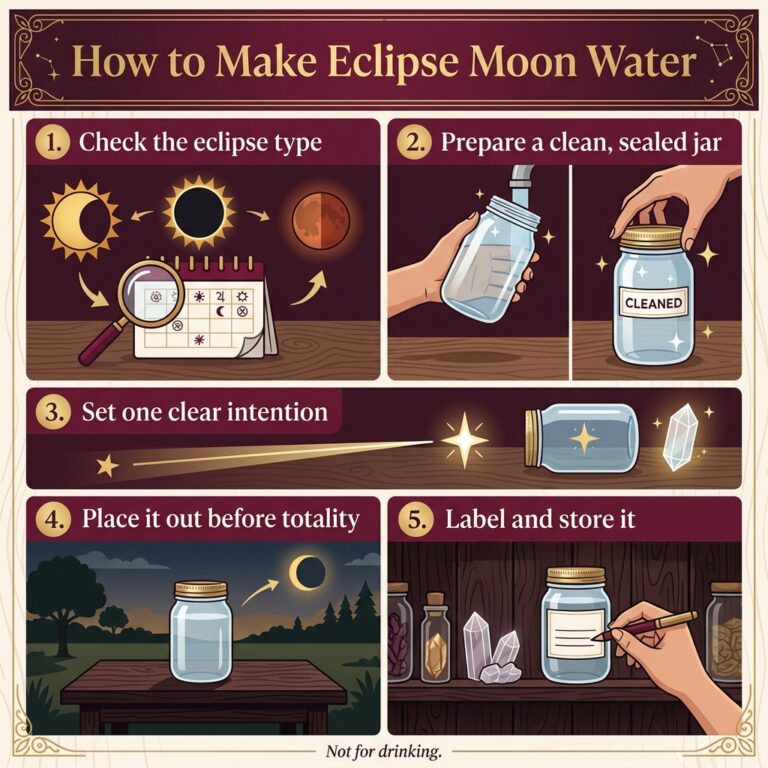
How to Make Eclipse Moon Water, Step by Step
The method is simple, but the timing takes planning. Follow these steps in order.
1. Check the Type of Eclipse
First, look up whether the eclipse is total, partial or penumbral. A penumbral eclipse is so faint that people often mistake it for a normal full moon[5]. Many witches still use it, but they treat it as a softer, quieter kind of eclipse water. For true blood moon water, you need a total eclipse.
2. Prepare a Clean, Sealed Jar
Next, choose a glass jar with a lid and fill it with clean water. Spring water or filtered water works well. Keep the lid on, because an open jar collects dust, insects and leaves overnight. The lid does not block the symbolism. Instead, it keeps the water usable.
3. Set One Clear Intention
Then hold the jar and name one purpose for it. Some witches write the intention on a slip of paper and tape it under the jar, so the wording stays fixed. Eclipse water suits endings, so an intention such as releasing an old habit fits well. Keep it to a single sentence. A focused jar is easier to use later than one loaded with five wishes.
4. Place It Out Before Totality
Put the jar outside or on a windowsill before the eclipse begins. That way, you will not miss the peak while you search for the right spot. If clouds cover the sky, you can still leave it out. Most practitioners hold that the eclipse happens whether or not you can see it.
5. Collect, Label and Store It
Finally, bring the jar in once the eclipse ends. Label it with the date and the eclipse type, because eclipse water is easy to confuse with ordinary moon water later. Store it somewhere cool and dark.
Belief, Intention & The Power of Magic
Witchcraft, spells, and manifestation are deeply rooted in belief, intention, and spiritual practice. If these practices do not resonate with you, this may not be the path for you, and that’s perfectly okay. But if you believe in divine powers, trust your intentions, and feel drawn to the mysteries of the unseen, we invite you to continue exploring with Madame Celestine and discover the magic that speaks to your soul.
What Eclipse Moon Water Is Used For
Because the eclipse takes the full moon’s light away for a while, most uses center on release and change. Here are the most common ones.
- Letting go. Practitioners add a few drops to a bath or wipe it on a candle when they want to close a chapter.
- Shadow work. Some keep a small bowl nearby while journaling about habits or feelings they usually avoid.
- Mending conflict. The Batammaliba people of West Africa saw a lunar eclipse as a fight between sun and moon, and as a time to settle old feuds[3]. Inspired by that idea, some witches use eclipse water in rituals for making peace.
- Resetting tools. A light sprinkle on a tarot deck or altar cloth marks a fresh start after a hard season.
Eclipse water is less suited to spells for steady growth, such as slowly building savings. For that kind of work, many witches reach for water made under a waxing or full moon instead. If you want to compare phases, this guide to moon water recipes for every phase sets them side by side.
Solar Eclipse Water: The New Moon Version
A solar eclipse is the mirror image. It happens when the moon passes between the sun and Earth, and it can only happen at a new moon[1]. As a result, solar eclipse water carries new moon themes, such as beginnings made in the dark. Some witches call it “shadow water” for that reason.
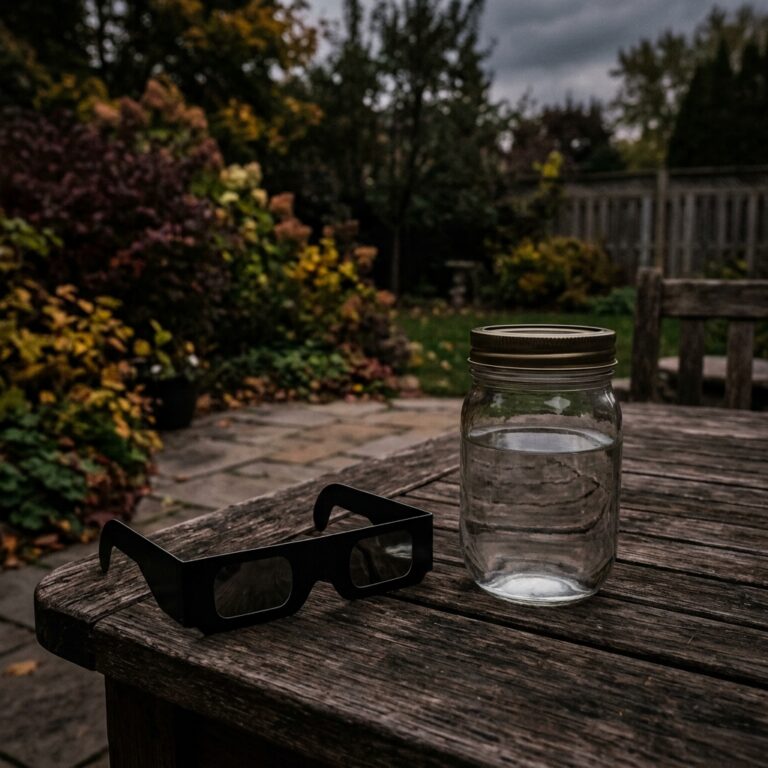
Safety matters far more here. NASA advises using eclipse glasses or another safe viewing method throughout a solar eclipse, except for the brief moments of totality during a total eclipse[1]. So set your jar out, then protect your eyes. The water does not need you to stare at the sun.
When You Can Next Make Eclipse Moon Water
Timing is the hardest part, because the calendar is uneven. All three lunar eclipses in 2027 are penumbral. They fall on February 20, July 18 and August 17[6]. You can still make a gentle eclipse water on those nights, but the moon will barely change color.
In 2028, partial lunar eclipses arrive on January 12 and July 6. Then comes the date blood moon water fans are waiting for. A total lunar eclipse falls on December 31, 2028, visible across western North America, Africa, Asia, Europe and Australia[6]. That means a true blood moon on New Year’s Eve, which is a striking moment for release work. Always check visibility for your own location, though, since not every eclipse is seen everywhere.
Common Eclipse Moon Water Mistakes to Avoid
The first mistake is drinking it. Water left outside overnight is not meant for drinking, even in a sealed jar. Use it for baths, cleansing and anointing instead.
The second mistake is assuming every eclipse looks the same. A penumbral eclipse can pass without any visible change[5]. So if you label that jar “blood moon water,” you may later use it for the wrong kind of work.
Another mistake is bringing the jar in too early. A lunar eclipse unfolds in stages, as the moon slides into Earth’s shadow and then slowly out again. Many practitioners leave eclipse moon water out for the whole event, not just the red peak. That way, the jar holds the full arc of the eclipse, from the first dimming to the return of the light. This also suits the purpose of the water, since release work is about a whole process rather than a single moment.
The last mistake is making too much. Eclipse water feels special because it is rare. A small jar keeps it that way, and it also stops you from using it for everyday spells where ordinary moon water would do.
Frequently Asked Questions
Is blood moon water different from full moon water?
Blood moon water is made during a total lunar eclipse, which only happens at a full moon. Practitioners usually use it for endings and release, while regular full moon water is used for completion and charging.
Can you make eclipse moon water if it is cloudy?
Yes. Most practitioners believe the eclipse still counts even when clouds hide it, so you can leave your jar out as planned.
Can you drink eclipse moon water?
It is best not to. Water left outside overnight can pick up dirt and bacteria, so keep eclipse water for baths, cleansing and anointing.
Is a water eclipse ritual bad luck?
Some traditions covered their water during eclipses to protect it. Modern witches who make eclipse water see the event as a powerful time for release, so the meaning depends on the tradition you follow.
How long does eclipse moon water last?
Many practitioners keep it until the next eclipse, stored in a cool, dark place. If it turns cloudy or smells off, pour it onto the earth and make a fresh jar next time.
References
- Types of Solar Eclipses. NASA Science. https://science.nasa.gov/eclipses/types/
- What Is a Blood Moon? timeanddate.com. https://www.timeanddate.com/eclipse/blood-moon.html
- Blood moon: lunar eclipse myths from around the world. The Conversation. https://theconversation.com/blood-moon-lunar-eclipse-myths-from-around-the-world-100548
- Jane J. Lee. Lunar Eclipse Myths From Around the World. National Geographic, April 14, 2014. https://www.nationalgeographic.com/science/article/140413-total-lunar-eclipse-myths-space-culture-science
- Penumbral lunar eclipses explained. timeanddate.com. https://www.timeanddate.com/eclipse/penumbral-lunar-eclipse.html
- Eclipses in 2026, 2027, and 2028. Encyclopaedia Britannica. https://www.britannica.com/topic/upcoming-eclipses
Not sure where to start? You don’t have to do this alone.
Madame Celestine offers guided spellwork for beginners — real support for your first working, not just another guide to read.
Related reading: Southern Hemisphere Sabbats: Why the Wheel Turns Backwards Down Under · Exploring What Does It Mean To Be Born On A Full Moon?: Symbolism, Tradition & Personal Practice

About Wren Ashby
Wren Ashby is the pen name our editorial team uses for articles on sigils, Tarot and modern traditional witchcraft. Articles under this byline are researched from published sources and reviewed by Madame Celestine before publishing.