
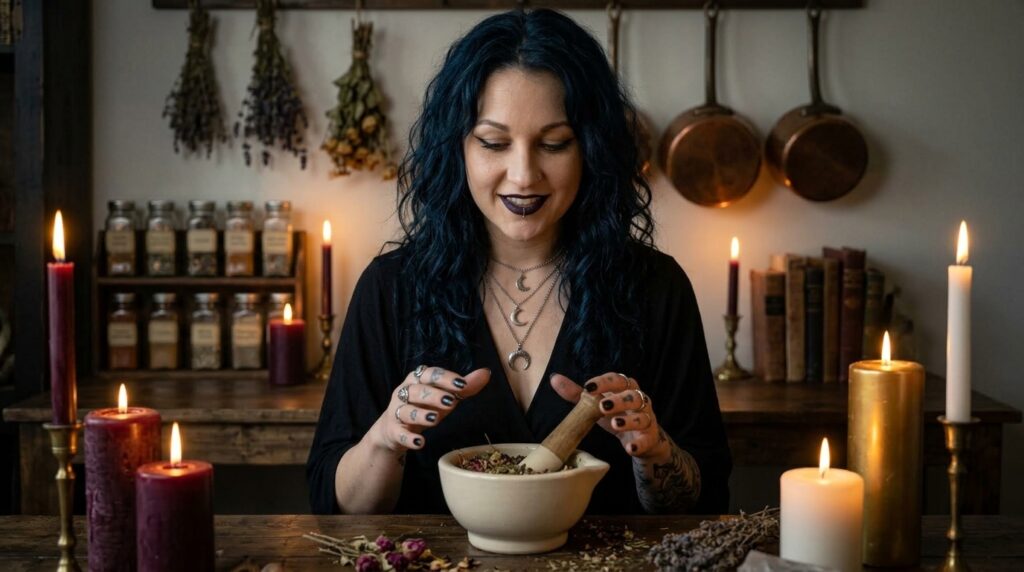
You don’t need a black cauldron or a candlelit altar to practice real magic. If your kitchen is where you spend an hour every evening chopping and stirring, it’s already a powerful ritual space. You just haven’t been using it that way yet.
Kitchen witchcraft takes the tools already sitting in your drawers and cabinets and puts intention behind them. No special purchases required, no secrecy, no performance. Just a shift in how you approach the everyday act of feeding yourself and the people you love.
What Is Kitchen Witchcraft?
Kitchen witchcraft is a hearth-based practice that treats cooking as ritual work. Instead of separating “spiritual” tasks from “domestic” ones, it folds them together. Stirring a pot clockwise while focusing on abundance, or chopping vegetables while silently naming what you want to release, both count as spellwork. The tradition draws on old folk magic, where the hearth was the center of the home and the person tending it was also its protector.
What makes it appealing is accessibility. You don’t need to carve out a separate hour for ritual. You fold the practice into something you’re already doing, which means it’s sustainable in a way that elaborate altar work often isn’t.
Tools You Already Own
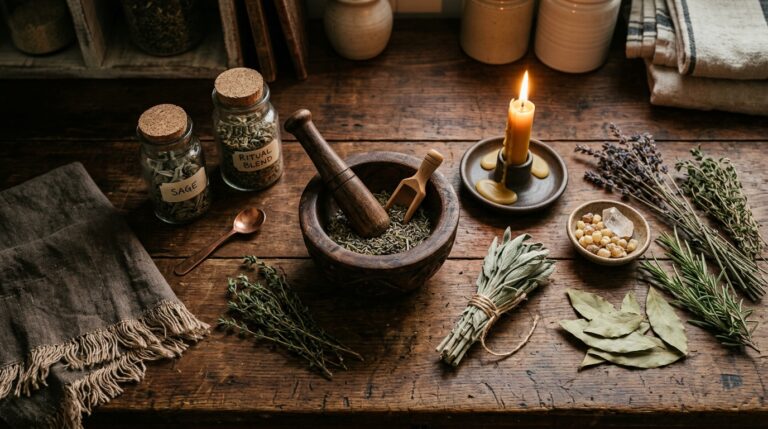
Almost everything in a standard kitchen doubles as a magical tool once you assign it intention.
Your knife becomes an athame, a tool for cutting away what no longer serves you as you dice an onion. Your wooden spoon becomes a wand, directing energy as you stir a soup toward comfort or a stew toward strength. Salt is one of the oldest protective substances in folk magic, and it’s sitting in nearly every kitchen. Sprinkle it at a threshold or add it to food for grounding. Herbs and spices carry their own associations too: basil for prosperity, rosemary for protection, cinnamon for quick action.
None of these need to be special or ceremonial. The magic comes from your attention, not from buying a new set of “witch” tools.

Setting Your Intention Before You Cook
The difference between dinner and a kitchen spell is a few seconds of focus at the start. Before you begin cooking, pause with your hands on the counter or the ingredients in front of you. Name, even silently, what you want this meal to carry: comfort for a hard week, energy for a busy one, healing for someone who’s sick.
Then let that intention guide small choices as you cook. Stir clockwise to draw something toward you, counterclockwise to send something away. Chop with intention rather than distraction. It sounds simple because it is. The ritual isn’t in complicated choreography, it’s in consistency and attention.
A Simple Kitchen Spell to Try Tonight
Here’s a beginner-friendly spell for calm, using ingredients most kitchens already have.
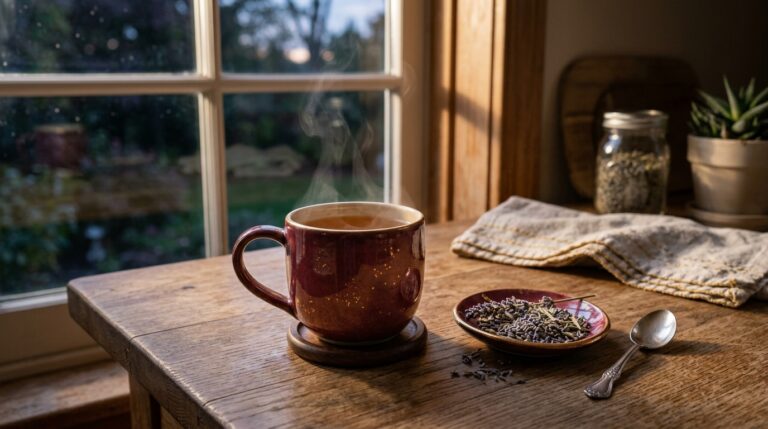
Boil water for tea and add a pinch of chamomile or lavender if you have it. As the water heats, hold your hands near the steam. Say, aloud or silently: “As this water warms, so does my mind settle.” Stir clockwise three times, picturing tension leaving your shoulders. Drink slowly, without your phone, and let the ritual end when the cup is empty.
This works because it’s repeatable. A spell you’ll actually do on a Tuesday night is more useful than an elaborate one reserved for special occasions.
Common Mistakes to Avoid
New kitchen witches often over-complicate the practice before they’ve built the habit. A few things to watch for:
Don’t wait for the “right” ingredients. Folk magic developed around whatever was on hand, not a curated shopping list. Don’t skip the intention-setting step. The focus is the spell, not the stirring itself. And don’t treat one unsuccessful attempt as proof the practice doesn’t work. Like any skill, kitchen witchcraft improves with repetition and attention, not with a single perfect try.
Kitchen witchcraft asks for nothing you don’t already own. Start with one meal this week. Pause before you cook, name your intention, and let the stirring do the rest.
Not sure where to start? You don’t have to do this alone.
Madame Celestine offers guided spellwork for beginners — real support for your first working, not just another guide to read.
Related reading: Medusa’s Spiritual Meanings: Myth and Modern Symbol · Exploring Divination Methods: Traditional and Modern Techniques: Symbolism, Tradition & Personal Practice

About Madame Celestine
Madame Celestine has practiced and taught spellwork, divination, and seasonal ritual for over two decades, helping newcomers build a grounded, confident practice from their very first spell.