
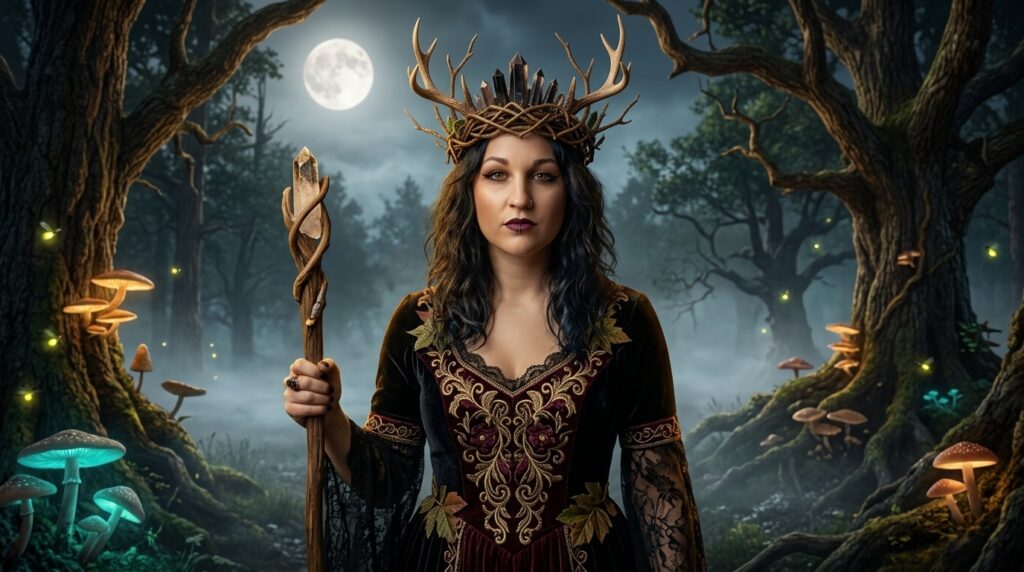
You keep circling back to the same pull — toward moonlit woods, old ballads, and stories where a crowned woman rules a realm just out of sight. Maybe you’ve read about Titania, or heard the name “Queen of Elphame” whispered in a folklore forum, and you’re not sure if you’re looking at a goddess, a fairy, or something in between. That confusion is common, because the Fairy Queen has worn dozens of names and faces across centuries of storytelling, and no single source lays out how they connect. Here’s a clear path through the archetype — where she comes from, which goddesses share her crown, and how to work with that energy in your own practice.
Who Is the Fairy Queen? Tracing an Ancient Archetype
The Fairy Queen isn’t one figure but a recurring role that folklore keeps recasting. In Irish tradition she appears as Áine or Clíodhna, sovereign women tied to specific hills and shorelines. In Scotland she’s the Queen of Elphame, a figure who shows up in witch trial testimony as the leader of a nocturnal court. English ballads like “Tam Lin” and “Thomas the Rhymer” cast her as a ruler who can bless a traveler or bind them to her realm for seven years. What links these versions is sovereignty over a liminal space — a hill, a forest, a border between dusk and night — and the power to grant favor or exact a price.
Goddesses Who Wore the Fairy Queen’s Crown
Long before “fairy” meant something small and winged, the word described powerful nature spirits, and many of them were once worshipped as goddesses. Áine, associated with midsummer and sovereignty in County Limerick, was venerated at Cnoc Áine long before she was folded into fairy lore. Clíodhna, queen of the banshees in some tellings, carries traces of an earlier sea-goddess cult. Even Shakespeare’s Titania draws on this lineage; scholars have long linked her name to Diana, the Roman goddess of the hunt and moon, suggesting the fairy court and the goddess pantheon were never fully separate ideas. Medieval clergy often blurred the line further, recording folk beliefs about nocturnal goddess-led processions as evidence of pagan survival. For a wider look at how folklore preserved these darker or more sovereign feminine figures, this guide to goddesses of darkness traces several names that overlap with fairy-queen tradition.
How the Fairy Queen Differs From Other Goddess Archetypes
It’s easy to lump the Fairy Queen in with maiden-mother-crone goddesses or generic “nature spirit” imagery, but she has a distinct signature. She rules a bordered realm rather than a broad domain like the sea or the harvest. She trades in bargains — safe passage, artistic inspiration, or a night of revelry, each carrying a cost. And she rarely appears alone; ballads and folk accounts usually place her at the head of a retinue, a court of lesser fair folk who answer to her. That combination — territory, transaction, and retinue — sets her apart from goddesses tied to a single element or life stage, and it’s worth knowing before you build a practice around her, so you approach her as a sovereign to negotiate with rather than a nurturing figure to simply call on.
Working With Fairy Queen Energy in Your Own Practice
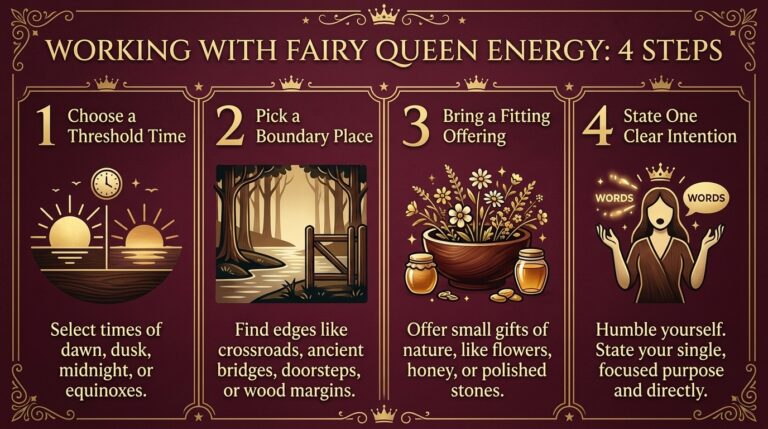
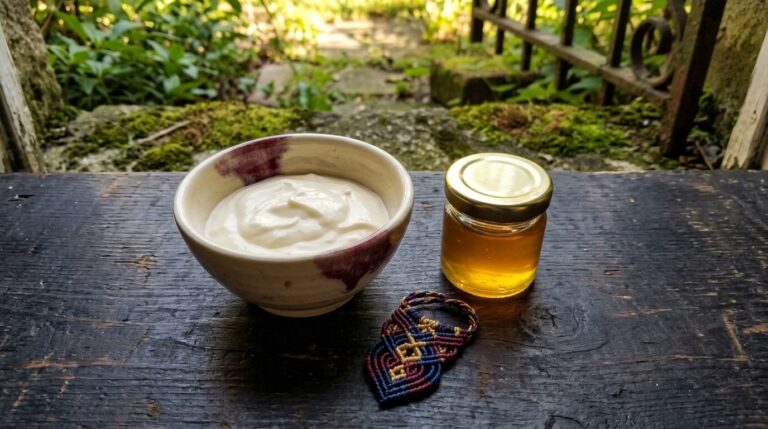
If this archetype resonates, start small and specific rather than trying to “meet the Fairy Queen” all at once. Set aside a liminal time — dusk, dawn, or the turning of a season — since fairy tradition consistently favors thresholds over midday hours. Choose a physical boundary too: a garden edge, a tree line, or a doorway you can sit near. Bring an offering that fits the old bargains, such as cream, honey, or a small handmade token, and state your intention plainly rather than asking for something vague. Speak your request once, thank the space, and leave the offering behind rather than retrieving it. Keep a short journal of what you notice afterward — a dream, a recurring bird, a shift in mood — since fairy lore treats subtle signs as real communication, not proof of nothing happening.
Belief, Intention & The Power of Magic
Witchcraft, spells, and manifestation are deeply rooted in belief, intention, and spiritual practice. If these practices do not resonate with you, this may not be the path for you, and that’s perfectly okay. But if you believe in divine powers, trust your intentions, and feel drawn to the mysteries of the unseen, we invite you to continue exploring with Madame Celestine and discover the magic that speaks to your soul.
Signs the Fairy Queen Archetype Is Calling You
Some practitioners feel drawn to this figure long before they have language for it. Recurring dreams set in forests or old estates, an unexplained pull toward Celtic ballads or Midsummer folklore, or a habit of leaving small offerings outdoors without quite knowing why can all point here. So can a fascination with bargains and thresholds in stories — doorways, crossroads, the “be careful what you wish for” plot that shows up again and again in your reading. None of these signs are proof on their own, and you don’t need all of them. Treat them as an invitation to experiment with the practice above, then judge by what actually happens when you try it.
According to Wikipedia’s overview of the Fairy Queen in folklore and literature, the figure spans Irish myth, Arthurian legend, and Shakespeare’s Titania alike, which is part of why her identity can feel so slippery to newcomers. Reading a few of the older ballads yourself is often the fastest way to get a feel for her particular tone — generous, exacting, and never quite fully knowable.
Frequently Asked Questions
Is the Fairy Queen a real goddess or just a folklore character?
Both, depending on the tradition. Figures like Áine and Clíodhna were venerated as goddesses in early Irish belief before later folklore recast them as fairy royalty, so the line between “goddess” and “fairy queen” is more a matter of era than of two separate beings.
Do I need Irish or Celtic ancestry to work with this archetype?
No. Ancestry isn’t a requirement for honoring a folkloric figure, though it’s respectful to learn the cultural context behind the names and stories you’re drawing on rather than treating them as generic fantasy imagery.
What offerings suit the Fairy Queen best?
Traditional folklore points to simple, natural gifts — cream, honey, baked goods, or a handmade token left at a threshold. Avoid anything metallic, since iron and fairy tradition are famously at odds.
Is it dangerous to try to contact the Fairy Queen?
Older ballads treat her court with real caution, so approach the practice with clear boundaries and a specific intention rather than an open-ended invitation. Most modern practitioners report the encounter as neutral to positive when approached this way, but respect for the tradition matters.
How is the Fairy Queen different from a guardian angel or spirit guide?
She isn’t framed as a protector by default. Folklore treats her as a sovereign figure who trades favor for offering or respect, which asks for a more reciprocal approach than the one-directional help often associated with guides or angels.
Can the Fairy Queen archetype fit into an existing Wiccan or pagan practice?
Yes, many practitioners incorporate her as one goddess-adjacent figure among several, particularly around Midsummer and threshold sabbats, without needing to restructure an existing practice around her alone.
Not sure where to start? You don’t have to do this alone.
Madame Celestine offers guided spellwork for beginners — real support for your first working, not just another guide to read.
Related reading: Sacred Spiral: Meaning of the Ancient Symbol of the Goddess: Symbolism, Interpretation & Ritual Practice · Exploring 11 Goddesses of Darkness: Sacred Names for Spirits of the Dark: Symbolism, Tradition & Personal Practice

About Madame Celestine
Madame Celestine has practiced and taught spellwork, divination, and seasonal ritual for over two decades, helping newcomers build a grounded, confident practice from their very first spell.