
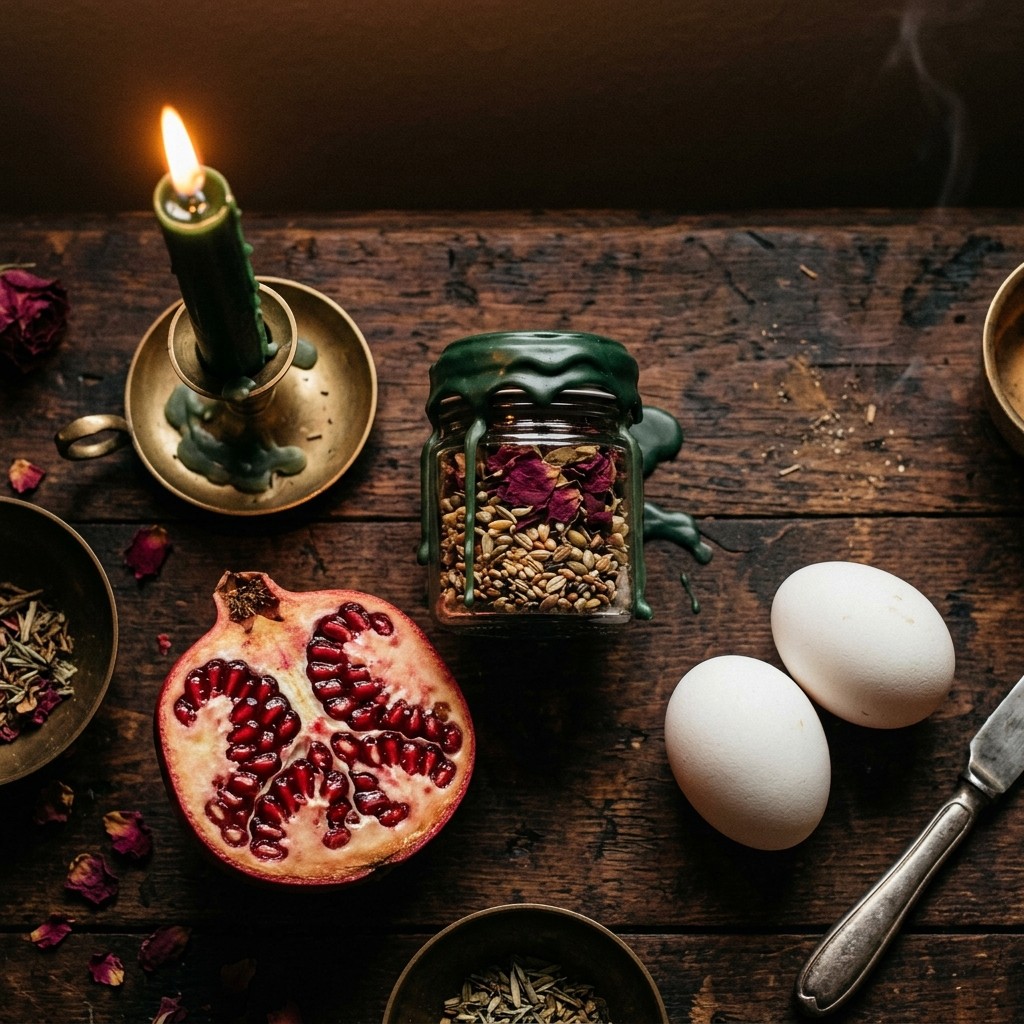
Pregnancy spells answer one of the most tender hopes a person can carry. If you are longing for a child, you may wonder what people did with that same wish long before modern medicine. This guide walks through fertility rituals from Rome, Egypt, Ireland, China and the Hebrew Bible. Then it shows how those old patterns shape a modern fertility spell jar. Finally, it clears up a common mix-up and explains, plainly, what no spell can promise.
- Struck With Goatskin: Rome’s February Fertility Rite
- Mandrake Roots and Pomegranate Seeds: Plants of Promise
- The Guardian Goddesses Behind Old Pregnancy Spells
- Ask, Guard or Borrow: Three Shapes of Pregnancy Spells
- How to Make a Fertility Spell Jar, Step by Step
- Candle Pregnancy Spells and the Candlesticking Mix-Up
- Fertility Spells for Someone Else: Ask Them First
- What Pregnancy Spells Can Hold, and What They Can’t
- Frequently Asked Questions
- References
Struck With Goatskin: Rome’s February Fertility Rite
Every year on February 15, Rome held a festival called Lupercalia. First, priests sacrificed animals. Then they cut thongs from the skins and ran in two bands around the Palatine Hill. As they ran, they struck at any woman who came near them. Romans believed a blow from the thong would make a woman fertile.[1]
It sounds harsh to modern ears. However, the logic behind it is worth noticing. The thong came from an animal just offered to the gods, so it seemed to carry the life of that offering. Women stepped forward on purpose, because being touched was the whole point.
In other words, this was not a private rite whispered alone at night. Instead, it was loud and public, and the whole city took part. That is easy to forget today, since many people now keep pregnancy spells secret. So Rome offers a gentle reminder. Hope for a child has often been held by a community, not carried by one person alone.
Mandrake Roots and Pomegranate Seeds: Plants of Promise
Plants appear again and again in old fertility magic. Two stand out because their stories are so well recorded.
The first is the mandrake. In Genesis 30, Rachel lets her sister Leah spend a night with their husband Jacob in exchange for mandrakes. Scholars read these roots as supposed fertility aids. The Hebrew word for them, dudaim, is likely related to the word for “beloved.” Also, the forked roots look a little like tiny human figures, which is why many in the ancient world linked them to birth.[2]
Yet here is the detail most readers miss. Rachel gets the mandrakes, but it is Leah who conceives next.[2] Even this ancient story does not treat the plant as a sure thing.
The second plant is the pomegranate. In ancient Greece, its deep red color and many seeds made it a symbol of abundance and fertility. For example, the Archaeological Museum of Thessaloniki holds a clay pomegranate from the 5th century BC. It was found in the grave of a young woman at Sindos.[3] The fruit also appears in the myth of Persephone, who ate its seeds in the underworld.
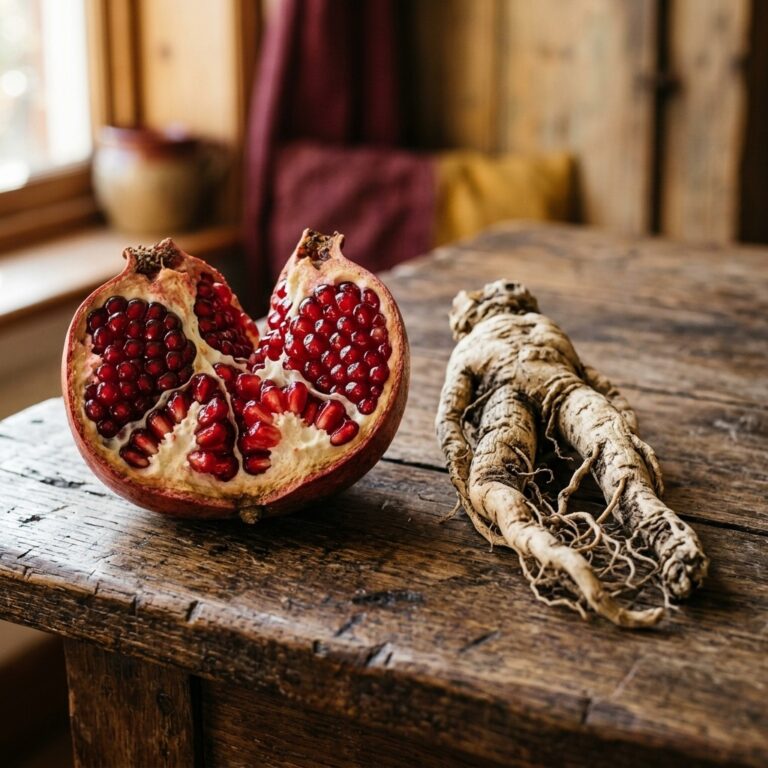
Both plants show the same idea at work. People looked for something that already seemed full of life. Then they hoped some of that life would pass to them.
The Guardian Goddesses Behind Old Pregnancy Spells
In ancient Egypt, the goddess Taweret looked fierce on purpose. She was a pregnant hippopotamus with a crocodile’s tail and a lioness’s hands and feet. Pregnant and nursing women wore her amulets to protect themselves and their babies from evil spirits. Her image also appeared on beds, stools and headrests, so she watched over the home itself.[4] In a sense, she was the closest thing Egypt had to a maternity spell. She did not bring a pregnancy. Instead, she guarded one that had begun.
In China, people prayed to a form of the bodhisattva Guanyin called Songzi Guanyin, the Child-Giving Guanyin. This form developed during the Ming dynasty. The Lotus Sutra says she grants children of either sex, depending on the mother’s wishes. In practice, though, families most often asked for sons, because only men could enter government service.[5] That detail matters. Fertility prayers have always carried the pressures of their own time.

In Ireland, St Brigid’s Day falls on February 1. It grew from the older Celtic festival of Imbolc, which the National Museum of Ireland calls a festival of new life and fertility. Families hung Brigid’s crosses so she would bless homes and farms as she passed through the land on the eve of her feast. They also left a cloth, the Brat Bríde, outside for her to touch. Afterward, people believed it could ward off illness and pain.[6]
Ask, Guard or Borrow: Three Shapes of Pregnancy Spells
Put side by side, these traditions share a clear pattern. Almost every one takes one of three shapes. This grouping is an analysis, not a formal system, but it can help you choose where to start.
| Shape | What it does | Old examples | Best suited to |
|---|---|---|---|
| Ask | Petition a deity or saint | Songzi Guanyin; Brigid at Imbolc | Hoping to conceive |
| Guard | Protect what has begun | Taweret amulets; blessed crosses in the home | During pregnancy |
| Borrow | Take on the life of something fertile | Mandrake root; pomegranate seeds; Lupercalia thongs | Focusing a daily intention |
Here is why this matters. Many people reach for a pregnancy spell without asking what they need right now. If you are still hoping to conceive, the Ask and Borrow shapes fit best. On the other hand, if you are already pregnant, a guarding practice in the spirit of Taweret makes more sense than more asking.
Also, notice the timing. Both Imbolc and Lupercalia fall in the first half of February, as northern winter starts to loosen. So if you like seasonal timing, early February has old roots for this work. Finally, most modern practice blends the shapes. A fertility spell jar, for example, borrows life from seeds and can also hold a written request.

How to Make a Fertility Spell Jar, Step by Step
A fertility spell jar is a modern folk practice. It gathers symbols of growth in one sealed container that you keep near your bed or altar. Here is a simple version, with the reason behind each step.
- Choose a small glass jar with a lid. Clear glass lets you see what is inside, so the intention stays in view.
- Add seeds first. Pomegranate, sunflower or sesame seeds all work. Seeds are the plainest symbol of life waiting to begin, the same logic as the Greek pomegranate.
- Add a few gentle herbs. Rose petals stand for love, and a pinch of cinnamon adds warmth. Keep it simple, because these are symbols, not medicine.
- Write your wish on a slip of paper. Some witches draw a sigil instead, which is a symbol built from the letters of a wish. Then fold the paper toward you to draw the wish in.
- Seal the jar with wax. Drip wax from a white or green candle over the lid. This closes the working and marks it as complete.
- Keep it where you will see it daily. Each time you notice it, pause and breathe with your intention for a moment.
Many modern witches build their jar during a waxing moon, because the growing moon mirrors the growth they hope for. However, there is no single correct night. Instead, choose a time when you feel calm and unhurried.
One common mistake is worth avoiding. Don’t put anything in the jar you might later be tempted to eat or drink. Also, if you are pregnant or trying, check with your doctor before taking any herb by mouth.
Belief, Intention & The Power of Magic
Witchcraft, spells, and manifestation are deeply rooted in belief, intention, and spiritual practice. If these practices do not resonate with you, this may not be the path for you, and that’s perfectly okay. But if you believe in divine powers, trust your intentions, and feel drawn to the mysteries of the unseen, we invite you to continue exploring with Madame Celestine and discover the magic that speaks to your soul.
Candle Pregnancy Spells and the Candlesticking Mix-Up
Candle work is one of the simplest pregnancy spells. First, choose a candle color. Green often stands for growth, white for new beginnings and pink for tenderness. Then carve a word or symbol into the wax, rub it with a little oil, and light it while you state your intention. Many practitioners burn it in short sessions over several nights, because returning to it keeps the wish alive.
You may also see the phrase “candlesticking to get pregnant.” Despite the name, it has nothing to do with candle magic. It is a folk tip from trying-to-conceive forums about lying with your legs raised after sex, like the yoga pose sometimes called “the candle.” So it is a physical habit, not a spell, and questions about it belong with your doctor.
Fertility Spells for Someone Else: Ask Them First
Many people want to cast fertility spells for someone else, such as a sister, a friend or a daughter. The wish is loving. Still, pregnancy is deeply personal. Some people are trying hard and would welcome support. Others are grieving, undecided, or not trying at all.
So ask first, and ask gently. If they say yes, offer a blessing for their well-being rather than a working aimed at their body. For example, you might light a candle for them or give them a jar of seeds to keep. Let them choose how involved they want to be. If they say no, respect it fully. After all, the older rites in this guide were shared openly, as Lupercalia shows, not worked on people in secret.
What Pregnancy Spells Can Hold, and What They Can’t
No spell can make a baby happen. That is true today, and the story of Rachel and Leah hints that people sensed it long ago. What pregnancy spells can do is give your hope a shape. They can mark a new chapter, bring a partner into a shared moment, or offer a small daily practice while you wait.
So treat pregnancy magic as a companion to medical care, never a replacement. If you have been trying for a while, a doctor or fertility clinic can look for causes no ritual can reach. Also, be wary of anyone who sells pregnancy spells with a guaranteed result, because honest practitioners never promise one. For a closer look at that balance, read what a fertility ritual can and can’t promise.
Frequently Asked Questions
Are there pregnancy spells that work?
No spell can guarantee a pregnancy, and honest practitioners never promise one. People use pregnancy spells to focus hope and intention, ideally alongside medical care.
What goes in a fertility spell jar?
Most jars hold seeds, such as pomegranate or sunflower, plus gentle herbs like rose petals and a written wish. The jar is then sealed with candle wax and kept where you see it daily.
Can I cast pregnancy spells for someone else?
Only with their clear consent, because pregnancy is deeply personal. If they agree, a blessing for their well-being is kinder than a spell aimed at their body.
What is candlesticking to get pregnant?
It is a folk conception tip about raising your legs after sex, not a form of candle magic. Ask a doctor about it rather than a witch.
Is it safe to practice witchcraft during pregnancy?
Candle, jar and prayer work is generally gentle. However, don’t swallow herbs, burn heavy smoke or use essential oils without first checking with your doctor or midwife.
When is the best time for pregnancy spells?
Many modern witches cast a spell to conceive during the waxing moon, since its growth mirrors the growth they hope for. Early February, the season of Imbolc and Lupercalia, also has old links to fertility.
References
- What happens during Lupercalia?. Encyclopaedia Britannica. https://www.britannica.com/question/What-happens-during-Lupercalia
- Mandrakes, Fertility, and the Bible: Rachel, Leah, and the Legend of the Dudaim. Robert R. Cargill. Bible & Archaeology, University of Iowa. https://bam.sites.uiowa.edu/articles/swapping-sex-drugs-mandrake-mythology-and-fertility-genesis-30
- Clay pomegranate, a symbol of abundance, fertility and eternal life. Archaeological Museum of Thessaloniki. https://www.amth.gr/en/exhibitions/exhibit-of-the-month/2101
- The Goddess Taweret: Protector of Mothers and Children. Jennifer Houser Wegner, 30 September 2014. Glencairn Museum. https://www.glencairnmuseum.org/newsletter/september-2014-the-goddess-taweret-protector-of-mothers-and.html
- Songzi Guanyin, Bodhisattva Avalokiteshvara as the Bestower of Children. Embodying Compassion, Vassar College. https://pages.vassar.edu/embodyingcompassion/2014/09/24/image-11/
- St Brigid’s Day was an important Irish festival in folk tradition, celebrating fertility, blessings and protection. Clodagh Doyle. National Museum of Ireland. https://www.museum.ie/en-IE/News/2023/St-Brigids-Day
Not sure where to start? You don’t have to do this alone.
Madame Celestine offers guided spellwork for beginners — real support for your first working, not just another guide to read.
Related reading: Why Manifestation Isn’t Working Yet: Common Blocks · Confidence Spell for Job Interviews: Calming Pre-Interview Nerves

About Wren Ashby
Wren Ashby is the pen name our editorial team uses for articles on sigils, Tarot and modern traditional witchcraft. Articles under this byline are researched from published sources and reviewed by Madame Celestine before publishing.