
A reconciliation candle spell is one of the most searched-for workings in love magic. After a fight or a breakup, the silence can feel louder than the argument did. If you’re wondering whether a candle and a photo can help two people find their way back, this guide walks through it honestly. You’ll learn what the spell is meant to do, where the photo comes from in magical tradition, the full seven-night method, and what other cultures teach about making peace.
- What a Reconciliation Candle Spell Is Really For
- Why a Reconciliation Candle Spell Uses a Photo
- Before You Light Anything: An Honest Check
- How to Cast a Reconciliation Candle Spell With a Photo
- How Other Traditions Make Peace After a Rift
- Timing Your Reconciliation Candle Spell: Colors, Moon and Variations
- After the Last Candle: Reaching Out or Letting Go
- Frequently Asked Questions
- References
What a Reconciliation Candle Spell Is Really For
“Reconcile” comes from the Latin reconciliare, built from re-, meaning “again,” and conciliare, meaning “make friendly”[1]. So at its root, reconciliation means bringing people together again after a rift. It doesn’t mean making someone stay.
That difference shapes how many modern witches approach spells for reconciliation. They aim the work at softening, which means easing anger, opening a door and making a calm conversation more likely. A binding, by contrast, tries to lock someone in place. This ritual belongs to the first group. Practitioners believe it works on the mood around a relationship, and it leaves the other person’s choice with them.
In practice, then, a reconciliation love spell is partly a spell on yourself. It asks you to cool your own hurt and get clear on what you’d say if the door opened. For that reason, many witches see it as the gentlest of the love spells, and also the one that most needs honesty.
Why a Reconciliation Candle Spell Uses a Photo
Photos turn up in a reconciliation candle spell for a reason that’s far older than cameras. In 1890, the anthropologist James George Frazer published The Golden Bough, and in it he described two principles he saw across folk magic. The first is that “like produces like,” so an image can stand in for the person it shows[2]. The second is that things once in contact keep acting on each other at a distance[2].
Frazer’s own framing is dated, and many scholars have criticized it since. Still, his two principles explain the photo neatly. A picture of the two of you is an image of the bond itself. And if it was taken on a happy day, it also carries the memory of when things were easy between you.

So choose the photo with care. A shared photo from a good moment works best. If you don’t have one together, place two separate photos side by side. Avoid pictures from tense days, because practitioners believe the image carries the mood it captured.
Before You Light Anything: An Honest Check
Not every rift needs a reconciliation candle spell. Before a rebuilding relationship spell, ask yourself a few plain questions. Was the relationship good for both of you? Did it end over a misunderstanding, or over something that would happen again? And could you accept it if the answer stays no?
If those questions are hard to answer, the guide to deciding between reconciliation and release can help you sort it out. It’s also worth reading about why some exes come back and others don’t, since timing and distance matter as much as feelings.
If the relationship involved abuse or fear, skip this spell entirely. Reconciliation magic is for rifts between people who were safe together.
How to Cast a Reconciliation Candle Spell With a Photo
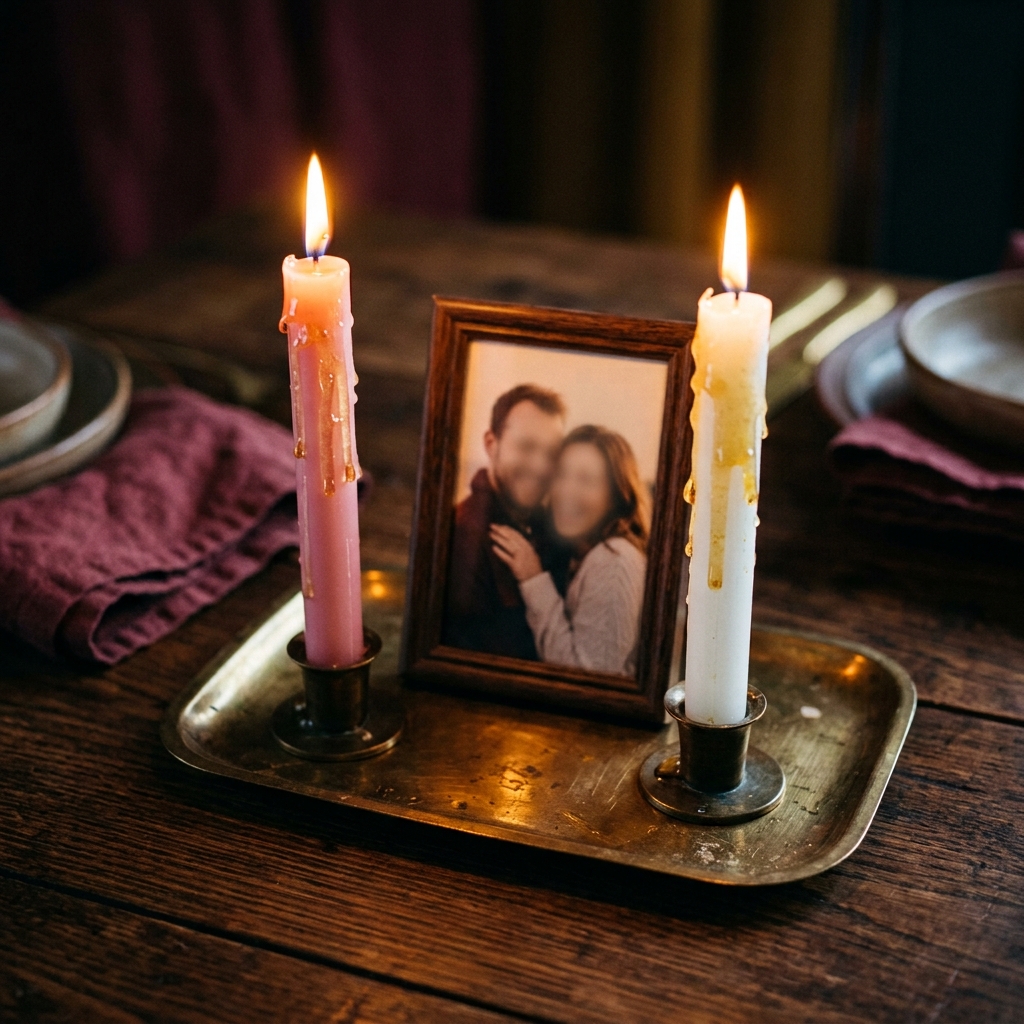
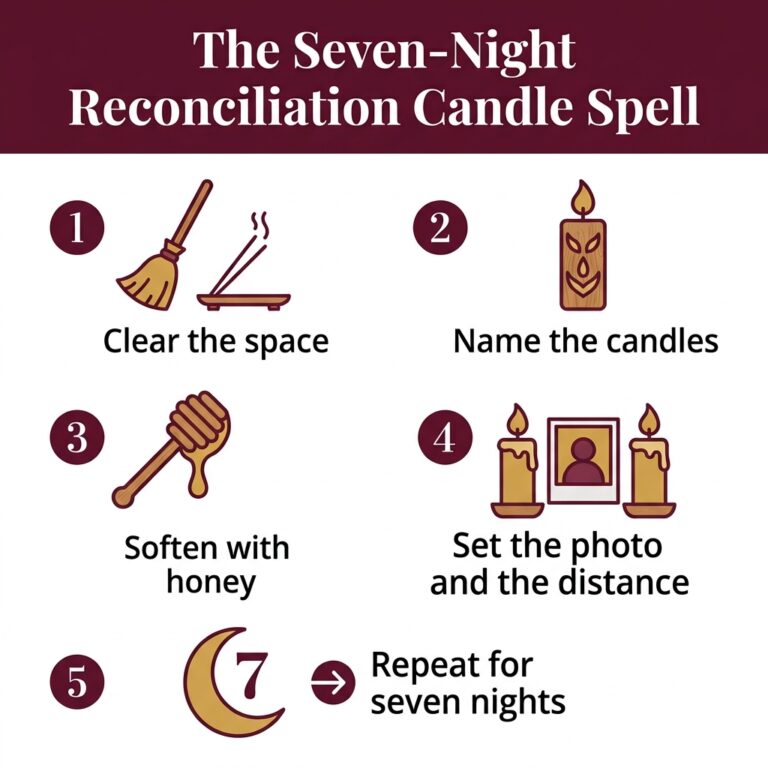
To cast a reconciliation candle spell, place a photo of you both between two candles, one for each person. Carve each name into its candle and dress both with honey. Then burn them for a few minutes each night for seven nights, moving them slightly closer every time. On the last night, let them touch and burn down safely.
You’ll need two small taper candles (pink or white), a photo, a little honey, a pin for carving, a fireproof tray and a lighter. Here are the steps:
- Clear the space. Tidy a table and set the tray on it. Many witches cleanse with incense or a bowl of salt water first, so the work starts fresh.
- Name the candles. Carve your name into one candle and the other person’s name into the second. Some add the word “peace” under each name.
- Soften with honey. Rub a thin layer of honey on both candles. In folk magic, honey sweetens a situation, which is why practitioners call this the softening step.
- Set the photo and the distance. Prop the photo between the candles, about a hand’s width from each. Then light both and speak your intention, such as “Let the anger ease between us, and let us talk again in peace.”
- Repeat for seven nights. Burn the candles for a few minutes, then snuff them out. Each night, move both a little closer to the photo. On the seventh night, let them touch, and stay with them until they burn down.
Never leave a burning candle alone, and keep the photo out of the flame’s reach. Afterward, store the photo in a drawer or a book rather than burning it. That way the work stays gentle and easy to undo.
Belief, Intention & The Power of Magic
Witchcraft, spells, and manifestation are deeply rooted in belief, intention, and spiritual practice. If these practices do not resonate with you, this may not be the path for you, and that’s perfectly okay. But if you believe in divine powers, trust your intentions, and feel drawn to the mysteries of the unseen, we invite you to continue exploring with Madame Celestine and discover the magic that speaks to your soul.
How Other Traditions Make Peace After a Rift
Witchcraft isn’t the only tradition with a ritual for repairing broken bonds. In Hawaii, families have long practiced ho’oponopono, a way of “making things right” through gathering together. Mary Kawena Pukui, the Hawaiian scholar who helped preserve it, described her family airing every grudge until they “forgave and were forgiven”[3].
Jewish tradition sets a similar task before Yom Kippur, the Day of Atonement. According to the Mishnah, the day atones for wrongs against God, but wrongs against another person need that person’s forgiveness first[4]. The Talmud also adds a limit: you shouldn’t ask a friend for forgiveness more than three times[4].
Modern relationship research lands somewhere nearby. The Gottman Institute calls small peace-making gestures “repair attempts,” meaning anything that stops negativity from spiralling during conflict. In Dr. John Gottman’s research, couples whose repair attempts keep failing face an unhappy future[5].
| Tradition | Who acts first | Built-in limit |
|---|---|---|
| Ho’oponopono | Each person names their own grudge | Done together, with the whole family present |
| Yom Kippur custom | The person who did wrong asks | Ask no more than three times |
| Gottman repair attempts | Either partner, mid-conflict | Works only if the other person accepts it |
| Candle and photo spell | You, by softening your own hurt | Seven nights, then one real step |
Put side by side, these traditions share two habits. First, the person seeking peace does their own part before anything else. Second, each one stops somewhere and leaves room for the other person’s answer. Read that way, a reconciliation candle spell works best as preparation for your own repair attempt. The seven nights soften you, and the eighth day is for one honest message. If that message meets silence, the traditions suggest you’ve done your part.
Timing Your Reconciliation Candle Spell: Colors, Moon and Variations
Pink is the usual candle color for romantic reconciliation spells because practitioners link it with tender affection. White works for any relationship, since it stands for peace and a clean slate. Some witches use one of each, one candle per person.
Timing matters to many practitioners, too. A waxing moon, when the visible moon grows each night, is a popular choice for spells that draw something closer. So starting a reconciliation candle spell about a week before the full moon lets the seven nights follow that growth.
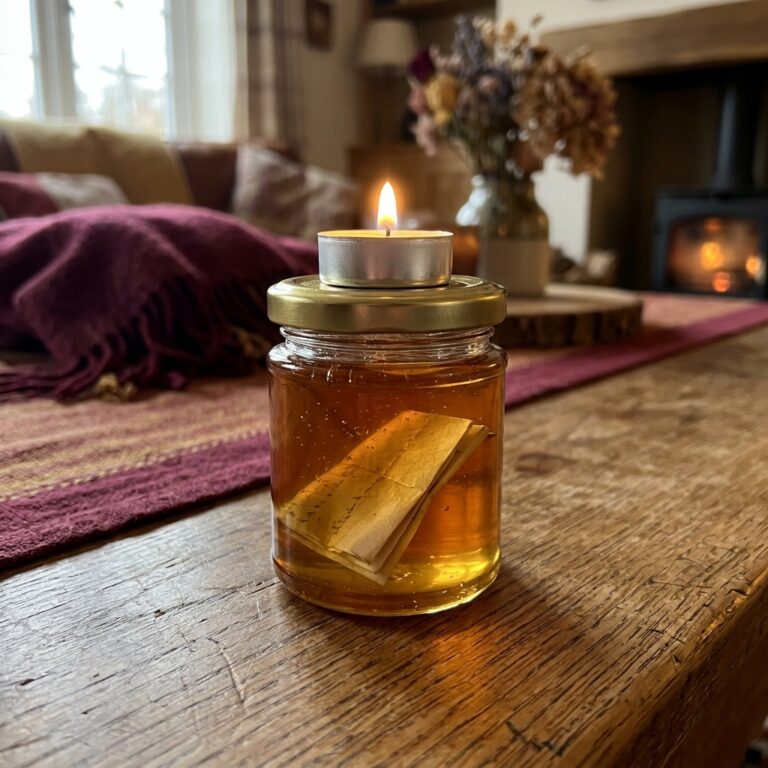
If a full reconciliation candle spell feels like too much, try a simple softening spell instead. Write both names on a small piece of paper, fold it toward you, and drop it into a small jar of honey. Then, each evening, light a tea light on the lid while you picture a calm conversation. Many witches use this version for friends and family, too, since spell reconciliation work isn’t only for lovers.
After the Last Candle: Reaching Out or Letting Go
Once the last candle of your reconciliation candle spell burns out, the practical part begins. If it feels right, send one short, kind message. Own your part in the rift, and don’t demand an answer. The guide to reopening a stalled conversation has ideas for what to say and what to avoid.
Then give it time. If the reply is warm, take things slowly. If it’s a no, or nothing at all, the kindest next step may be a release ritual for heartache. Choosing release shows the same respect for the other person’s choice that every tradition above builds in.
Frequently Asked Questions
Do reconciliation spells work?
Practitioners believe a reconciliation spell can soften anger and make a conversation more likely. It can’t override another person’s free will, and results depend a great deal on what happens after the spell.
Can a reconciliation spell backfire?
Because a reconciliation candle spell aims at softening and avoids binding, there is little to backfire. The main risk is emotional: if you cast while desperate, you may push too hard afterward and make things worse.
Is a spell for reconciliation ethical?
Witches disagree on this. Many accept spells that ease tension and open communication, but they avoid spells that try to force someone to return or stay.
How long does a reconciliation candle spell take?
The ritual itself takes seven nights. Practitioners usually suggest waiting several weeks after that before judging the outcome, and acting on the relationship in the meantime.
What if my ex is with someone else?
Most practitioners advise against reconciliation magic in that case. Instead, a release or self-love working is the usual recommendation.
Can I use a reconciliation spell for a friend or family member?
Yes. Use white candles instead of pink, and keep the spoken intention focused on peace and calm conversation.
References
- Reconcile: Etymology, Origin & Meaning. Online Etymology Dictionary. https://www.etymonline.com/word/reconcile
- The Golden Bough, Chapter 3: Sympathetic Magic. James George Frazer, via Internet Sacred Text Archive. https://www.sacred-texts.com/pag/frazer/gb00301.htm
- Ho’oponopono: Traditional Ways of Healing to Make Things Right Again. University of Hawai’i Curriculum Research & Development Group. https://crdg.hawaii.edu/products/wp-content/uploads/2019/07/sample_ho_oponopono.pdf
- The Laws and Practices of Erev Yom Kippur. Rav David Brofsky, Torat Har Etzion, September 21, 2014. https://www.etzion.org.il/en/halakha/orach-chaim/holidays/laws-and-practices-erev-yom-kippur
- R is for Repair. Zach Brittle, The Gottman Institute, September 3, 2014. https://www.gottman.com/blog/r-is-for-repair/
Not sure where to start? You don’t have to do this alone.
Madame Celestine offers guided spellwork for beginners — real support for your first working, not just another guide to read.
Related reading: Self-Love Spell: A Daily Ritual for Worth and Care · Free Love Spells Without Ingredients: Words and Intention Only

About Wren Ashby
Wren Ashby is the pen name our editorial team uses for articles on sigils, Tarot and modern traditional witchcraft. Articles under this byline are researched from published sources and reviewed by Madame Celestine before publishing.