
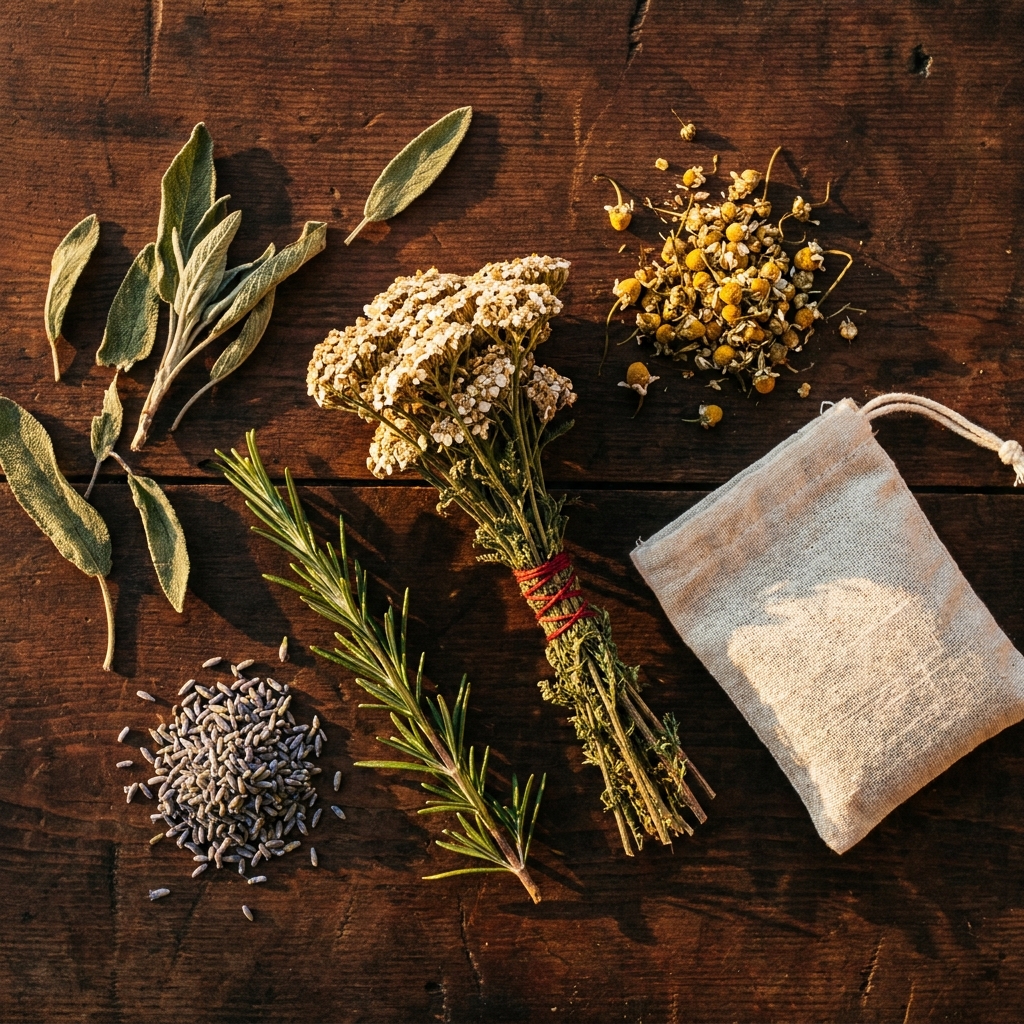
Herbal healing spells usually start with a hard, simple question: when someone you love is unwell, what can you do besides wait? Many modern witches answer it the old way, with a plant in hand and a clear intention. This guide walks through seven herbal rituals whose roots are far older than Wicca. For each one, you’ll learn where the herb’s reputation came from and how to use it as spiritual support alongside proper medical care.
- What Herbal Healing Spells Actually Do (and What They Don’t)
- Before Herbal Healing Spells: Gather and Prepare Your Herbs
- Rituals 1 to 3: Sage, Yarrow and Chamomile for Recovery
- Rituals 4 and 5: Lavender and Rosemary for Rest and Grief
- Rituals 6 and 7: The Nine Herbs Charm and the Elder Mother
- Choosing Herbal Healing Spells by Need: A Decision Guide
- Common Mistakes With Herbal Healing Spells
- Frequently Asked Questions
- References
What Herbal Healing Spells Actually Do (and What They Don’t)
Wicca itself is a 20th-century religion. So when a Wiccan or pagan healing spell calls for sage or yarrow, it is borrowing from much older kitchen, garden and folk-medicine traditions. The herbs came first. The ritual framing came later.
In practice, herbal healing spells are acts of focus and care. Practitioners believe each plant carries a quality, often tied to its old reputation. Working with the plant gives an intention something physical to hold on to. For example, a sage leaf in a pocket is meant as a daily reminder of a wish for health, not as a dose of anything.
These rituals sit beside a doctor’s care, never in place of it. Because of that, none of the seven below asks you to eat or apply an herb as a treatment. The one exception is an ordinary cup of tea. If you want the wider story of spoken charms and village healers, the companion piece on how folk healing charms worked covers that history.
Before Herbal Healing Spells: Gather and Prepare Your Herbs
A few minutes of preparation prevents most of the problems people run into with herbal healing spells. Work through these steps before any of the seven rituals.
- Know exactly which plant you have. Buy dried culinary herbs from a grocer or a reputable herb supplier. Only harvest wild plants you can identify with certainty, because several look alike.
- Dry fresh herbs completely. Damp leaves sealed in a jar can grow mold within days, and a moldy jar works against the whole intention.
- Write one clear intention. Keep it to a single sentence, such as “rest and steady recovery for my mother.” A narrow wish is easier to hold than a vague one.
- Ask before working for someone else. If the person can be asked, ask them first. Then respect the answer.
- Keep smoke out of shared air. Burning herbs is optional. Also, smoke can bother pets, children and anyone with breathing problems, so every ritual here works without fire.
Rituals 1 to 3: Sage, Yarrow and Chamomile for Recovery
These first three herbal healing spells focus on the body: getting well, mending and calming down. Each one uses a herb you can find in an ordinary shop.
1. The Garden Sage Pocket Charm
Sage’s name is a clue to its past. The English word comes from Latin salvia, which grew from salvus, meaning “healthy.” The plant was named for the healing and preserving powers people once credited it with.[1]
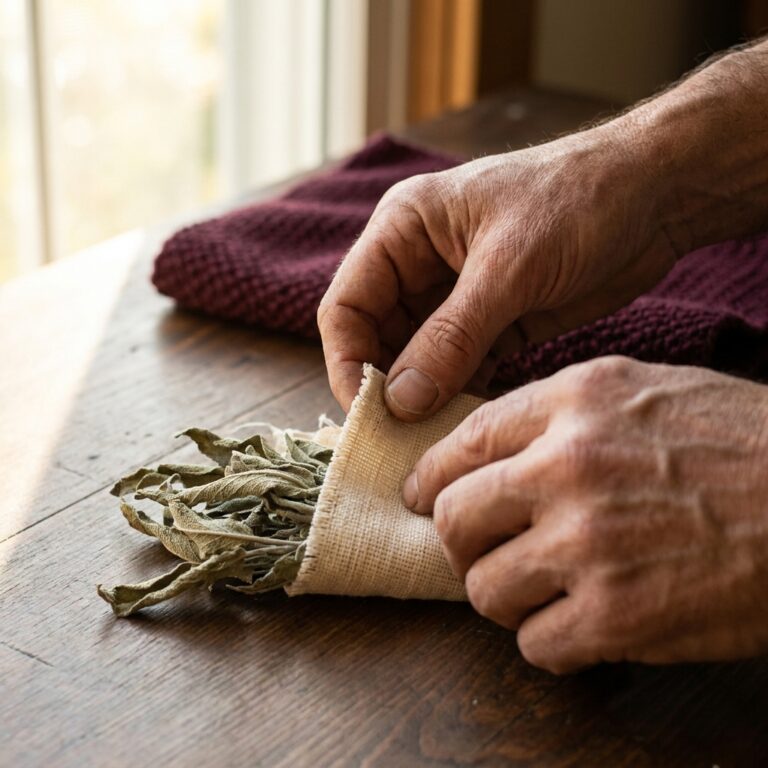
For this ritual, take three dried leaves of common garden sage (Salvia officinalis), the kind sold for cooking. First, hold them and say the intention aloud. Then fold them into a small square of cotton and tie it shut. The person it is for keeps the charm in a pocket or under a pillow.
Garden sage is enough here, so there’s no need to buy white sage (Salvia apiana), a different plant altogether. This guide to alternatives to white sage explains why many practitioners have switched. Once a week, swap in fresh leaves and return the old ones to the soil.
2. Yarrow and Red Thread for Closing a Wound
Yarrow earned its reputation on the battlefield, at least in legend. The Greek physician Dioscorides called it “Achilles’ woundwort.” In 1650, the English herbalist Nicholas Culpeper wrote that it “stauncheth bleeding.” One of its old folk names is Soldier’s Woundwort.[2]
Modern practitioners keep that symbolism and leave the first aid to medicine. So the ritual is purely symbolic. Tie a small bundle of dried yarrow with red thread, wrapping it once for each day since the injury or surgery. Then set it on a windowsill or altar. The thread stands for the edges of a wound drawing together.
Don’t press yarrow onto broken skin, though. The same source notes that the leaves can cause dermatitis and that the plant should be avoided in pregnancy.[2]
3. A Chamomile Cup for Calm
Chamomile is the gentlest of the seven. Its name comes from the Greek khamaimelon, “earth apple,” a name it got for its scent.[3] Crush a dried flower head between your fingers and the apple note is easy to find.
The ritual is simple. Brew a cup of plain chamomile tea and hold it in both hands while it cools a little. Then speak the intention over the steam before you drink. Practitioners use this at the end of a hard day, when the healing needed is calm rather than cure. However, anyone who is pregnant, takes regular medication or has plant allergies should check with a doctor or pharmacist before drinking herbal teas.
Rituals 4 and 5: Lavender and Rosemary for Rest and Grief
Not every healing ritual is about the body. In fact, one of the most common requests in online witchcraft groups is for herbs to help with grief or a broken heart. These two herbal healing spells answer that need.
4. The Lavender Sleep Pouch
Lavender belongs in the bedroom more than on the altar. Its scent is a familiar one in linen cupboards and sleep sachets, so this ritual follows that habit. Use English lavender (Lavandula angustifolia) if you can find it. Fill a small cotton pouch with a tablespoon of dried lavender buds. Next, add a slip of paper with one word on it, such as rest, ease or sleep, and tie the pouch closed.
Place it inside the pillowcase rather than on top, so the scent stays faint. Each night before bed, squeeze the pouch gently and say the word once. When the scent fades after a few weeks, refresh the buds. If you’d rather work with a scented oil, this guide to making your own spell oils explains how to infuse dried lavender.
5. A Rosemary Sprig for Remembrance
Rosemary’s link to memory is old enough that Shakespeare could count on his audience knowing it. In Hamlet, Ophelia says, “There’s rosemary, that’s for remembrance.” The Royal Horticultural Society notes that the herb is particularly associated with remembering the dead.[4]
That makes rosemary a natural choice for grief. Place a fresh sprig beside a photograph of the person who has died. Then, once a day for seven days, touch the sprig and say one specific memory of them out loud. On the last day, bury the sprig in a garden or a pot of soil.
The seven days give grief a daily shape with a clear end, so the ritual has a finish line even when the loss does not.
Rituals 6 and 7: The Nine Herbs Charm and the Elder Mother
The last two herbal healing spells come from English and British folklore. Both carry old rules about how to work with plants at all.
6. A Count-of-Nine Herb Blessing
The oldest source behind these herbal spells for healing is an Anglo-Saxon poem now called the Nine Herbs Charm. It was recorded in the tenth century in a medical collection known as the Lacnunga. That collection survives in Harley MS 585 at the British Library.[5]
The herbs it names are sometimes listed as mugwort, plantain, lamb’s cress, betony, chamomile, nettle, crab-apple, chervil and fennel. The poem presents them as a remedy against poison. One verse even has the god Woden taking nine “glory-twigs.”[5] Woden is far from the only god tied to medicine, and the list of deities of health and healing spans many cultures.
The original was a medical recipe, and nobody should try to recreate it as one. Its structure, however, is easy to borrow. Gather nine pinches of dried herbs, either nine different kinds from your kitchen or nine of a single herb. Then place them into a bowl one at a time, naming each herb aloud and saying what you hope it brings. When all nine are in, stir them clockwise and scatter them outdoors. Counting slows you down, so the intention gets spoken nine times instead of once.

7. Asking the Elder Mother First
Elder comes with one of the clearest rules in British plant lore. According to the Woodland Trust, a dryad called the Elder Tree Mother was said to live in its branches. Anyone who wanted to cut its wood had to ask her permission first. Skip that step, and she might follow and haunt you. Rowan had a similar guard: in Scotland there was a strong taboo against cutting one down.[6]
This ritual keeps that permission at its center. Before picking elderflowers or a few leaves for a healing jar, stand at the tree and say why you want them. Wait a moment before you cut. Then take only a little, and leave the rest for the tree and the birds. These pieces are for jars and altars only, not for eating. For practitioners, that restraint is part of the healing work.
Belief, Intention & The Power of Magic
Witchcraft, spells, and manifestation are deeply rooted in belief, intention, and spiritual practice. If these practices do not resonate with you, this may not be the path for you, and that’s perfectly okay. But if you believe in divine powers, trust your intentions, and feel drawn to the mysteries of the unseen, we invite you to continue exploring with Madame Celestine and discover the magic that speaks to your soul.
Choosing Herbal Healing Spells by Need: A Decision Guide
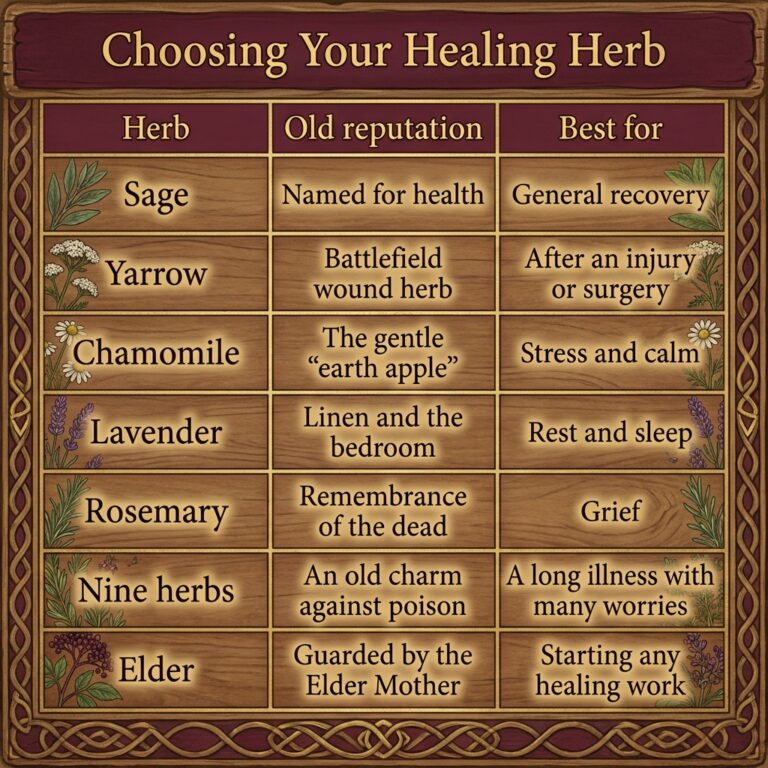
Put the seven herbs side by side and a pattern appears. In almost every case, the plant’s magical role grew out of what it did or meant in everyday life. Sage was named for health.[1] Yarrow was a wound herb long before it became a symbol of closing wounds.[2] Similarly, rosemary stood for remembering the dead before anyone built a grief ritual around it.[4]
| Herb | Old reputation | Best for |
|---|---|---|
| Sage | Named for health | General recovery |
| Yarrow | Battlefield wound herb | After an injury or surgery |
| Chamomile | The gentle “earth apple” | Stress and calm |
| Lavender | Linen and the bedroom | Rest and sleep |
| Rosemary | Remembrance of the dead | Grief |
| Nine herbs | An old charm against poison | A long illness with many worries |
| Elder | Guarded by the Elder Mother | Starting any healing work |
So the practical rule is to choose the herb whose old job matches the kind of healing you mean. A grief ritual feels more grounded with a plant that already means remembrance than with one pulled from a generic list of healing herbs. Likewise, a ritual after surgery borrows something real from yarrow’s long history with wounds.
This is an editorial reading of the sources, not an established rule. Still, it gives a beginner a reason behind every choice, which is more useful than a memorized chart. It also explains why the rituals stay small. When an herb already carries its meaning, herbal healing spells don’t need ten extra ingredients to make the point.
Common Mistakes With Herbal Healing Spells
The biggest mistake is treating a spell as a substitute for treatment. Practitioners see herbal healing spells as support for a person who is also getting proper care. If symptoms continue or get worse, that’s a reason to see a doctor, not a reason to cast a stronger spell.
Another common mistake is overloading a jar. Twenty herbs thrown together don’t add up to twenty times the power. Instead, the intention gets lost in the crowd, which is why each ritual above leans on one plant.
Smoke causes trouble too. Burning bundles indoors around cats, dogs, babies or anyone with asthma turns a caring act into a health problem. Since none of these rituals needs fire, it’s easy to leave the lighter out.
Finally, people sometimes give up after one try. Most of the rituals here are built to repeat, whether that means weekly sage leaves, nightly lavender or seven days of rosemary. Repetition is how practitioners keep herbal healing spells alive while recovery takes its own time.
Frequently Asked Questions
Can you do herbal healing spells without burning anything?
Yes. Every ritual in this guide works without fire. Pouches, jars and bowls of herbs carry the same intention, and they’re kinder to pets and to anyone sensitive to smoke.
What herbs go in a healing spell jar for someone who is sick?
Dried sage, chamomile and lavender are common choices, and all three are easy to buy as kitchen herbs. Keep them completely dry, add a written intention, and ask the person first if you can.
Are Wiccan healing spells different from pagan healing spells?
Wicca is one modern pagan religion, so Wiccan healing spells are part of the wider pagan family. Both draw on the same older herb lore. The differences are mostly in ritual framing, such as whether a circle is cast first.
Do I need white sage for herbal healing spells?
No. Common garden sage, rosemary and lavender work well for the rituals here. Some modern practitioners now leave white sage out altogether.
Why don’t my herbal healing spells seem to work?
Practitioners see these rituals as support for intention and wellbeing, not as a cure, so they don’t judge them by medical results. If a health problem continues, the next step is a doctor, while the ritual stays a source of comfort and focus.
References
- Sage (n.1). Online Etymology Dictionary. https://www.etymonline.com/word/sage
- Achillea millefolium. Royal College of Physicians Medicinal Garden. https://garden.rcp.ac.uk/viewPlant?plantId=18
- Chamomile. Online Etymology Dictionary. https://www.etymonline.com/word/chamomile
- Bring English literature to life: Flowers in Shakespeare’s plays. Royal Horticultural Society. https://www.rhs.org.uk/education-learning/school-gardening/resources/curriculum-linked/flowers-in-shakespeare-plays
- Nine Herbs Charm. Wikipedia. https://en.wikipedia.org/wiki/Nine_Herbs_Charm
- British trees: folklore and mythology. Helen Keating, Woodland Trust, 29 April 2021. https://woodlandtrust.org.uk/blog/2021/04/tree-folklore/
Not sure where to start? You don’t have to do this alone.
Madame Celestine offers guided spellwork for beginners — real support for your first working, not just another guide to read.
Related reading: Healing Spells: What Old Folk Healers Knew That We Forgot · Imbolc and Brigid: Crosses, Candles and Spring Cleaning

About Wren Ashby
Wren Ashby is the pen name our editorial team uses for articles on sigils, Tarot and modern traditional witchcraft. Articles under this byline are researched from published sources and reviewed by Madame Celestine before publishing.