
A purification ritual starts from a simple feeling: something in you or your home has gone stale, and ordinary cleaning has not shifted it. So what do the old traditions actually do about that? This guide follows Taoist and Chinese folk practice first, then compares it with Shinto, Mexican and witchcraft cleansing. By the end, you will know where each step comes from, what it is meant to clear, and how to do a spiritual cleansing ritual for self and home in the right order.
- Why Your Home Feels Heavy, and What a Purification Ritual Actually Clears
- The Seven-Day Taoist Purification Ritual That Locked the Public Out
- A Sword That Never Cut Anyone: Taoist Tools of Exorcism
- Burn It to Use It: The “Hundred Removals” Talisman
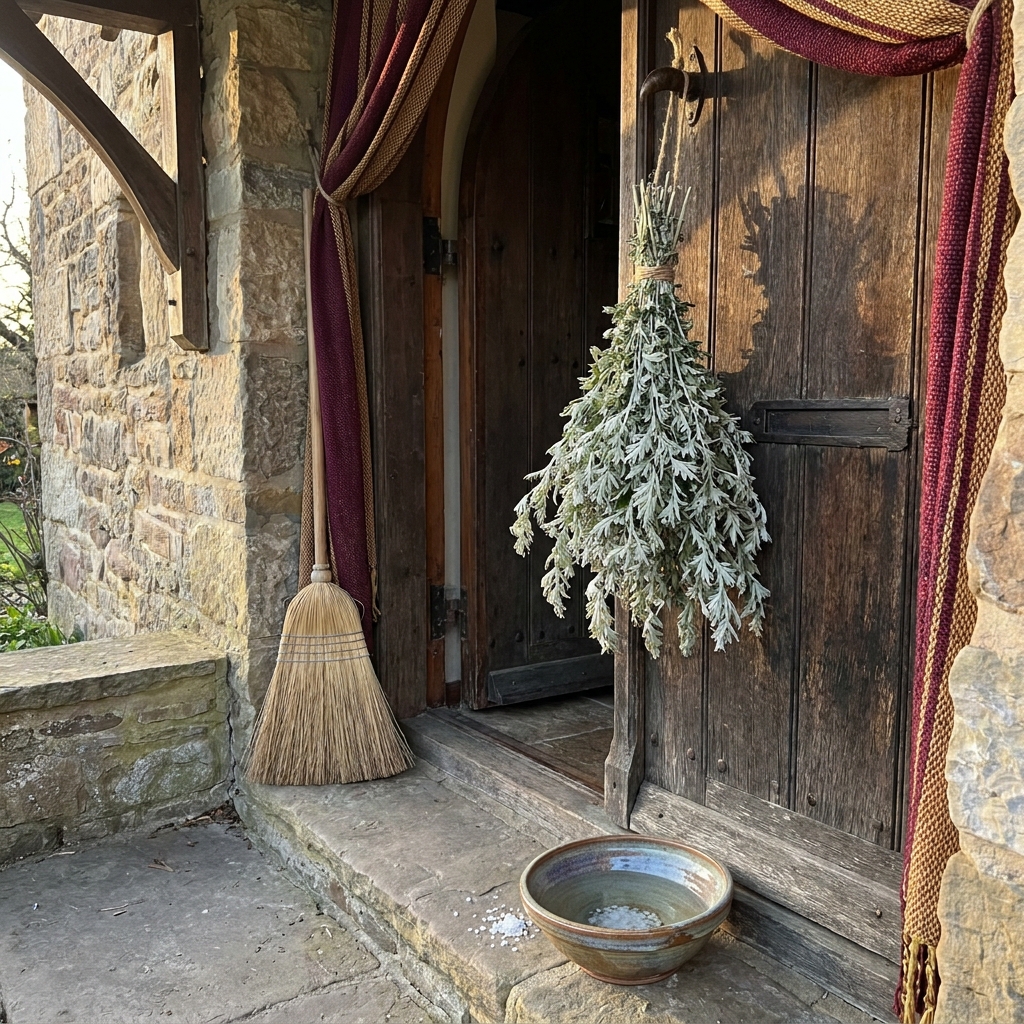
- Mugwort Over the Door, a Broom at the Threshold
- Salt, Water, Smoke and Egg: How Five Traditions Purify the Same Way
- Water, Salt, Smoke or Paper: Picking Tools for Your Purification Ritual
- How to Spiritually Cleanse Yourself First: A Self Cleansing Ritual
- A Purification Ritual for Your Home, Room by Room
- Six Mistakes That Quietly Undo a Spiritual Cleansing
- When a Home Purification Ritual Isn’t Enough
- Frequently Asked Questions
- References
Why Your Home Feels Heavy, and What a Purification Ritual Actually Clears
Most people look for a purification ritual after a hard stretch. Maybe there was an argument that still seems to hang in the kitchen. Or a move into a flat where the last tenant left more than dust behind. The word “stuck” comes up again and again, and it is a useful word, because it points to the goal. So the aim of a purification ritual is removal: it clears what is in the way.
That idea of removal runs through the traditions in this guide. Again and again, cleansing is framed as untying a knot, and only rarely as fighting an enemy. That framing matters for practice. It means a purifying spell is closer to housework than to battle, so it rewards patience and order more than drama.
If you want the broader basics first, start with this general guide to spiritual cleansing. This article goes deeper into one lineage and the reasons behind each step.
The Seven-Day Taoist Purification Ritual That Locked the Public Out
The grandest purification ritual in Taoism is the jiao, often translated as a rite of cosmic renewal. Ordained Taoist priests performed it to renew a community’s covenant with the highest powers, asking for blessings and protection. The services could last from one day to as many as seven days and nights.[1]
Three details from the jiao are worth carrying into any home practice. First, the community fasted for several days beforehand. Second, the public was strictly barred from the sacred arena while the rites went on. Third, the offerings were deliberately “pure”: wine, tea, cakes and fruit, never blood.[1]
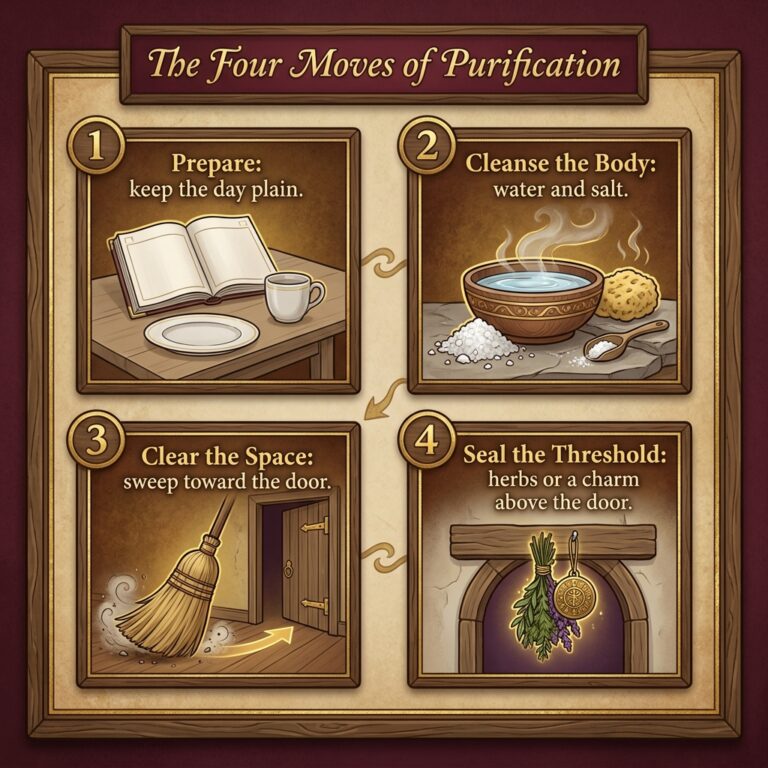
So the jiao teaches a sequence. People prepared their own bodies first, then closed off the space, then offered only clean things inside it. That order is the backbone of every purification ritual in this guide, for yourself and for your home. It also explains why rushing straight to the smoke or the salt often feels hollow. The preparation is part of the work.
A Sword That Never Cut Anyone: Taoist Tools of Exorcism
Walk through a Taoist ritual collection and you will meet swords. They look like weapons, and they were balanced like real fighting blades. However, they were never meant for combat. According to the Art Institute of Chicago, these swords were used to purify the sacred altar of negative energies, and they were primarily tools of exorcism.[2]
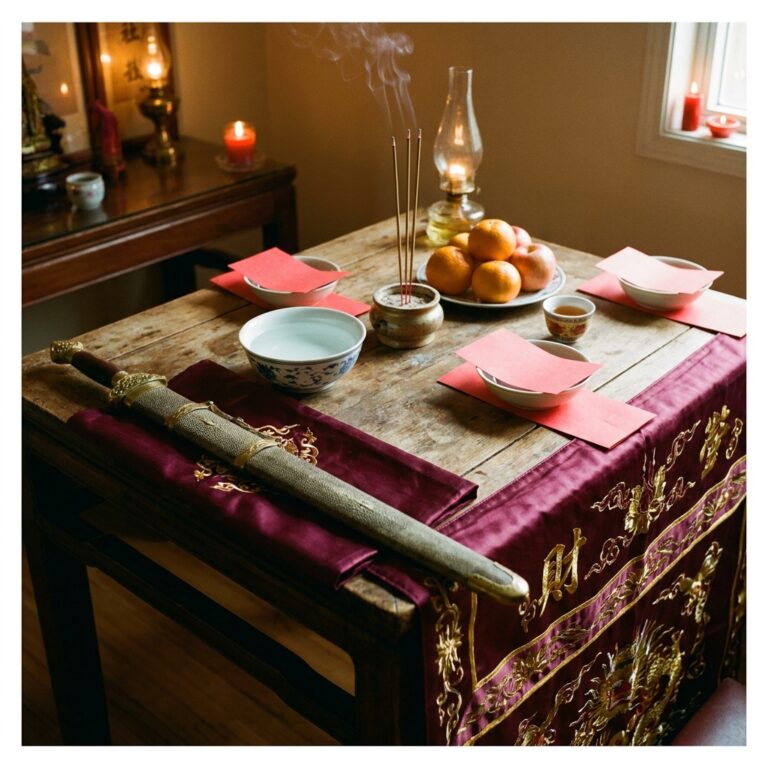
The blade on one 18th-century example is inlaid with the 28 Lunar Mansions and the Northern Dipper. Taoists believed these star groups held the sword’s power, and the Dipper in particular was a strong symbol of exorcism. Priests moved with the sword in ritual dances that looked a lot like martial arts.[2]
You do not need a sword to borrow the idea behind it. The point is direction and intent. The priest cut through stale energy with clear, deliberate movement, and then the altar was ready for offerings. In a home purification ritual, that same principle shows up in how you sweep, how you walk the rooms, and where you finish.
Burn It to Use It: The “Hundred Removals” Talisman
Paper talismans, called fu, are the most familiar Taoist cleansing tool. The Penn Museum holds a printed charm from Guangzhou known as a “hundred removals” paper. It shows three deities and lists twelve kinds of trouble it is meant to remove, including fire and water damage, quarrels with officials, illness and household problems.[3]
The most common word on it is jie, which means to remove, resolve, release or exorcise.[3] Two other features make this charm interesting. First, it has blank spaces for the owner’s birth date and personal details, so a mass-printed paper became personal once filled in. Second, it worked by being burned.[3] In other words, the fire carried the removal away, much as smoke does in many other traditions.
That is a different logic from a charm you wear. A worn talisman holds protection close, while a burned one sends trouble off. If you are curious about the worn kind, see this guide to enchanting jewelry as a protective amulet. For spell clearing, though, the burned paper is the closer model: write down what you are releasing, then let it go up in smoke.
Mugwort Over the Door, a Broom at the Threshold
Not every cleansing magic in China belonged to priests. Much of it lived in ordinary households and seasonal festivals. The Dragon Boat Festival, recognised by UNESCO in 2009, is one of the clearest examples. During the festival, people hang plants such as moxa (mugwort) and calamus over their doors. They also ward off evil by bathing in flower-scented water.[4]
So the festival does two separate jobs. The bath cleanses the person, and the herbs over the door guard the house. Both happen at the same moment of the year, so the festival works as a self cleansing ritual and a home protection rite in one.
Chinese New Year adds the broom. In one account held by the USC Digital Folklore Archives, a family sweeps the house and then pushes the dirt out the front door. The person describing it explains that they are sweeping out real dust and, at the same time, all the bad luck and evil.[5] Again, everything moves toward the exit and then out of the house.
Salt, Water, Smoke and Egg: How Five Traditions Purify the Same Way
Taoist practice is not alone. In Japan, Shinto purification rites called harai use salt, water and fire as their main purifying agents. A priest may wave a harai-gushi, a wooden wand hung with folded paper, over a worshipper. Even the simplest form, washing the hands and rinsing the mouth before prayer, is meant to prepare a person to approach the sacred.[6]
In Mexico, a limpia (literally “a cleaning”) takes another route. Another account in the USC Digital Folklore Archives describes a healer praying while rubbing an egg around a person, then brushing them with leaves from a tree called el paraíso. The aim was to scare away bad vibes so that good luck could return.[7] Meanwhile, modern witchcraft cleansing in the West leans on salt, smoke and water, and it often asks practitioners to choose between smoke, salt and water depending on the situation.
| Tradition | What cleanses | Where it ends |
|---|---|---|
| Taoist jiao | Fasting, pure offerings | A sealed sacred space |
| Chinese New Year | Sweeping | Dirt out the front door |
| Dragon Boat Festival | Scented bath | Herbs over the door |
| Shinto harai | Salt, water, fire | Ready to approach the sacred |
| Mexican limpia | Egg, leaves, prayer | Bad luck driven off |
Put side by side, these five traditions share a pattern that none of them spells out on its own. Each purification ritual moves in the same four steps. First, prepare the person. Then cleanse the body. After that, clear the space, always pushing toward an exit. Finally, seal the threshold, marking or guarding it so the space stays clean. The materials change from culture to culture, but the order holds.
Water, Salt, Smoke or Paper: Picking Tools for Your Purification Ritual
That pattern gives you a practical rule. If your cleansing spell feels like it “didn’t take”, check the order before you blame the herbs. Most failed home cleanses skip the first two moves or forget the last one.
Once the order is right, the tools are a matter of fit. Each of the main materials above does a slightly different job in the traditions that use it. So you can choose them by what you want the purification ritual to do.
- Water washes. Shinto worshippers rinse their hands and mouth before prayer, and Dragon Boat Festival bathers use flower-scented water. So choose water when the heaviness feels personal, such as after a draining week or a hard conversation.
- Salt clears surfaces. It is one of the three main purifying agents in harai, alongside water and fire.[6] It also suits corners, doorways and window sills, because you can scatter it and later sweep it away.
- Smoke and fire carry things off. The “hundred removals” charm only worked once it was burned.[3] That makes fire a good fit for a purification ritual where you want something gone for good, like the end of a chapter.
- Paper makes the intention specific. Writing down exactly what you are releasing gives the fire something definite to take.
You can also combine them. For example, a full purification ritual might start with water for yourself, use salt in the rooms, and finish by burning a written list. However, more tools do not make a stronger result. A short purification ritual done in the right order usually feels more complete than a long one done out of sequence.
How to Spiritually Cleanse Yourself First: A Self Cleansing Ritual
Every tradition above cleanses the person before the place, so a purification ritual begins with you. This spiritual cleansing ritual for self borrows its steps from the practices described earlier.
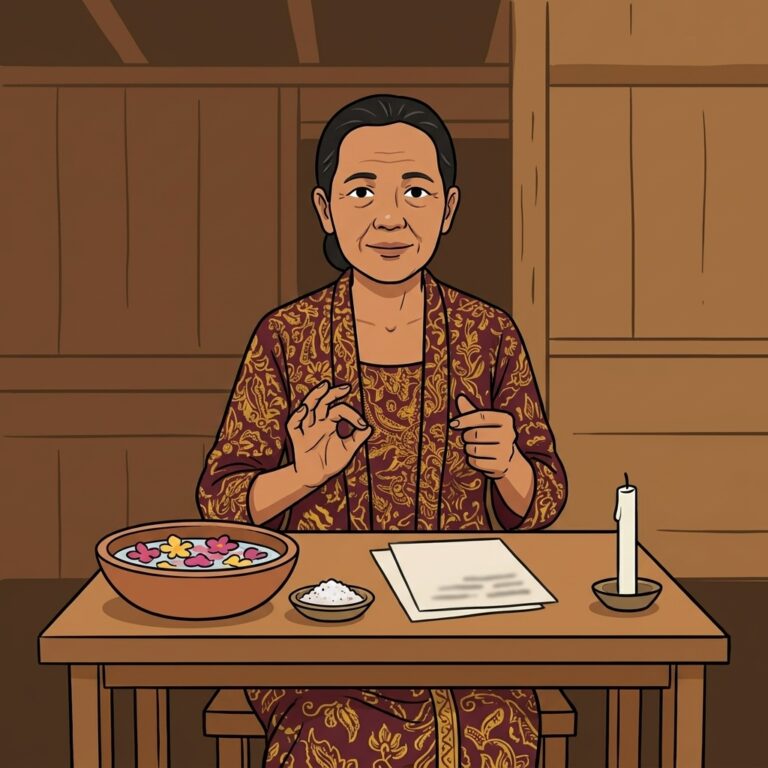
- Keep the day plain. The jiao began with days of fasting. You do not need to fast, but a simple day with plain food and fewer distractions echoes that preparation. The goal is to arrive at the ritual with less noise in your head.
- Wash your hands and rinse your mouth. This is the smallest Shinto purification, and it works as a clear starting signal. Do it slowly, so it feels like a threshold rather than a habit.
- Take a flower-scented bath. Add fresh petals or herbs you know are gentle on your skin, plus a handful of sea salt. As you soak, picture the water lifting off what you want to release. Then let the water drain away before you stand up, so the release leaves before you do.
- Burn your list. Write what you are letting go of on a slip of paper. Next, burn it safely in a fireproof dish, the way the “hundred removals” charm was burned. Afterwards, scatter the ash outside, never back into the house.
- Light a white candle and state your intention. Many practitioners use cleansing candles for energy work because a flame gives the mind a fixed point. Say plainly what you want to keep, now that the old weight is gone.
Once you feel settled, you are ready to work on the house.
A Purification Ritual for Your Home, Room by Room
This is the full purification ritual for a house or flat. To be clear, it is a home adaptation built from the practices above, not a copy of any single documented rite. It follows the four moves in order, and each step names where it comes from.
- Clean the ordinary way first. The New Year family swept real dust before anything symbolic. So wash dishes, clear clutter and take out rubbish. Spiritual cleansing is hard to feel in a room that is physically dirty.
- Open the windows and the front door. The jiao sealed its space only after preparation. At this stage, you want the opposite: an open exit for whatever you are clearing.
- Sweep from the back of the home to the front. Start in the room farthest from the entrance. Then sweep each room toward the front door, and push the last pile outside. Bin it outdoors, so nothing comes back in.
- Purify with salt, water or smoke. Sprinkle lightly salted water in the corners of each room, or carry smoke through the same path. Move in the same direction as the broom, back to front.
- Seal the threshold. Hang a bundle of mugwort or another dried herb above the front door, as households do at the Dragon Boat Festival. Alternatively, place a simple protective charm there.
- Close with a pure offering. Set out tea, fruit or a small cake in the main room, echoing the clean offerings of the jiao. Leave it for a day, then remove it respectfully.
Belief, Intention & The Power of Magic
Witchcraft, spells, and manifestation are deeply rooted in belief, intention, and spiritual practice. If these practices do not resonate with you, this may not be the path for you, and that’s perfectly okay. But if you believe in divine powers, trust your intentions, and feel drawn to the mysteries of the unseen, we invite you to continue exploring with Madame Celestine and discover the magic that speaks to your soul.
Six Mistakes That Quietly Undo a Spiritual Cleansing
Each of these slips breaks one of the four moves of a purification ritual. So if a cleanse feels flat, run down this list first.
- Doing the house before yourself. Every tradition above starts with the person. If you skip that, you carry the old weight back into a freshly cleared room.
- Cleansing with the doors shut. Sweeping toward a closed door leaves the energy with nowhere to go. Open the exit first.
- Leaving the swept pile indoors. The New Year sweep ends outside. A dustpan emptied into the kitchen bin undoes the symbolism.
- Forgetting the threshold. Clearing a space and then leaving it open is like mopping a floor while the rain blows in. So finish at the door.
- Copying priestly talismans you cannot read. Traditional fu carry specific written formulas. Writing out characters you do not understand is guesswork, so a plain written intention is more honest.
- Treating it as a one-time fix. Festivals like the New Year and the Dragon Boat Festival repeat every year for a reason. Cleansing works best as a rhythm.
When a Home Purification Ritual Isn’t Enough
The great Taoist purification rites were never household jobs. The jiao was led by ordained priests, and the public was kept out of the sacred arena while they worked.[1] Likewise, the Mexican limpia described above was done by a healer, not by the person being cleansed.[7]
So it is normal for some situations to feel too big for a home purification ritual. For example, the heaviness may return within days, or the household may be too worn down to carry out the steps with real focus. In that case, many people choose to have the work done for them. If that is where you are, you can read about our professional cleansing spells and decide whether a practitioner-led cleanse suits you. Either way, the home steps above remain a good foundation to keep between deeper workings.
Frequently Asked Questions
How often should you do a purification ritual at home?
Many practitioners do a full house cleanse at the change of seasons or the new year, plus a quick sweep and salt-water pass after illness, arguments or guests who left a heavy feeling. The old festivals repeat yearly, so a regular rhythm suits the tradition better than a single deep clean.
Can you spiritually cleanse yourself without sage?
Yes. Water, salt, flower-scented baths and burned paper all appear in the traditions in this guide, and none of them depends on sage. Choose whichever method fits your home and your health.
What is the difference between a cleansing spell and a purification ritual?
The terms overlap, but a cleansing spell usually targets one problem with a stated intention, while a purification ritual is a fuller sequence that prepares the person, clears the space and seals the threshold. Many practitioners use a purification ritual as the groundwork before other spells.
Do you need to be Taoist to use these practices?
No. The home steps in this guide draw on folk customs and general principles, not ordained Taoist liturgy. Treat the sources with respect, and leave formal priestly rites, such as written talismans, to trained practitioners.
Should you cleanse a new home before moving in?
It is a popular time to do it, because the rooms are empty and easy to sweep from back to front. Clean physically first, then follow the four moves before you bring your belongings inside.
References
- Laurence G. Thompson. “Jiao.” Encyclopedia of Religion, via Encyclopedia.com. https://encyclopedia.com/environment/encyclopedias-almanacs-transcripts-and-maps/jiao
- Taoist Ritual Sword. Taoism and the Arts of China, Art Institute of Chicago. https://archive.artic.edu/taoism/church/e59.php
- Printed exorcistic charm (talisman), bai jie zhi (“hundred removals paper”). Penn Museum. https://www.penn.museum/collections/object/93520
- Decision 4.COM 13.12: Dragon Boat Festival. UNESCO Intangible Cultural Heritage. https://ich.unesco.org/en/Decisions/4.COM/13.12
- Sweeping Ritual – Chinese New Year. USC Digital Folklore Archives. https://folklore.usc.edu/?p=87009
- Harai. Encyclopaedia Britannica. https://www.britannica.com/topic/harai
- Una Limpia. USC Digital Folklore Archives. https://folklore.usc.edu/una-limpia/
Not sure where to start? You don’t have to do this alone.
Madame Celestine offers guided spellwork for beginners — real support for your first working, not just another guide to read.
Related reading: How to Break a Curse From a Witch: 6 Steps Explained · Spiritual Cleansing: How to Cleanse Yourself and Your Home

About Wong Fat Kin
Wong Fat Kin is the pen name our editorial team uses for articles on Taoist ritual, talismans (符), house cleansing, Feng Shui and divination. Articles under this byline are researched from published sources and reviewed by Madame Celestine before publishing.