
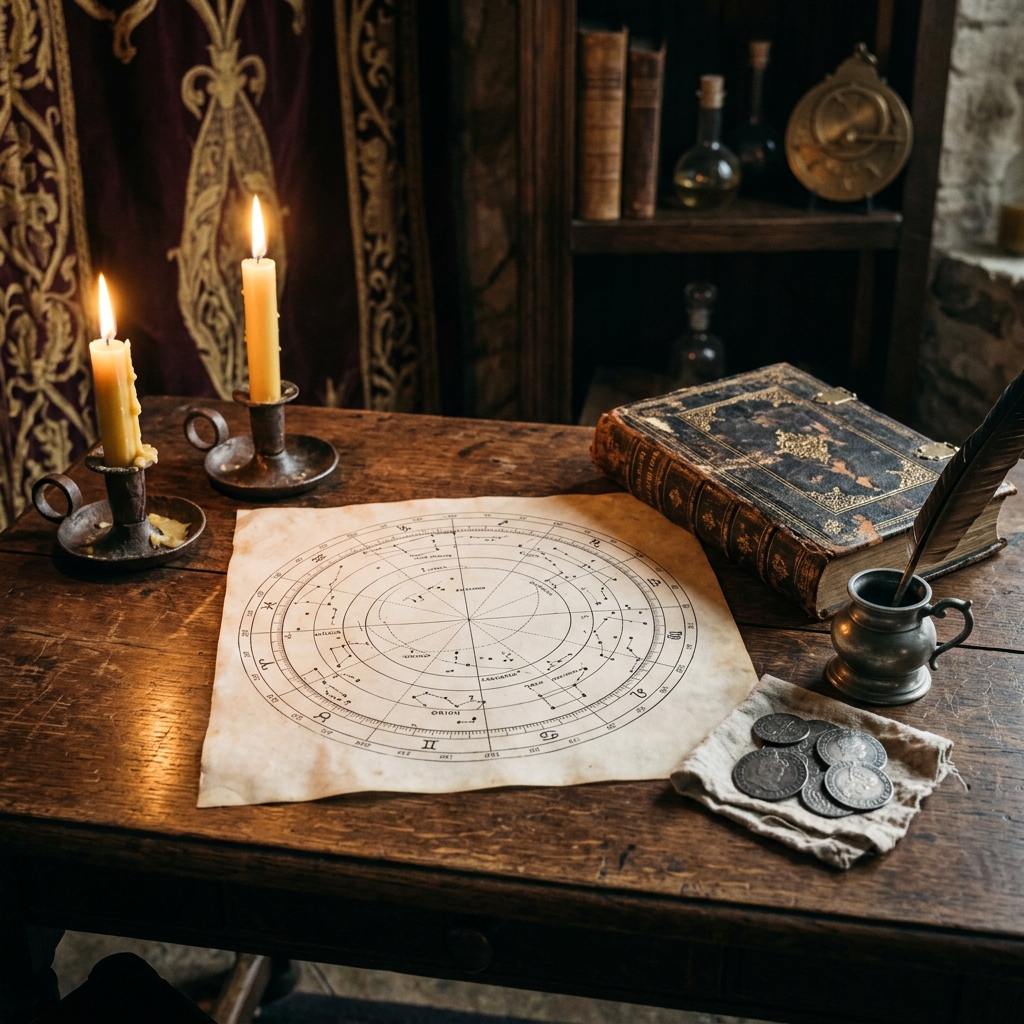
Commissioned magic, where you pay someone else to perform a ritual for you, can look like a very modern business. Today, people book custom infernal rituals online, often from a practitioner they will never meet. Yet the idea of hiring a magical specialist is thousands of years old. In this guide, you’ll meet the wandering seers of ancient Greece, England’s village cunning folk and a queen’s astrologer. You’ll also see what these older traditions can tell you about how a custom ritual service works today.
- Commissioned Magic Began at Rich Men’s Doors
- Cunning Folk: The Village Experts England Relied On
- What Commissioned Magic Cost in Tudor England
- 80,000 Consultations: Commissioned Magic in the Casebooks
- A Queen’s Astrologer: Magic Commissioned at Court
- Spirit Manuals: Grimoires Written for Working Practitioners
- From Cunning Man to Custom Infernal Ritual: Commissioned Magic Today
- What Changed, and What Stayed the Same
- Frequently Asked Questions
- References
Commissioned Magic Began at Rich Men’s Doors
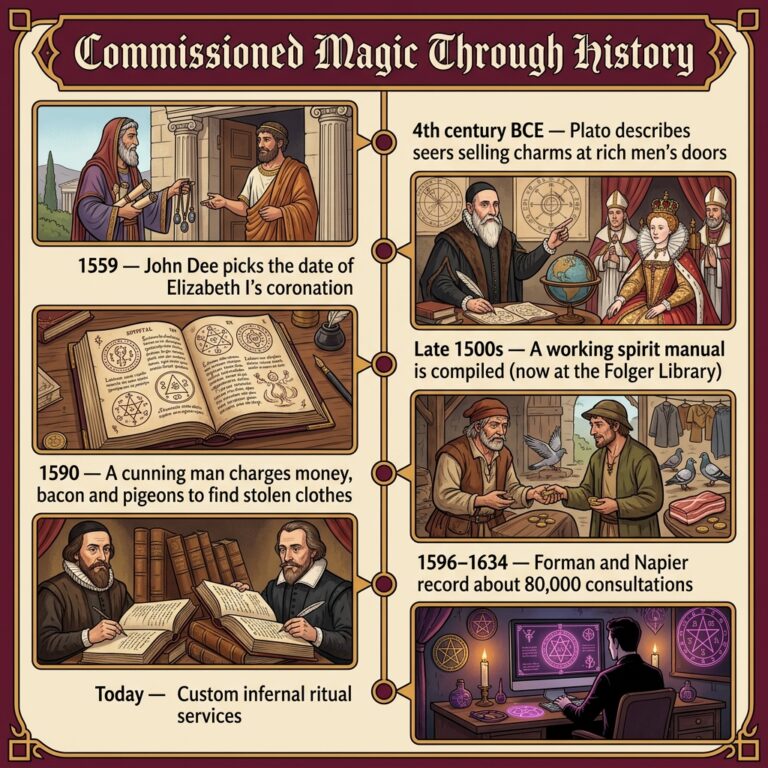
One of the oldest complaints about paid magic comes from Plato, writing in Athens in the fourth century BCE. In the Republic, a speaker describes “mendicant prophets,” or begging seers, who knock at rich men’s doors. They promised to cleanse a family’s old wrongs with sacrifices. They also offered to deal with an enemy through charms and invocations, all at a small charge[1].
Plato was not a fan, so he framed these sellers as cheap and shallow. Still, his complaint tells us something useful. Even then, a clear market existed. Clients had money and a problem, while specialists had rituals and a price. The basic shape of commissioned magic, a client, a practitioner and an agreed service, was already in place.
Notice, too, what those seers offered. They did not sell a general blessing. Instead, they sold a named result for a named person, such as clearing a debt to the gods or removing a rival. That focus on one specific need still defines custom ritual work today.
Cunning Folk: The Village Experts England Relied On
Fast forward to early modern England, and the local expert had a name. Cunning folk, sometimes called wise women or cunning men, were practitioners of folk medicine and folk magic. Their skills included finding lost objects, predicting the future, blessing fields, providing amulets and charms, and writing spells[2].
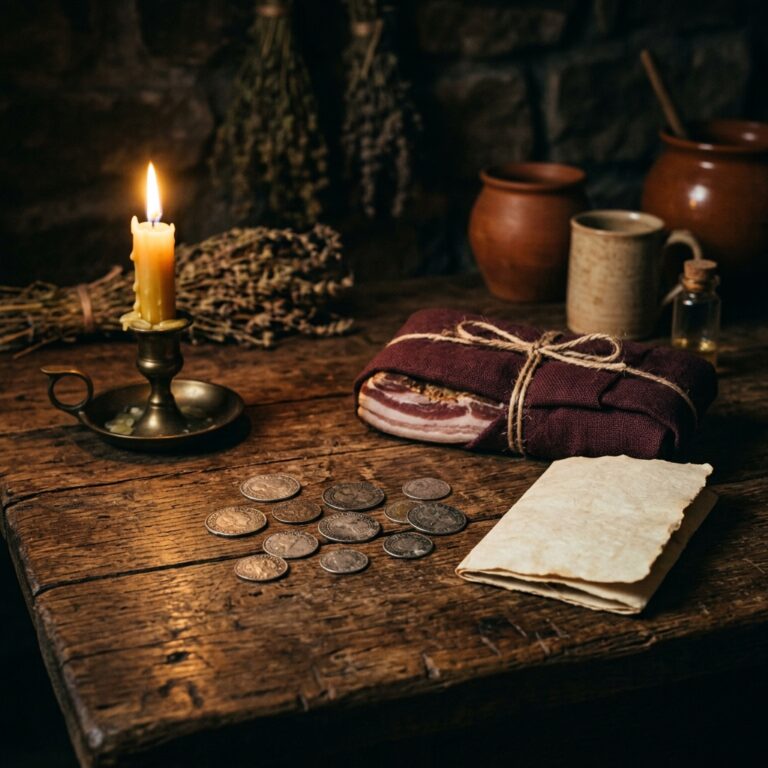
People usually turned to them only after ordinary remedies had failed[2]. So the cunning man or woman was rarely a first stop. Instead, they were the person you visited when a horse vanished, a child fell sick or a house felt wrong.
One surviving handbill from a Chichester cunning man shows how these experts advertised. It claimed skill in astronomy, herbal lore and “physic,” the old word for medicine. It also offered horoscopes to “unbewitch the enchanted”[2]. In other words, he presented himself as a trained specialist rather than a village oddity.
What Commissioned Magic Cost in Tudor England
Court records let historians see real prices. For example, one practitioner, William Bowes, took one shilling for naming a thief through divination. In 1590, another, Thomas Harden, charged 5 shillings’ worth of money, bacon and pigeons to find a stolen parcel of clothes[3].
Harden’s other fees show how prices rose with the stakes. He asked 12 pence to find two lost horses, with 20 shillings more promised. Then, for naming who had burned down a house, he asked 40 shillings, with a remarkable £20 more promised on success[3].
That last detail matters most. Practitioners often took a smaller sum up front, and the client promised more once the work succeeded[3]. As a result, the practitioner carried part of the risk. Meanwhile, some cunning folk refused payment entirely, because they believed money would disturb their abilities[3]. So even then, clients faced different models of paid spiritual work.
80,000 Consultations: Commissioned Magic in the Casebooks
The richest record of paid consultations comes from two English astrologer-physicians, Simon Forman and Richard Napier. Their casebooks hold about 80,000 cases covering around 65,000 people. They run from 1596 until Napier’s death in 1634[4].
During each consultation, the two men wrote quick notes. They recorded names, ages, times and places, along with snatches of illness and worry. Then they sketched the positions of the stars and noted a remedy[4]. Most clients simply asked practical questions, such as “what’s my disease?” or “am I pregnant?”[4].
However, magic appeared too. When clients feared witchcraft, the pair sold “counter-spells” of incantations, sigils and blessed amulets. Napier even sought second opinions from angels[4]. So a single visit could combine note-taking, astrology and a made-to-order protective object. That mix of record-keeping and ritual looks a lot like a modern intake form.
A Queen’s Astrologer: Magic Commissioned at Court
Paid magic was not only for villagers. At the very top of Tudor society, John Dee served Queen Elizabeth I as a scholar and adviser. He chose her coronation date, January 15, 1559, based on his astrological and mystical calculations[5].
Dee was no village charm-seller. He owned England’s largest private library, and he also believed he spoke with angels[5]. Yet the job he did for the queen had the same basic shape as a cunning man’s work. A client with a major event needed the right moment, and a specialist used his craft to choose it.
This is a helpful reminder for anyone curious about custom ritual services. Timing has long been one of the main things a practitioner provides. Picking the hour, day or moon phase for a working is a real part of the service, and it goes back centuries.
Spirit Manuals: Grimoires Written for Working Practitioners
Where did these experts learn their methods? Many relied on handwritten grimoires, the working manuals of ritual magic. A good example sits in the Folger Shakespeare Library in Washington, D.C. It is a book of magic with instructions for invoking spirits. Today it survives as two joined fragments written by several hands, and some pages are still missing[6].
One entry describes a spirit called Oberyon, a fairy king. The text says he can reveal the nature of stones, herbs, trees and metals, find treasure, and tell of things past, present and to come[6]. Those are exactly the services clients paid for, such as medicine, finding lost goods and seeing ahead.

The manual also borrows scripture and prayer without a priest’s approval[6]. That independence is key to the infernal side of the story. Later grimoires, such as the Goetia, list spirits by name and office. Modern infernal practitioners still draw on these lists. So today’s custom infernal ritual rests on a long line of manuals for people who worked magic for others.
From Cunning Man to Custom Infernal Ritual: Commissioned Magic Today
So what does history suggest a custom infernal ritual service actually provides? Looking back, four parts appear again and again.
First comes the consultation. Like Forman and Napier’s notes, a careful practitioner records your situation before choosing any method. Second comes the design. The practitioner picks spirits, symbols and materials from a tradition, much as the Folger manual’s owners chose from their pages.
Third comes timing. As Dee did for the queen, the practitioner picks a moment that fits the working. Fourth, there is often a made object or written piece, such as a sigil or charm, like the counter-spells in the casebooks.
History also shows which questions to ask. Earlier clients knew the price, what the work was for and whether payment depended on results. Modern clients can reasonably ask the same things. Clear terms, an honest scope and no promised outcomes all fit the older pattern of good practice. For a closer look at tailored work versus doing it yourself, see this comparison of custom infernal prosperity work and a general ritual guide.
Belief, Intention & The Power of Magic
Witchcraft, spells, and manifestation are deeply rooted in belief, intention, and spiritual practice. If these practices do not resonate with you, this may not be the path for you, and that’s perfectly okay. But if you believe in divine powers, trust your intentions, and feel drawn to the mysteries of the unseen, we invite you to continue exploring with Madame Celestine and discover the magic that speaks to your soul.
What Changed, and What Stayed the Same
Of course, commissioned magic today is not identical to a Tudor visit. The biggest change is distance. A cunning man lived down the lane, so his neighbors knew his record. Today, you may never meet the person doing the work. As a result, written terms matter more than they once did.
The form of payment has also changed. Nobody pays in pigeons now. Still, the question behind Harden’s split fees remains. Clients want to know what they pay for, and when.
Some things, however, have not changed at all. People still seek commissioned magic when ordinary routes feel blocked, just as clients once did in the casebooks. They still want a named service for a named need. And they still value a practitioner who listens first, explains the method and is honest about what ritual can and cannot do. Seen this way, commissioned magic is less a modern trend than one of the oldest services a practitioner offers.
Frequently Asked Questions
Is commissioned magic a modern idea?
No. Plato described seers selling charms at rich men's doors in the fourth century BCE. Later, English cunning folk charged fees for magical help in the 1500s and 1600s.
How did people pay for commissioned magic in the past?
Clients paid in coins and sometimes in goods such as bacon or pigeons. Many practitioners took a small sum first, with more promised if the work succeeded.
What did cunning folk actually do for clients?
They found lost or stolen goods, predicted the future, blessed fields, made amulets and charms, and wrote spells, often after ordinary remedies had failed.
Were grimoires used by paid practitioners?
Yes. Handwritten spirit manuals gathered the methods that working practitioners used for clients. One example is held at the Folger Shakespeare Library.
What should a modern custom ritual service explain?
It should explain the consultation, the method and tradition used, the timing, anything you will receive, the price and what the work cannot promise.
References
- The Republic, by Plato, translated by Benjamin Jowett. Project Gutenberg. https://www.gutenberg.org/files/1497/1497-h/1497-h.htm
- Magic Charms and Amulets. Horniman Museum and Gardens. https://www.horniman.ac.uk/story/magic-charms-and-amulets/
- The Magiconomy of Early Modern England. Taylor Aucoin. Forms of Labour, University of Exeter. November 4, 2020. https://formsoflabour.exeter.ac.uk/2020/11/04/the-magiconomy-of-early-modern-england/
- From the casebooks of the most notorious astrologer doctors in all England. University of Cambridge. https://www.cam.ac.uk/casebooks
- Queen Elizabeth’s Court Occultist. Encyclopaedia Britannica. https://www.britannica.com/story/queen-elizabeths-court-occultist
- The Fairy King’s Grimoire. The Collation, Folger Shakespeare Library. https://www.folger.edu/blogs/collation/the-fairy-kings-grimoire/
Not sure where to start? You don’t have to do this alone.
Madame Celestine offers guided spellwork for beginners — real support for your first working, not just another guide to read.
Related reading: Satanic Luck Rituals vs. Prosperity Rituals: Understanding the Distinction · Before You Book a Satanic Career Ritual: 10 Questions About Scope and Claims

About Edmund Hale
Edmund Hale is the pen name our editorial team uses for articles on grimoires, Qabalah, ceremonial magic and British folklore. Articles under this byline are researched from published sources and reviewed by Madame Celestine before publishing.