

The word “witch” has meant wildly different things depending on the century and the person holding it. Some of these famous witches in history were mythic figures who may never have existed as described. Others were real people executed for a crime that was never actually possible. A few built the modern practice we recognize today. Knowing the difference matters.
Legendary and Folkloric Figures
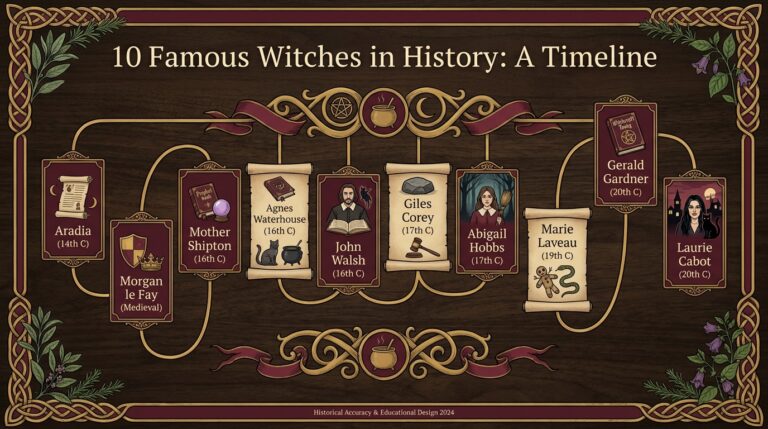
Aradia comes from Charles Leland’s 1899 book “Aradia, or the Gospel of the Witches.” The book claimed to record an Italian folk tradition centered on a divine teacher sent to instruct the oppressed in witchcraft. Historians still debate how much of Leland’s material reflects genuine older folklore versus his own invention. Aradia became a foundational figure in 20th-century witchcraft revival regardless, cited by writers and practitioners who never questioned whether Leland’s source material was authentic. Morgan le Fay belongs to Arthurian legend, appearing across centuries of retellings as a powerful enchantress with a shifting relationship to King Arthur, sometimes healer, sometimes adversary. Mother Shipton, tied to 16th-century Yorkshire folklore, was remembered as a prophetess whose predictions were published and reprinted for centuries, growing more elaborate with each new edition.
Women and Men Accused and Executed
Agnes Waterhouse was hanged in Chelmsford, England, in 1566, becoming the first woman executed for witchcraft under English law. John Walsh, examined the same year in Netherbury, described using familiar spirits and divination in a confession that fed growing English witch-trial panic. More than a century later, the Salem witch trials claimed Giles Corey. He refused to enter a plea, a decision meant to protect his estate for his heirs, and was pressed to death under heavy stones over two days in September 1692. Abigail Hobbs, a teenager at the time, confessed to witchcraft during the same Salem panic, and her testimony helped implicate others in a chain of accusations that historians still study for how fear spread through a small community.
Founders of Modern Witchcraft
Gerald Gardner published “Witchcraft Today” in 1954 and is widely credited as the founder of modern Wicca, drawing on ceremonial magic and older folk traditions to build a new, organized practice. Marie Laveau, working in 19th-century New Orleans, became the city’s best-known practitioner of Voodoo, blending African, Catholic, and Indigenous spiritual traditions into a public ministry that outlasted her own lifetime in local memory. She held gatherings, offered spiritual consultations, and became a figure whose reputation grew larger with each retelling long after her death. Laurie Cabot, born in 1933 and still active in Salem, Massachusetts, opened the city’s first witch shop in 1971 and later founded the Witches’ League for Public Awareness to push back against negative media portrayals of practitioners.
How Modern Witches Honor These Figures
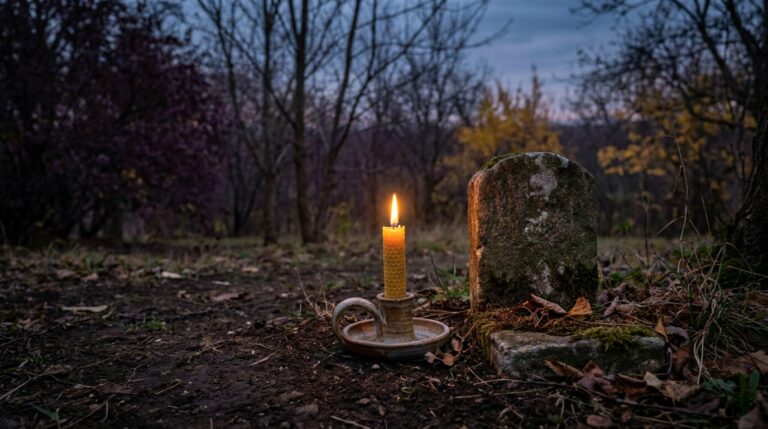
You don’t need to share a tradition with any of these figures to learn from them. Reading primary accounts, rather than secondhand summaries, gives you a much clearer picture of who each person actually was. Trial transcripts, period diaries, and a practitioner’s own published writing all tell a more honest story than a secondhand paraphrase ever will. Some practitioners light a candle for Salem’s victims on the anniversary of their deaths, treating it as a moment of remembrance rather than ritual invocation. If a specific figure’s story resonates with you, research her actual historical or cultural context before incorporating her into your own practice, since respectful engagement starts with accuracy rather than assumption. Visiting a historical site, like Salem or New Orleans, in person adds another layer of understanding that reading alone can’t fully provide, since standing in the actual place tends to make the history feel less abstract.
Belief, Intention & The Power of Magic
Witchcraft, spells, and manifestation are deeply rooted in belief, intention, and spiritual practice. If these practices do not resonate with you, this may not be the path for you, and that’s perfectly okay. But if you believe in divine powers, trust your intentions, and feel drawn to the mysteries of the unseen, we invite you to continue exploring with Madame Celestine and discover the magic that speaks to your soul.
Our New Orleans spiritual traditions guide goes deeper into the cultural roots behind Marie Laveau’s city, if her story is the one that pulled you in. And if you want the documented history behind Giles Corey’s death rather than the shorthand version, the Massachusetts Historical Society’s account draws directly on period diary entries.
Frequently Asked Questions
Was Aradia a real historical person?
There’s no solid historical evidence she existed as described. She comes from a 1899 folklore collection whose accuracy is still debated by historians.
Why were so many accused witches actually innocent?
Witchcraft as described in most trial records isn’t something anyone could actually perform, and most accusations stemmed from fear, personal disputes, or coerced confessions rather than evidence.
Is Laurie Cabot still active today?
Yes. She remains associated with Salem’s witch community and has authored several books on witchcraft and magic.
What’s the difference between Gerald Gardner’s Wicca and older folk witchcraft?
Gardner organized ceremonial magic and folk traditions into a structured practice in the 1950s, while folk witchcraft traditions, like those associated with Marie Laveau, developed independently over centuries.
Why include both real people and legendary figures on the same list?
Both shape how witchcraft is understood today. Legendary figures influenced later practitioners just as much as documented historical ones did.
Not sure where to start? You don’t have to do this alone.
Madame Celestine offers guided spellwork for beginners — real support for your first working, not just another guide to read.
Related reading: Working with Types of Fairies & Facts About Fairies for Witches: Ritual Context, Meaning & Practice · Palm Reading Guide: How to Read your Own Palm: Ritual Ideas, Meaning & Practical Guidance
About Madame Celestine
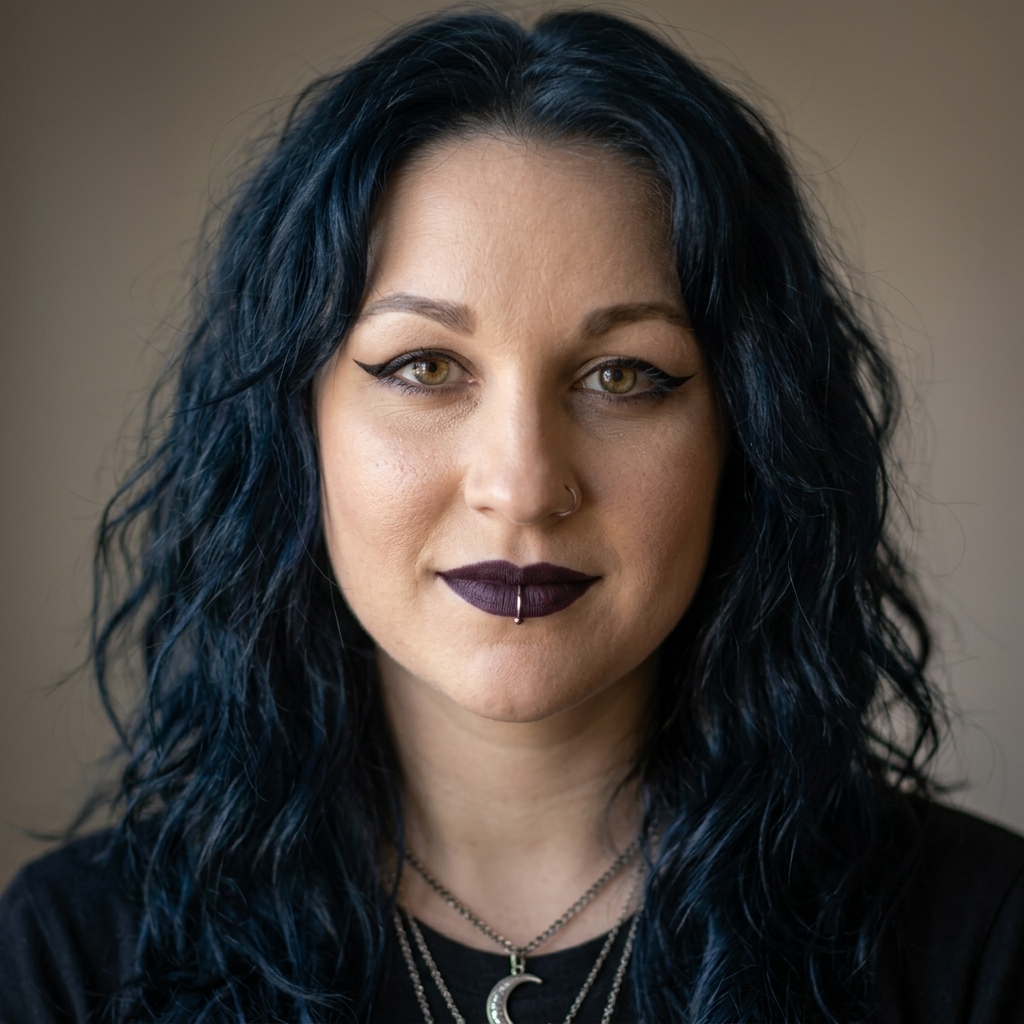
Madame Celestine has practiced and taught spellwork, divination, and seasonal ritual for over two decades, helping newcomers build a grounded, confident practice from their very first spell.