
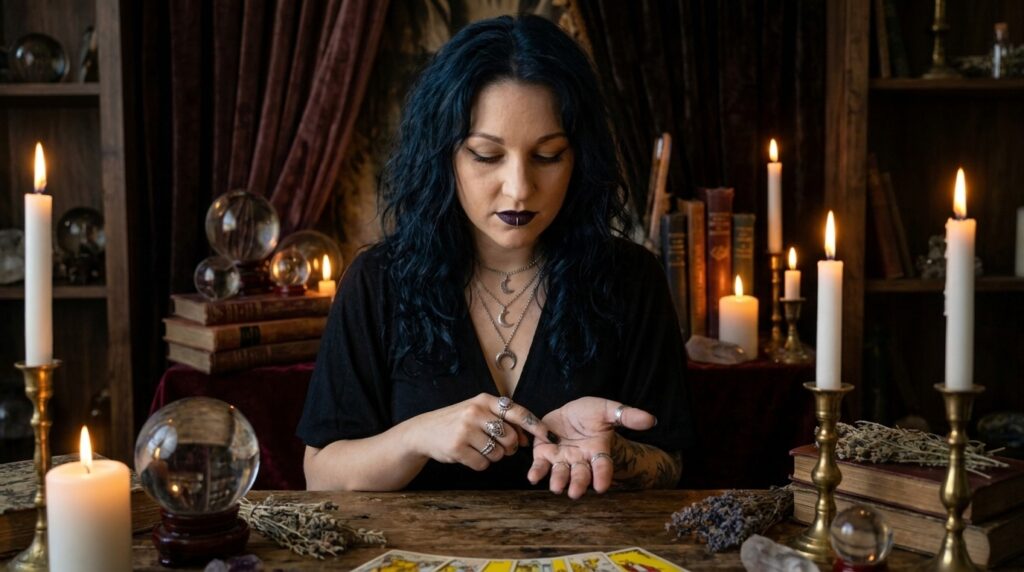
You’ve probably glanced at your own palm a hundred times without ever really looking at it. The lines seem random until you know what you’re looking for, and then they read almost like a map. Learning to read your own palm doesn’t require a teacher or a deck of cards, just a bit of patience and good light.
Why Your Palm Is Worth Reading
Palmistry likely began in ancient India and spread through trade routes into the Middle East, Europe, and beyond. Britannica traces its major Western revival to the 19th century, when practitioners like Cheiro brought the practice into fashionable parlors. Modern palmistry sits alongside tarot and other traditional divination methods as a tool for reflection rather than fixed prediction. Reading your own hand is really a way of noticing patterns in how you live, work, and love, then asking what those patterns might mean. Unlike a tarot spread or a pendulum, your palm is always with you, which makes it one of the easiest divination tools to return to again and again without any special setup.
Which Hand Actually Tells Your Story
Most palmists read the dominant hand for your present and future. The non-dominant hand shows traits you were born with. If you’re right-handed, your left hand shows inherited tendencies, while your right hand reflects choices you’ve actively made. Left-handed readers simply reverse that split. Compare both hands rather than reading just one, since the differences between them often say more than either hand alone. A line that appears strong on your non-dominant hand but faint on your dominant one suggests a trait you’re moving away from, while the reverse suggests a trait you’re actively developing.
The Four Major Lines to Learn First
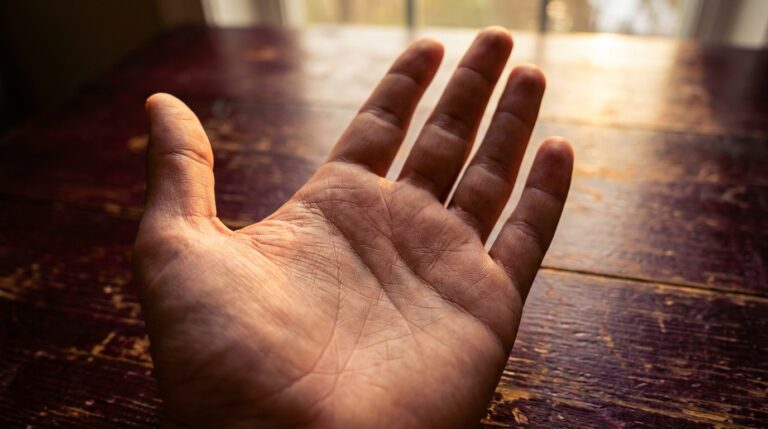
Start with the heart line, the top horizontal line running under your fingers, which reflects emotional style and relationships. A heart line that curves upward toward the index finger often points to an open, expressive approach to love, while a straighter line suggests someone more guarded. Below it sits the head line, tied to thinking style and decision-making. A head line that slopes downward suggests a creative, imaginative mind, while a straighter line points to a more analytical one. The life line curves around the base of your thumb and relates to vitality and major life changes, not lifespan itself, despite the common myth. Some hands also show a fate line running vertically toward the middle finger, linked to career direction and outside influences on your path. Look at depth, length, and any breaks or branches, since a broken line often marks a turning point rather than a problem.
Belief, Intention & The Power of Magic
Witchcraft, spells, and manifestation are deeply rooted in belief, intention, and spiritual practice. If these practices do not resonate with you, this may not be the path for you, and that’s perfectly okay. But if you believe in divine powers, trust your intentions, and feel drawn to the mysteries of the unseen, we invite you to continue exploring with Madame Celestine and discover the magic that speaks to your soul.
Reading the Mounts and Hand Shape
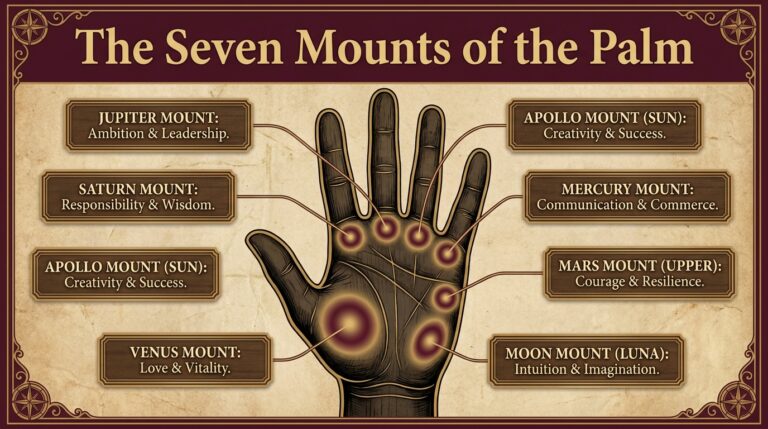
The mounts are the fleshy pads beneath each finger and along the palm’s edges, and their fullness matters as much as the lines themselves. A raised mount under your index finger points to ambition and leadership, while a full mount under your ring finger suggests a strong pull toward creativity. The mount beneath your pinky relates to communication style, and a well-developed one often belongs to someone who expresses themselves easily. The large mount at the base of your thumb, tied to Venus in traditional systems, reflects warmth and physical vitality when it’s full and rounded. Hand shape adds another layer. Square palms with short fingers often belong to practical, grounded people, while long fingers and an oval palm suggest someone who thinks in ideas first. None of these traits are fixed rules. Treat them as starting questions rather than verdicts.
Turning Palm Reading Into a Regular Ritual
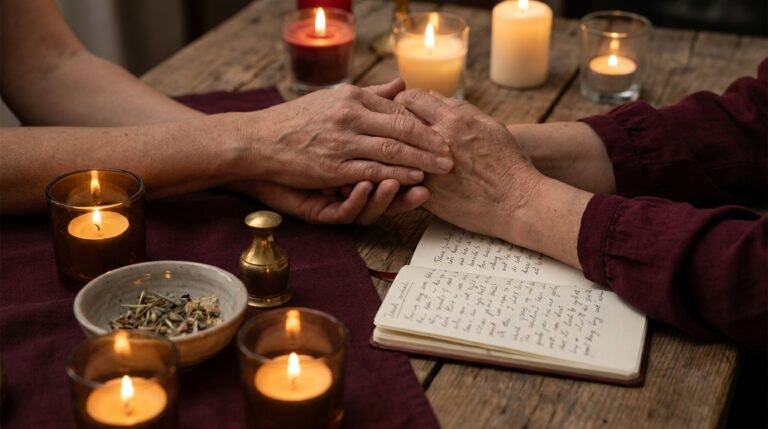
Your palm changes slowly over time, so a single reading only captures one moment. Set a simple monthly check-in instead, ideally on the new or full moon when you’re already pausing to reflect. Light a candle, hold your hands under good light, and photograph both palms so you can compare them later. Note anything that feels different, whether that’s a line looking deeper or a mount feeling fuller than before. Over a year, those small photos build into a record of how you’ve actually changed, which tends to be more useful than any single reading.
Frequently Asked Questions
Does the life line really predict how long I’ll live?
No. Most modern palmists read the life line as a marker of vitality and major transitions, not lifespan.
Which hand should I read if I’m left-handed?
Read your left hand as the dominant one for present and future traits, and your right hand for inherited tendencies.
Can my palm lines actually change over time?
Yes, though slowly. Depth and clarity can shift with major life changes, which is why a periodic check-in works better than a single reading.
Do I need special lighting to read my palm?
Natural daylight or a bright warm lamp works best. Harsh overhead light can flatten the shadows that make lines easier to trace.
Is palm reading connected to any specific religion?
No single religion owns palmistry. It developed across many cultures and is now practiced as a standalone reflective tool.
Not sure where to start? You don’t have to do this alone.
Madame Celestine offers guided spellwork for beginners — real support for your first working, not just another guide to read.
Related reading: Working with 14 Imbolc Ritual Ideas for a Pagan February Eve Celebration: Ritual Context, Meaning & Practice · Exploring Working With Fairies: 8 Signs The Fairies Are Near: Symbolism, Tradition & Personal Practice

About Madame Celestine
Madame Celestine has practiced and taught spellwork, divination, and seasonal ritual for over two decades, helping newcomers build a grounded, confident practice from their very first spell.