
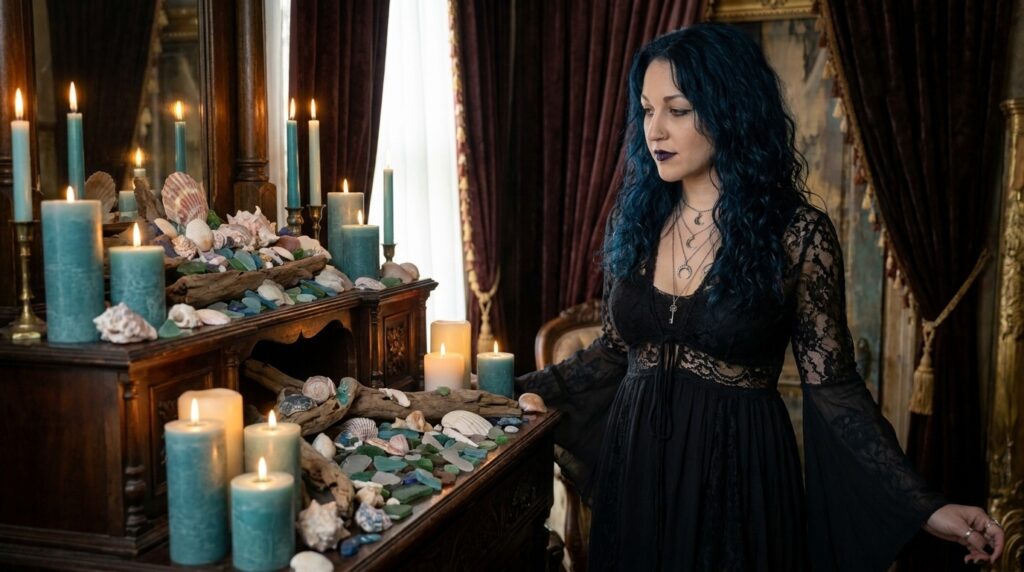
If you’ve ever stood at the edge of the ocean and felt something bigger looking back at you, you’re not imagining it. Cultures across the world have given that feeling a name and a face. These ocean goddesses carry different stories, but they share one thing: a connection to water’s power to heal, cleanse, and unsettle in equal measure.
Why the Ocean Has Always Had a Goddess
Water covers most of the planet, and nearly every coastal culture has built a deity around it. The sea gives food and trade routes, but it also takes ships and lives without warning. That double nature, generous and dangerous at once, is why so many ocean goddesses hold both healing and fierce protection in the same myth. Working with one isn’t about picking a gentle figure. It’s about respecting a force that can nurture you and still knock you flat.
Seven Goddesses of the Sea and Water
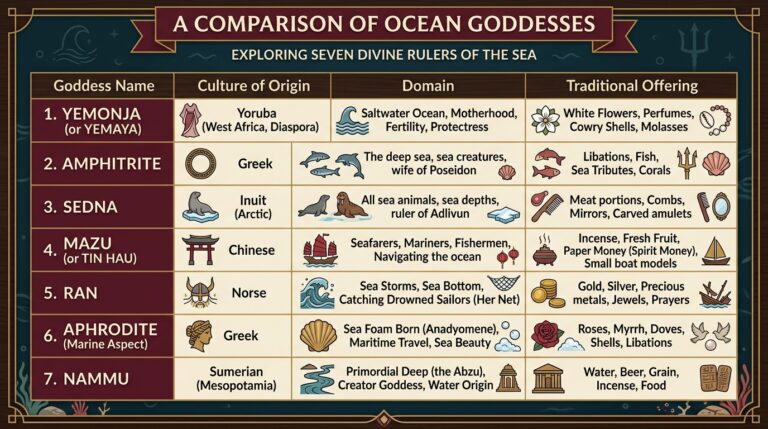
Yemonja, honored across Yoruba and diaspora traditions, is often called the mother of all waters. Britannica notes that her name draws from Yoruba words for mother, children, and fish. She is seen as the metaphysical mother of the orisha themselves, which places her above nearly every other figure in that tradition. Amphitrite rules the Greek sea as Poseidon’s queen, while Sedna, from Inuit tradition, guards the Arctic depths and the creatures within them. Fishing communities historically treated Sedna’s moods as directly tied to the success of a hunt. Mazu watches over sailors along the Chinese coast, and Ran gathers the drowned into her hall in Norse myth. Aphrodite rose from sea foam before she became a goddess of love. Nammu, in Sumerian belief, is the primordial water from which all other gods emerged, making her older than the sea itself in that cosmology. Each figure reflects how her culture actually lived with the sea, whether that meant fishing, trade, or fear of the deep.
How to Work With an Ocean Goddess in Ritual
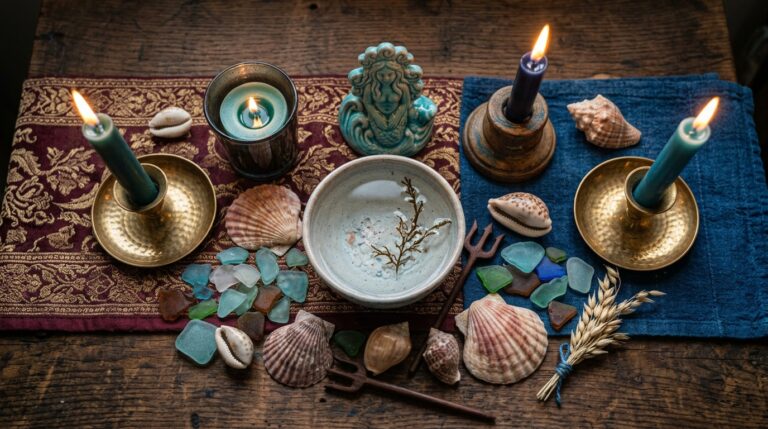
Start by choosing one goddess rather than invoking several at once, since each carries her own customs and expectations. Research her tradition before you begin, and use real seawater or a bowl of salted water if you can’t reach the coast. Light a blue or sea-green candle, then speak your intention aloud in plain language rather than a rehearsed script. Ask for what you actually need, whether that’s calm, clarity, or protection for someone traveling by water. Close by thanking her directly and pouring any offered water back outside, ideally toward a river or the sea itself. If you’re new to any kind of goddess work, our general spellcasting guide is a solid place to start before you specialize.
Belief, Intention & The Power of Magic
Witchcraft, spells, and manifestation are deeply rooted in belief, intention, and spiritual practice. If these practices do not resonate with you, this may not be the path for you, and that’s perfectly okay. But if you believe in divine powers, trust your intentions, and feel drawn to the mysteries of the unseen, we invite you to continue exploring with Madame Celestine and discover the magic that speaks to your soul.
Altars, Colors, and Offerings for Sea Deities
Most sea goddess altars share a simple color palette: blues, greens, silver, and white, echoing the ocean itself. Shells, sea glass, and driftwood work well as altar pieces, since they carry the water’s texture into your space. Offerings tend to be simple too. Fresh flowers, honey, perfume, or a small dish of clean water are traditional across several cultures. It’s worth researching what a specific goddess actually favors before you offer it, since customs vary widely by tradition. Avoid anything with heavy salt content if you’re working near live plants, since salt water can damage soil over repeated use. A small offering bowl set outside afterward, rather than poured down a drain, keeps the gesture consistent with most coastal traditions.
Signs an Ocean Goddess Is Reaching Out to You
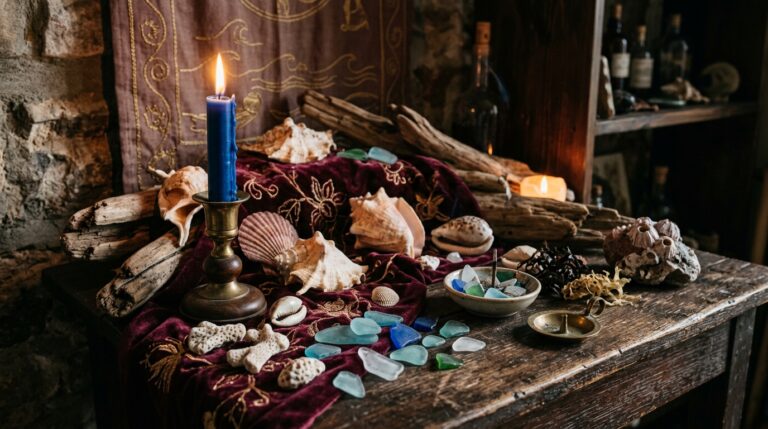
Many practitioners describe a sudden pull toward water imagery or recurring dreams about the sea. An unexplained craving for coastal air is another common report. Others notice shells or sea glass turning up in odd places, or feel calmer than usual near any body of water, even a bathtub. Some also find themselves drawn to blue and green clothing or jewelry without quite knowing why. None of these signs confirm anything on their own. Pay attention to patterns over weeks, not single moments, and treat any sense of connection as an invitation to research rather than a certainty.
Frequently Asked Questions
Do I need to live near the ocean to work with a sea goddess?
No. A bowl of salted water or tap water with a pinch of sea salt works as a substitute in most traditions.
Can I honor more than one ocean goddess at once?
You can, but most practitioners recommend starting with one to avoid mixing customs that come from very different cultures.
Is Yemonja the same as Yemaya?
They share the same root tradition. Yemaya is the name most commonly used in Santería and other Caribbean diaspora practices, while Yemonja is closer to the original Yoruba form.
What if I don’t know which goddess to start with?
Read a short summary of each one and notice which story or domain pulls at you. That initial pull is usually a reasonable starting point.
Are ocean goddess rituals safe to do alone?
Yes. Nearly all the practices described here are solo-friendly and don’t require a coven or teacher to begin.
Not sure where to start? You don’t have to do this alone.
Madame Celestine offers guided spellwork for beginners — real support for your first working, not just another guide to read.
Related reading: Working with Folklore Fairy Queen: Goddesses and the Fairy Queen Archetype: Ritual Context, Meaning & Practice · Sacred Spiral: Meaning of the Ancient Symbol of the Goddess: Symbolism, Interpretation & Ritual Practice
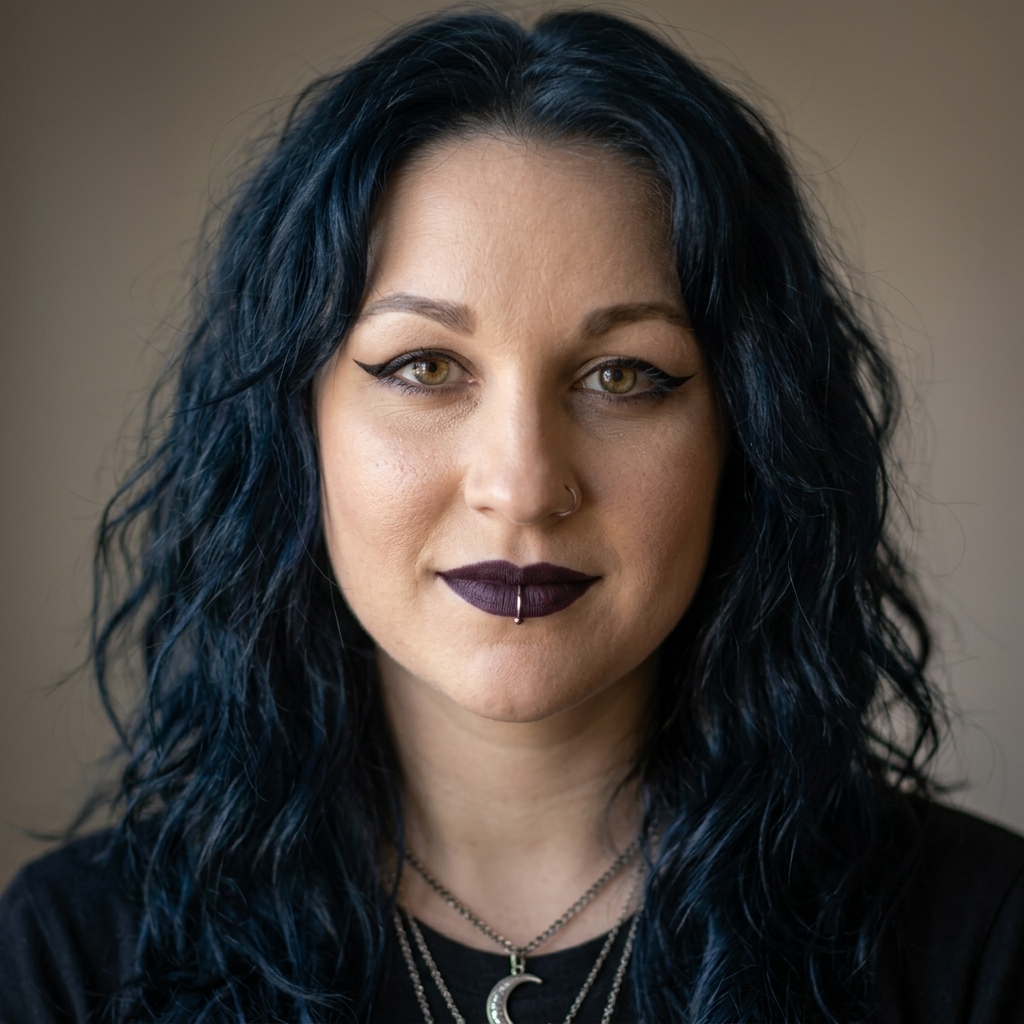
About Madame Celestine
Madame Celestine has practiced and taught spellwork, divination, and seasonal ritual for over two decades, helping newcomers build a grounded, confident practice from their very first spell.