

Water shows up in nearly every culture’s mythology, and so do the beings who guard it. Some are worshipped as goddesses. Others are feared as tricksters who pull the unwary under. These water goddesses, fairies, and water spirits span the full range, and knowing which is which matters before you invite any of them into ritual.
Water Goddesses and Gods of Order
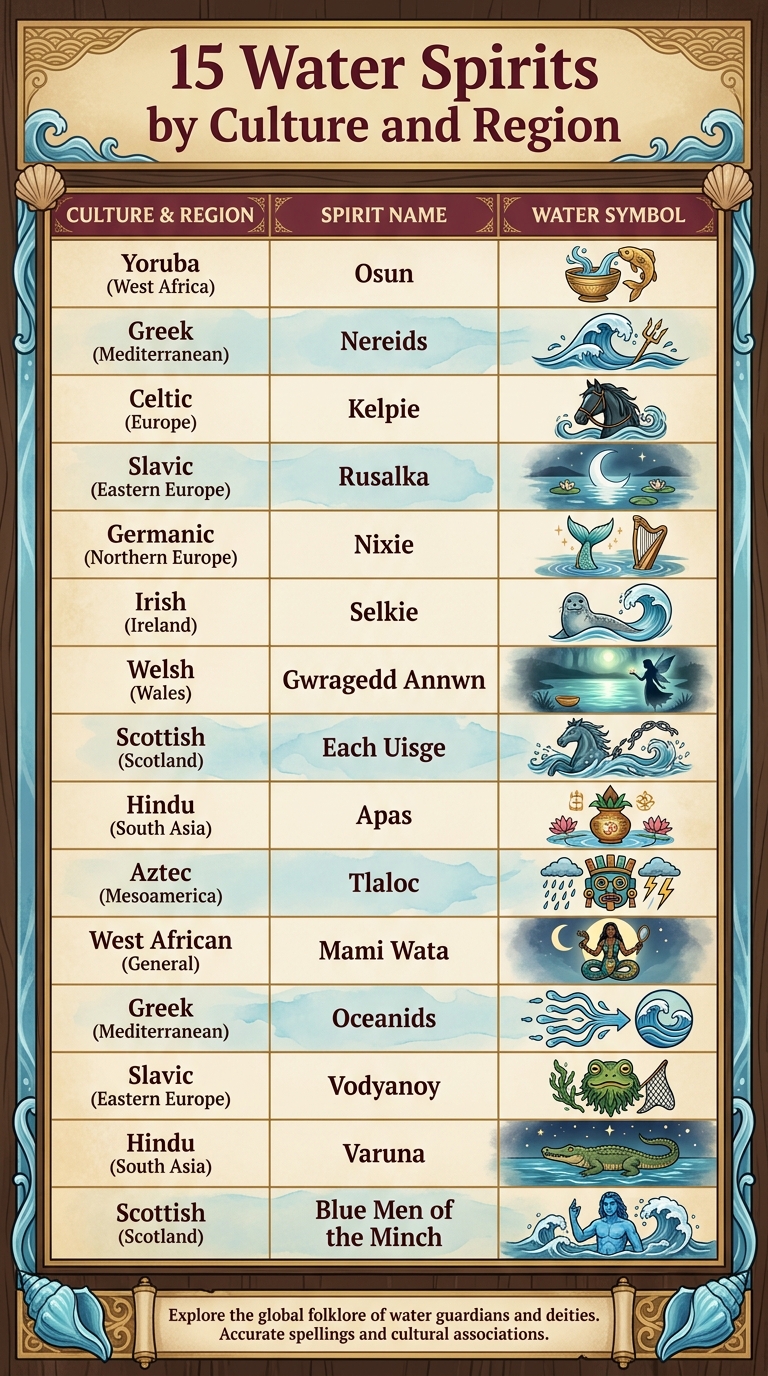
Osun, a Yoruba orisha, is honored across West Africa and the diaspora as a goddess of rivers, love, and sweet water, and remains one of the most widely celebrated river goddesses today. Apas, described in the Vedas as plural water goddesses, are tied to purification and the life-giving power of water itself rather than a single river or sea. Varuna, also from Hindu tradition, governs cosmic order and the oceans, holding a role closer to a keeper of universal law than a nurturing figure. Tlaloc, the Aztec rain god, brought the water crops depended on, but Aztec sources also describe him as capable of devastating storms and drought when neglected. All four show the same pattern: water deities tend to hold both a generous and a demanding side within the same tradition.
Greek Water Nymphs: Nereids and Oceanids
Nereids are the fifty sea nymph daughters of the old sea god Nereus, often depicted accompanying dolphins and helping sailors in distress. Oceanids are a separate, much larger group, the daughters of the primordial titans Oceanus and Tethys, tied to freshwater springs, clouds, and rain rather than the open sea. Ancient offerings of milk, honey, and flowers left at springs and shorelines suggest ordinary people took both groups’ goodwill seriously, even without grand temples built in their names.
Shapeshifting and Fae Water Spirits
Selkies, from Irish and wider Celtic folklore, appear as seals in the water and shed their skins to become human on land, a myth often used to explain sudden disappearances near the coast. Nixies, found in Germanic folklore, lure travelers with music before pulling them under. Rusalka, from Slavic tradition, are spirits tied to lakes and rivers, sometimes linked to the souls of women who died near water. Gwragedd Annwn, the lake maidens of Welsh folklore, are gentler than most on this list, sometimes said to marry mortal men, though the marriages in these stories rarely end without a catch.
Water Spirits Best Approached With Caution
The kelpie, a shape-shifting Scottish water spirit, typically appears as a beautiful horse near a loch before dragging anyone who mounts it into the water. The each-uisge, another Scottish water horse, carries a darker reputation still, described in Highland folklore as more aggressive and less likely to let a rider escape. Vodyanoy, the Slavic counterpart, is usually pictured as an old man tangled in weeds who drowns those who disturb his waters. The Blue Men of the Minch, tied to the waters between Lewis and the Scottish mainland, were blamed for sinking ships that couldn’t answer their rhyming challenges. Mami Wata, honored across West Africa and its diaspora, is described in the Fowler Museum’s own account as “beautiful and seductive, protective yet dangerous,” a figure who can bring wealth and healing or claim those who disrespect her. Folklore from all five of these traditions consistently treats them as forces to respect rather than charm.
Working With Water Spirits in Ritual
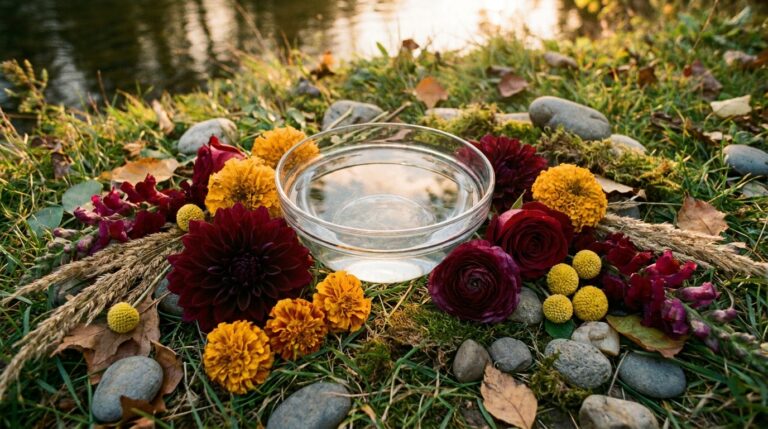
Start by researching the specific tradition a spirit comes from rather than treating all water beings as interchangeable. Simple offerings, like fresh water, flowers, or a small dish left near a river or the ocean, are traditional across many of these practices. Our elemental spirits guide covers undines specifically if you want a more Western-elemental entry point before working with culturally specific figures. Never wade into open water at night to “meet” a spirit, regardless of what folklore says about their appearances, since the practical danger is real even if the spirit isn’t. Close any working by thanking the water itself, not just the spirit you were addressing, since the two are rarely separated in the traditions these beings come from.
Belief, Intention & The Power of Magic
Witchcraft, spells, and manifestation are deeply rooted in belief, intention, and spiritual practice. If these practices do not resonate with you, this may not be the path for you, and that’s perfectly okay. But if you believe in divine powers, trust your intentions, and feel drawn to the mysteries of the unseen, we invite you to continue exploring with Madame Celestine and discover the magic that speaks to your soul.
Frequently Asked Questions
What’s the difference between the kelpie and the each-uisge?
Both are Scottish shape-shifting water horses, but the each-uisge is generally described as more dangerous and less likely to let a victim escape once mounted.
Is it safe to leave offerings at any body of water?
Check local rules first. Some parks and waterways restrict what can be left behind, and biodegradable offerings are always the more respectful choice.
Why do so many water spirits have a dangerous reputation?
Water itself is genuinely dangerous, and older cultures often used these stories to warn children and travelers away from unsafe currents or deep water at night.
Can I work with a water spirit that isn’t from my own culture?
Approach it with real research and respect for its origin rather than casual use, and consider starting with broader elemental water work if you’re new to spirit contact.
Are Nereids and Oceanids the same thing?
No. Nereids are daughters of the sea god Nereus and tied to the open sea, while Oceanids are a separate, larger group descended from the titans Oceanus and Tethys, tied more to freshwater and rain.
Not sure where to start? You don’t have to do this alone.
Madame Celestine offers guided spellwork for beginners — real support for your first working, not just another guide to read.
Related reading: 7 Goddesses of the Ocean: Female Deities of the Sea and Water: Ritual Ideas, Meaning & Practical Guidance · Working with Folklore Fairy Queen: Goddesses and the Fairy Queen Archetype: Ritual Context, Meaning & Practice
About Madame Celestine
Madame Celestine has practiced and taught spellwork, divination, and seasonal ritual for over two decades, helping newcomers build a grounded, confident practice from their very first spell.