
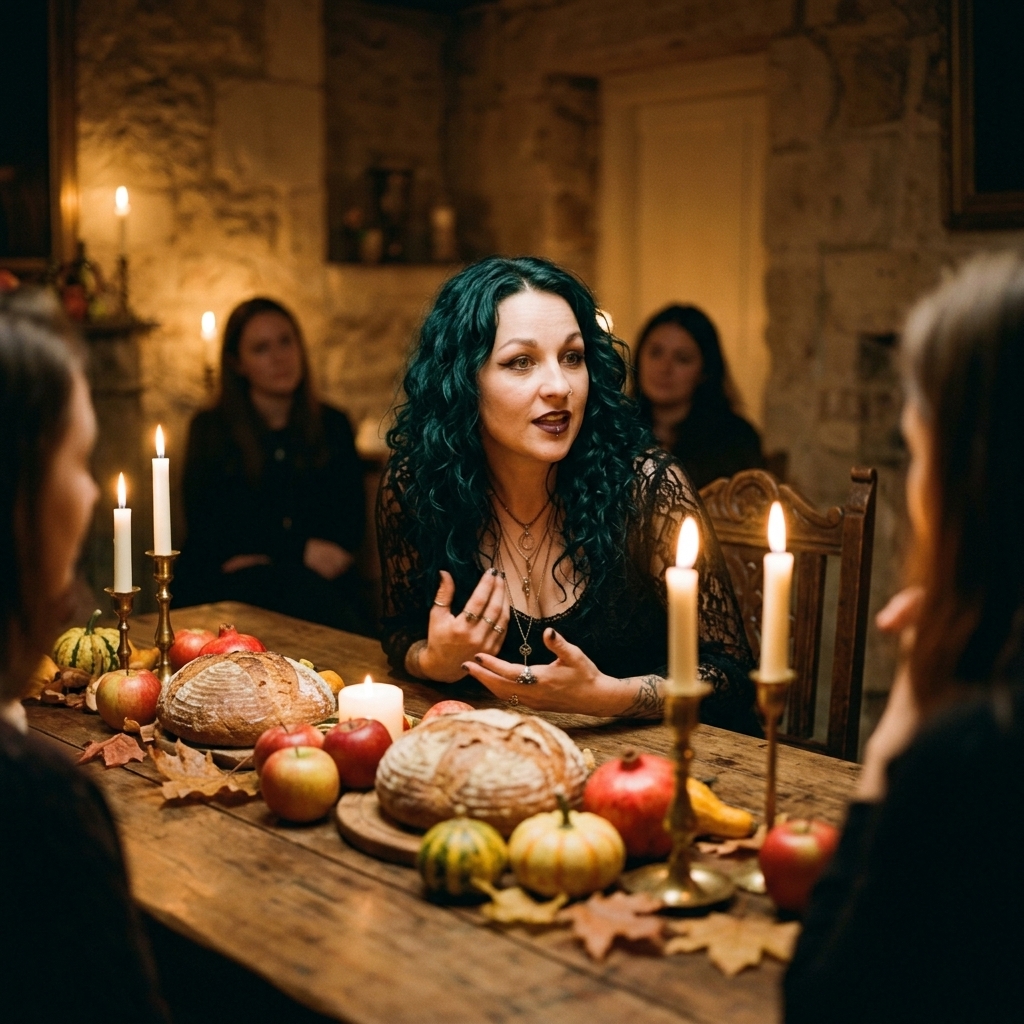
Mabon traditions look ancient, but the holiday’s name is younger than most of the people celebrating it. So what are we actually doing when we celebrate Mabon, and where did the customs come from? In this guide, I trace the name and give you the equinox dates. Then we walk through harvest festivals in Korea, China, Ghana, England and beyond. Finally, I show you what modern Mabon borrowed from them, what it left behind, and how I mark the season in New Orleans.
- Mabon Meaning: How a 1974 Name Shaped Mabon Traditions
- When Is Mabon? The Pagan Autumn Equinox by Year
- Mabon Fall Equinox Traditions: The Second Harvest and the Balance Point
- Chuseok: Korea’s Harvest Moon and the Ancestor Table
- Moon Festival: Round Cakes and Hidden Messages
- Homowo: Ghana’s Festival That Laughs at Hunger
- Harvest Home and Sukkot: Suppers and Shelters
- What Mabon Traditions Borrowed, and What They Left Behind
- My Mabon Traditions in New Orleans
- Frequently Asked Questions
- References
Mabon Meaning: How a 1974 Name Shaped Mabon Traditions
To define Mabon simply, it’s the modern pagan holiday of the autumnal equinox, the day when daylight and darkness are close to equal. The moment is ancient. Its name, however, is not. American witch Aidan Kelly says he gave the holiday its name in 1974. He found the phrase “autumn equinox” too plain, so he went looking for a myth to match the season.[1]
Kelly settled on Mabon, a figure from Welsh myth whose full name means “divine son of the divine mother.” In the Welsh tales, Mabon is taken from his mother Modron at three days old and later rescued by the hero Culhwch.[1] Kelly then published his renamed calendar in the pagan magazine The Green Egg.[1]
Not everyone likes the choice. The Welsh folk witch Mhara Starling points out that the god Mabon has no link to the autumn equinox, and his story doesn’t even happen in autumn.[1] I think that criticism is fair, and it’s also freeing. If the name was borrowed, then Mabon traditions were always something we build. The real question is what we build them from.
As for pronunciation, Welsh speakers use a short “a,” close to MAB-on. Many American witches say MAY-bon instead. Either way, people will know what you mean.
When Is Mabon? The Pagan Autumn Equinox by Year
Because Mabon follows the sky, its date shifts a little each year. The pagan fall equinox is the exact moment the sun crosses the celestial equator, heading south. So some years it lands on September 22, and other years on September 23.
People still search “when is Mabon 2025,” so here’s the answer. The US Naval Observatory puts that equinox at 18:19 Universal Time on September 22, 2025.[2] Here in New Orleans, that was 1:19 in the afternoon. In 2026, the equinox came at 7:05 p.m. Central time on September 22.[3]
Many witches celebrate Mabon on the evening of the equinox itself. After all, Mabon the autumn equinox is a single moment, not a whole day. Others keep the whole weekend around it. Also remember that south of the equator, September brings spring instead, so the autumnal equinox pagan holiday falls in March there. Southern Hemisphere witches often keep Mabon traditions in March for that reason.
Mabon Fall Equinox Traditions: The Second Harvest and the Balance Point
On the modern Wheel of the Year, Mabon sits between Lammas in early August and Samhain at the end of October. Lammas celebrates the first grain. Samhain closes the harvest and turns toward the dead. So the pagan autumnal equinox is the middle harvest, when fruit, nuts and late crops come in.
That middle position shapes Mabon traditions. Because day and night stand close to even, many witches treat the autumn equinox Mabon as a time to weigh things. What did the year give you? What did it cost? From here, the nights grow longer. So it’s also a good moment to decide what you’ll carry into the dark half of the year.
In other words, the pagan holiday of autumnal equinox is less about abundance alone and more about accounting. That’s exactly where the older harvest festivals below have something to teach.
Chuseok: Korea’s Harvest Moon and the Ancestor Table
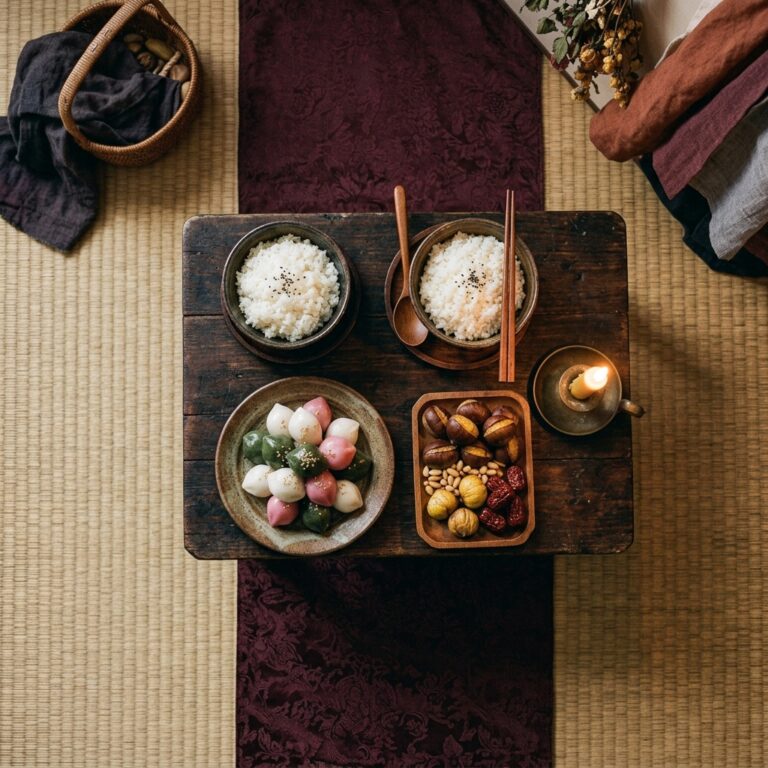
Now let’s travel. In Korea, Chuseok falls on the 15th day of the eighth lunar month, near the harvest full moon. Families gather and prepare charye, a memorial ceremony for ancestors made with newly harvested food.[4]
The signature food is songpyeon, a small rice cake made from new rice and filled with sesame seeds, chestnuts or red beans.[4] Notice who eats first. Before the living enjoy the new harvest, they offer the dead a share. That order matters, and it’s the first thing I think modern Mabon traditions can learn.
Moon Festival: Round Cakes and Hidden Messages
China’s Mid-Autumn Festival shares the same lunar date as Chuseok. People eat mooncakes under the full moon, and the cake’s round shape stands for a full life, perfection and good luck.[5]
There’s a wonderful story attached, too. According to one account, mooncakes once hid slips of paper calling for an uprising on the 15th night of the eighth month. This was during the fight against Mongol rule in the 14th century.[5] Whether or not every detail happened that way, the story shows how a harvest food can carry a message.
For a witch, that’s a lovely idea to borrow. A shared cake can be a vessel for intention, not just a dessert. So a round loaf or cake on your Mabon table can carry a wish for the season ahead.
Homowo: Ghana’s Festival That Laughs at Hunger
Homowo, celebrated by the Ga people of Ghana, has a name that means “hooting at hunger.” It remembers a time when the land was barren and people died of famine. According to the story, priests led the community in planting corn, and an abundant harvest followed.[6]
Before the celebration, the Ga observe a ban on drumming and noise. It’s a mark of respect for those who died in the famine. Then the festival centers on kpokpoi, a dish made from corn, which leaders sprinkle to honor the ones lost to hunger.[6]
Homowo happens between May and August, not at the equinox.[6] Even so, it belongs in any honest look at harvest festivals. It shows that thanksgiving is sharpest when people remember what hunger felt like.
Harvest Home and Sukkot: Suppers and Shelters
Closer to Mabon’s European image, English villages once held Harvest Home suppers when the last load came in from the fields. Farmers fed the workers who brought in the crop, and churches later added harvest services with produce on the altar.
Jewish tradition offers Sukkot, the autumn festival of ingathering. Families build a temporary shelter, the sukkah, and eat inside it with the sky showing through the roof. The shelter recalls a time of wandering, so the full harvest sits beside a reminder of fragile living.
What Mabon Traditions Borrowed, and What They Left Behind
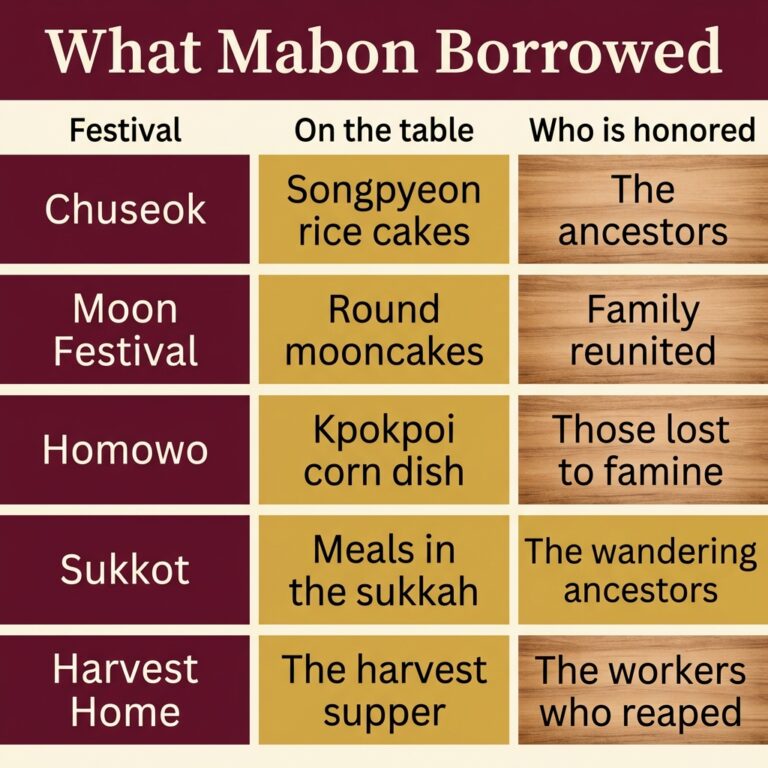
Put side by side, these harvest festivals share a pattern that most articles on Mabon traditions miss.
| Festival | On the table | Who is honored |
|---|---|---|
| Chuseok | Songpyeon rice cakes | The ancestors |
| Moon Festival | Round mooncakes | Family reunited |
| Homowo | Kpokpoi corn dish | Those lost to famine |
| Sukkot | Meals in the sukkah | The wandering ancestors |
| Harvest Home | The harvest supper | The workers who reaped |
Read down the last column. In every case, the feast honors someone besides the eaters. That might be the dead, the hungry or the hands that did the work. Modern Mabon took the feast, the gratitude and the theme of balance. However, it often left out that second guest at the table.
That’s my own reading of these festivals, not an established rule. Still, it gives you a clear way to deepen your Mabon rituals and restore what older Mabon traditions might have kept. Before you give thanks for what you have, name who made it possible or who went without it.
My Mabon Traditions in New Orleans
The autumn equinox in New Orleans rarely feels like autumn. It’s usually hot, and the leaves are still green. So my Mabon traditions don’t lean on falling leaves. Instead, I lean on the balance point itself and on the idea of the second guest.
First, I set a plate aside before anyone eats, the way Chuseok offers food to the ancestors. Next, I put something round on the table, like a loaf or a cake. Each person names one wish for the dark half of the year. Then I light two candles, one for what I’m grateful for and one for someone who helped me get here. Finally, I share food outward, such as a meal for a neighbor or a gift to a food bank. Homowo reminds me that hunger is part of the harvest story.
For Mabon colors, most witches use deep orange, gold, brown, burgundy and muted green, the tones of ripe grain and turning fruit. You don’t need all of them. One cloth or candle in harvest gold is enough. For the full sweep of the sabbats, my guide to the Wheel of the Year places Mabon in context.
Belief, Intention & The Power of Magic
Witchcraft, spells, and manifestation are deeply rooted in belief, intention, and spiritual practice. If these practices do not resonate with you, this may not be the path for you, and that’s perfectly okay. But if you believe in divine powers, trust your intentions, and feel drawn to the mysteries of the unseen, we invite you to continue exploring with Madame Celestine and discover the magic that speaks to your soul.
Frequently Asked Questions
What is the Mabon meaning?
Mabon is the modern pagan name for the autumnal equinox, the second harvest festival of the year. The name comes from a figure in Welsh myth, and a modern witch gave it to the holiday in 1974.
When is Mabon?
Mabon falls on the autumn equinox, usually September 22 or 23 in the Northern Hemisphere. In 2025 it came on September 22, and in 2026 it also came on September 22 in US time zones.
How do you pronounce Mabon?
Welsh speakers say it close to MAB-on, with a short “a.” Many American witches say MAY-bon, and both are widely understood.
Are Mabon traditions ancient?
People have marked the autumnal equinox for a very long time, but the name Mabon is modern. Today’s Mabon traditions blend old harvest customs with newer pagan practice.
What colors do Mabon traditions use?
Most witches use harvest tones such as deep orange, gold, brown, burgundy and muted green. These echo ripe grain, turning fruit and the fading year.
Do you say Happy Mabon or Blessed Mabon?
Both are common. “Happy Mabon” is casual, while “Blessed Mabon” carries a more ritual tone, so choose whichever fits the moment.
References
- Heather Greene. As pagans celebrate autumn equinox, some question why Mabon is its symbolic deity. Religion News Service, September 22, 2022. https://religionnews.com/2022/09/22/as-pagans-celebrate-autumn-equinox-some-question-why-mabon-is-its-symbolic-deity/
- Earth’s Seasons and Apsides, 2025. Astronomical Applications Department, US Naval Observatory. https://aa.usno.navy.mil/calculated/seasons?year=2025&tz=0&tz_sign=1&tz_label=false&dst=false
- Deborah Byrd. 2026 September equinox: All you need to know. EarthSky, September 17, 2026. https://earthsky.org/astronomy-essentials/everything-you-need-to-know-september-equinox/
- Chuseok: Korean Thanksgiving Day. Asia Society. https://asiasociety.org/korea/chuseok-korean-thanksgiving-day
- Michelle Tchea. The Rebellious History of Mooncakes, the Note-Passing Dessert That Liberated China. Smithsonian Magazine, September 12, 2024. https://www.smithsonianmag.com/travel/the-rebellious-history-of-mooncakes-the-note-passing-dessert-that-liberated-china-180985046/
- Rita Naa Ayeley Armah. The Homowo Story: How The Ga People Conquered Hunger. GBC Ghana Online, June 16, 2025. https://www.gbcghanaonline.com/news/the-homowo-story-how-the-ga-people-conquered-hunger/2025/
Not sure where to start? You don’t have to do this alone.
Madame Celestine offers guided spellwork for beginners — real support for your first working, not just another guide to read.
Related reading: Blood Moon Ritual to Connect With Your Ancestors · Eclipse Moon Water: How to Make It and What It’s Used For

About Madame Celestine
Madame Celestine has practiced and taught spellwork, divination, and seasonal ritual for over two decades, helping newcomers build a grounded, confident practice from their very first spell.