
Books only take you so far. At some point, most witches want a teacher, a structure, or at least other students working through the same material. Online witchcraft courses fill that gap, but the quality varies wildly across the space. Here’s what actually exists and how to tell a solid program from a weak one.
Why Consider a Structured Course
Self-study works, and plenty of witches never take a formal class. But a course gives you sequence. Someone else decides what to learn first, second, and third. That removes a real barrier for beginners who feel overwhelmed by scattered blog posts and conflicting advice. A course also builds in accountability. Deadlines, assignments, and other students create a mild social pressure that a stack of unread books doesn’t. There’s also a community angle that solo study can’t replicate. Fellow students ask the questions you haven’t thought to ask yet, and a shared syllabus gives you common ground for comparing notes. If you’ve read our guide for new practitioners and still feel unsure where to start, a structured course might solve that problem better than another article will.
Types of Online Witchcraft Education
Witch School International is the oldest name in this space. It was founded in 2001. According to its own history, it has enrolled over 240,000 students, and it currently runs entirely online after closing its physical campuses. You can read its full backstory, controversies included, on its Wikipedia entry. Witch Academy takes a narrower approach, built around three core tracks: witchcraft, herbalism, and tarot, each running from beginner through advanced levels. General course marketplaces like Udemy also host witchcraft content, though quality there depends entirely on the individual instructor rather than any school-wide standard. Independent teachers running their own paid workshops make up a fourth category. These tend to be the most personal option, but also the hardest to vet before you sign up. A quick search of the teacher’s name alongside words like “review” or “complaint” usually surfaces whatever a polished course page leaves out.
How to Choose a Course Worth Your Time
Start by checking who actually teaches it. A real name, a visible history, and some track record beats an anonymous account with a polished sales page every time. Read the syllabus before you pay, not after. Vague course descriptions usually mean vague content. Look for a preview lesson or a money-back window. A program confident in its material will let you sample it first. Ask whether the course teaches one specific tradition or blends several without saying so. That distinction matters if you want to go deeper later. Price alone tells you very little. Expensive doesn’t mean rigorous, and free doesn’t mean thin. Check for reviews outside the platform itself, too, since testimonials posted on a course’s own sales page rarely include the disappointed students.

Belief, Intention & The Power of Magic
Witchcraft, spells, and manifestation are deeply rooted in belief, intention, and spiritual practice. If these practices do not resonate with you, this may not be the path for you, and that’s perfectly okay. But if you believe in divine powers, trust your intentions, and feel drawn to the mysteries of the unseen, we invite you to continue exploring with Madame Celestine and discover the magic that speaks to your soul.
Red Flags to Watch For
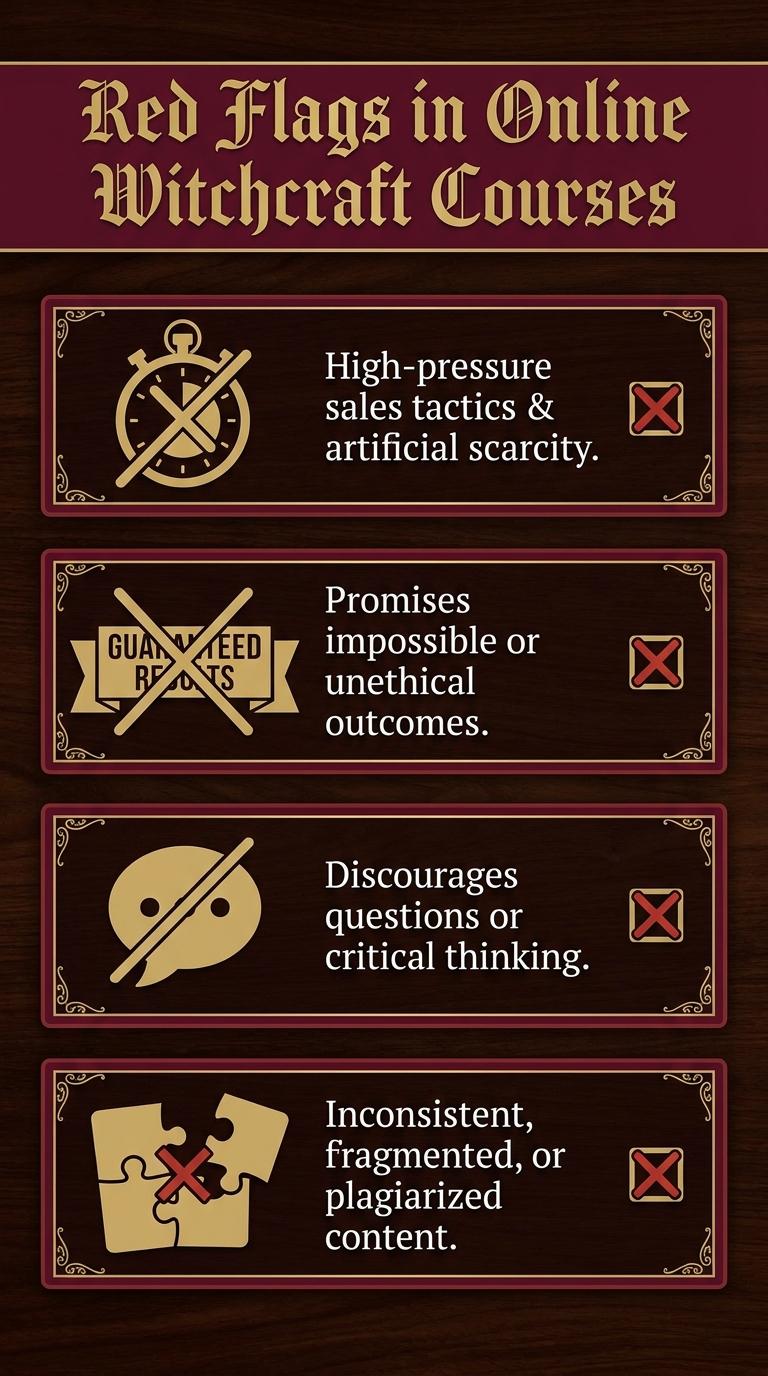
Be wary of any course promising guaranteed results, whether that’s a guaranteed spell outcome or a guaranteed psychic ability by the end of the program. Magic doesn’t work on a schedule, and no honest teacher claims it does. Pressure tactics are another warning sign. A countdown timer pushing you to enroll before a course explains its own content deserves suspicion. Watch for instructors who discourage questions. The same goes for anyone who frames all criticism as an attack from closed-minded skeptics. A real teacher welcomes scrutiny.
Watch, too, for a course that leans heavily on the instructor’s personal charisma instead of teachable material you can actually practice on your own. Also check whether the lessons read like original teaching or like copied blog posts stitched together, since recycled or plagiarized material is a reliable sign nobody is actually curating the curriculum. Finally, check whether the course delivers what its marketing promises. A mismatch between the sales page and the syllabus is one of the clearest signs of a weak program.
Free Resources vs Paid Programs
Plenty of solid material exists for free. Blogs, YouTube channels, and community forums cover most beginner topics without cost. What free resources rarely offer is structure or feedback on your own practice. Paid programs earn their price through organization. A syllabus that builds skills in order, and sometimes direct access to an instructor, can answer your specific questions in a way a search engine can’t. Neither option is automatically better. A disciplined self-learner can build real skill from free resources alone. Someone who needs structure might get more from a modest paid course than a year of scattered free reading. A reasonable middle path exists, too: use free resources to test whether a subject genuinely interests you, then invest in a paid course once you know which direction you actually want to go.

Frequently Asked Questions
Are online witchcraft courses legitimate?
Some are well-organized and genuinely useful. Others are thin content behind a paywall. Vet the instructor and preview the syllabus before you commit.
Do I need a course to practice witchcraft?
No. Many practitioners learn entirely through books, blogs, and personal experimentation without ever taking a formal class.
How much should a good course cost?
Price varies widely and doesn’t reliably predict quality. Focus on the syllabus and instructor’s track record instead of the price tag alone.
What’s the difference between Witch School International and Witch Academy?
Witch School International is the older, broader institution with a long documented history. Witch Academy focuses more narrowly on witchcraft, herbalism, and tarot.
Can I get a real certification from an online witchcraft course?
Some schools issue their own certificates, but no government or standard accrediting body regulates witchcraft education, so treat any certificate as informal rather than professionally recognized.
Not sure where to start? You don’t have to do this alone.
Madame Celestine offers guided spellwork for beginners — real support for your first working, not just another guide to read.
Related reading: Using 15 Water Goddesses, Fairies, and Other Enchanting Water Spirits in Ritual: Intention, Repetition & Practice · 7 Goddesses of the Ocean: Female Deities of the Sea and Water: Ritual Ideas, Meaning & Practical Guidance
About Madame Celestine
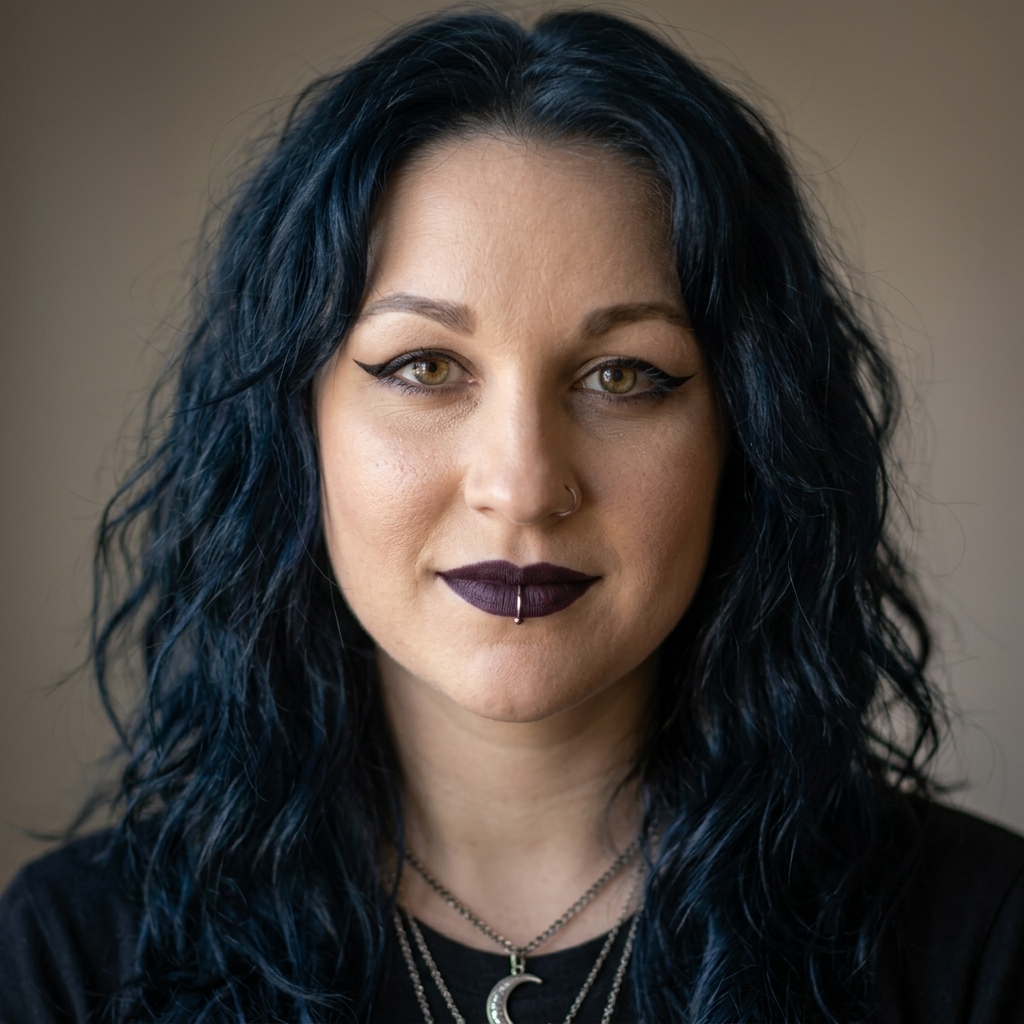
Madame Celestine has practiced and taught spellwork, divination, and seasonal ritual for over two decades, helping newcomers build a grounded, confident practice from their very first spell.