
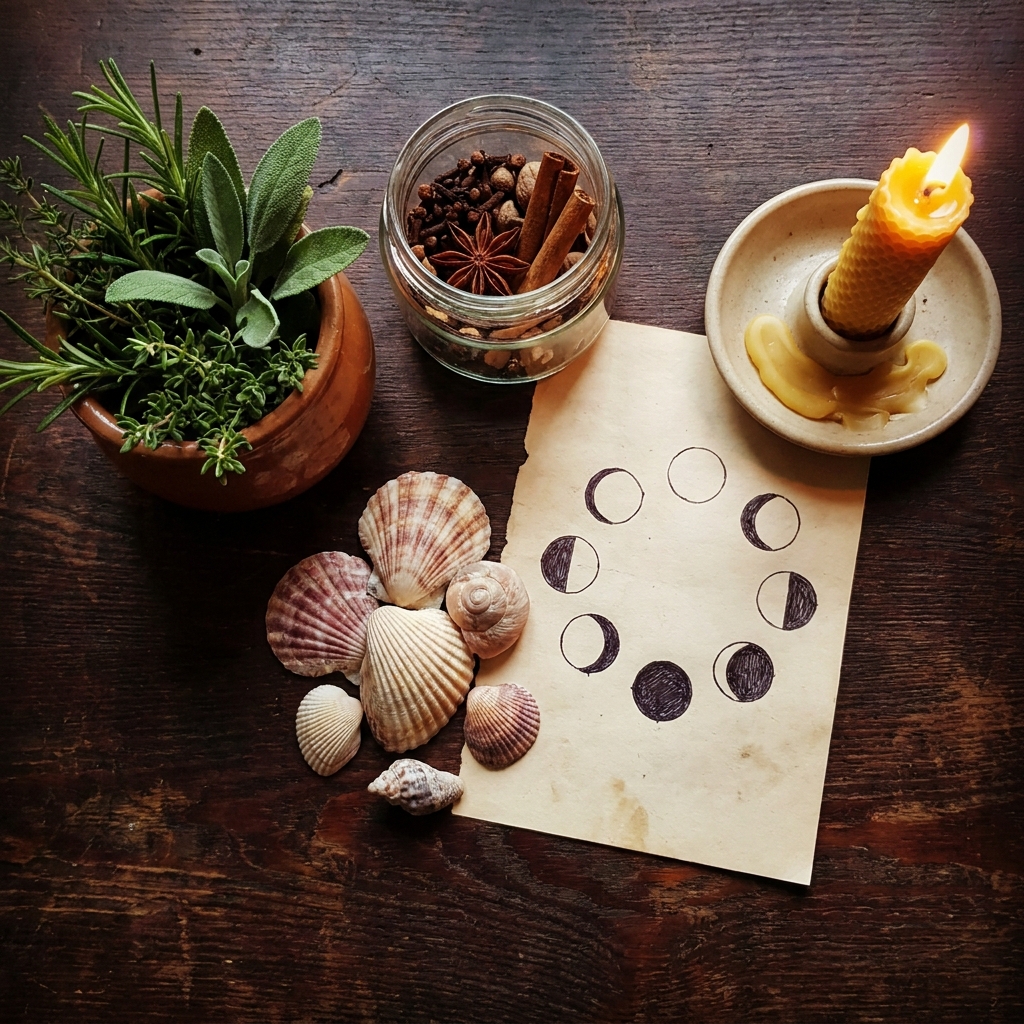
Types of witches are everywhere online now: green, kitchen, cosmic, sea, hedge and dozens more. If you’ve ever taken a quiz to find out which one you are, you’re far from alone. But most of those labels are very new, and the older ways of sorting witches looked completely different. In this guide, I’ll show you where the old categories came from and how my own city of New Orleans complicates the picture. Then we’ll work out what kind of witch you are, without boxing yourself in.
- Types of Witches: Why the Labels Are Newer Than You Think
- The Old Types of Witches: Wise Women, Cunning Folk and Healers
- New Orleans and Louisiana: Types of Witches the Labels Miss
- Different Types of Witches Today: A Types of Witches List
- Types of Wicca: Not Every Witch Is Wiccan
- Three Ways to Sort Types of Witches
- What Kind of Witch Am I? A Types of Witches Quiz
- A First Practice for Each Type of Witch
- You Don’t Have to Pick One Label
- Frequently Asked Questions
- References
Types of Witches: Why the Labels Are Newer Than You Think
The word itself is old. In Old English, wicce meant a female magician or sorceress, and wicca meant a man who practiced magic. Both came from a verb meaning “to practice witchcraft.” However, the word’s deeper origin is uncertain, and scholars still disagree about it.[1]
“Witch” once applied to men just as easily as to women. Only by around 1600 had the female sense taken over, so that people started saying “he-witch” for a man.[1]
The neat menu of witch types, on the other hand, is a modern invention. For example, Wicca, the religion most people picture when they hear the word, only spread through England in the 1950s.[2] Labels like “cosmic witch” or “kitchen witch” grew later still, mostly in books and online communities. You won’t find a cosmic witch in a parish record. So the modern types of witches are useful tools, but they aren’t ancient ranks.
The Old Types of Witches: Wise Women, Cunning Folk and Healers
Before the modern lists, people sorted magical practitioners by what they did for their neighbors. In Britain, many village healers didn’t call themselves witches at all. The Museum of Witchcraft and Magic in Boscastle, Cornwall, describes one healer who worked with herbs, charms and water poured over a magic stone. She preferred to be called a “Wise Woman,” and she would accept a few eggs or a loaf of bread as payment.[3]
That small detail tells you a lot, because the old types of witches were defined by trust and service. A wise woman healed. A cunning man might find lost goods or protect a farm. Meanwhile, the word “witch” was often what other people called you, and not always kindly.
The same museum also has a link to modern Wicca, since its guide notes that Gerald Gardner, the founder of modern Wicca, was once the museum’s “resident witch.”[3] So the old wise-woman tradition and the new religion of Wicca met, quite literally, under one roof. If you enjoy that history, this look at famous witches in history follows several of those figures.
New Orleans and Louisiana: Types of Witches the Labels Miss
Where my own practice is rooted, in New Orleans and south Louisiana, the internet’s witch types fit even less well. Two traditions show why the usual types of witches fall short here.
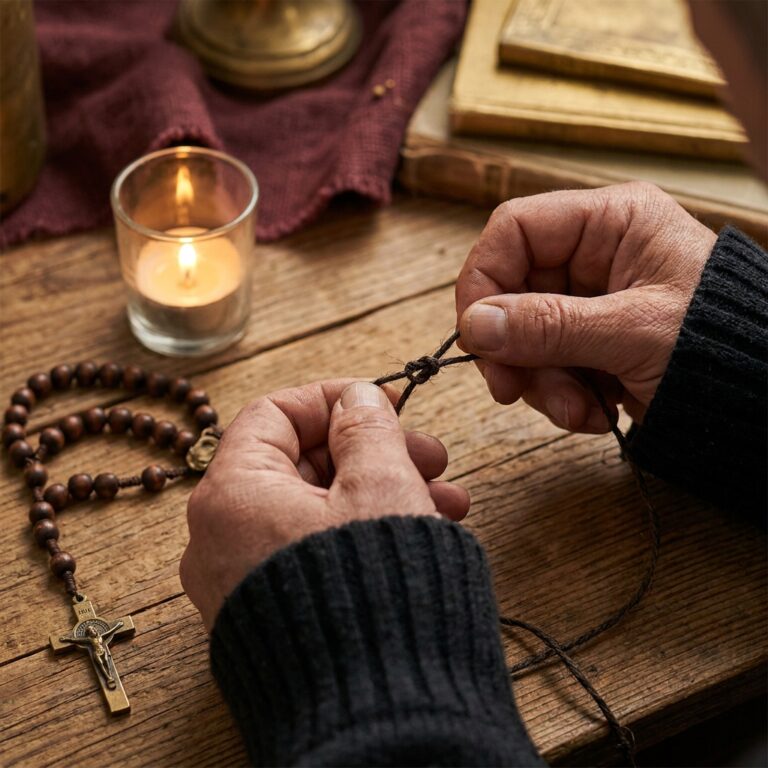
The first is the traiteur, a French word meaning “treater.” Folklorist Julia Swett describes traiteurs as traditional folk healers of south Louisiana, found among Cajuns, Creoles and Native Americans, working within a Catholic framework. Their prayers are known only to other traiteurs, and the gift usually passes from an older healer to a younger person, often in the same family. They treat warts, sunstroke, bleeding and asthma, among other things. Some tie a cordon, a knotted string, around the affected area. Also, by tradition, they don’t sell their services or turn anyone away.[4]
The second is New Orleans Voudou. Its most famous figure, Marie Laveau, was born in the city in 1801 and died there in 1881. Historian Carolyn Morrow Long describes her as the “Voudou Queen of New Orleans,” the leader of a multiracial religious community. At the same time, she was a lifelong Roman Catholic, known for nursing the sick and for leading St. John’s Eve celebrations on the shores of Lake Pontchartrain.[5]
Neither a traiteur nor a Voudou priestess fits neatly into “green witch” or “cosmic witch.” Many would not call themselves witches at all, and that choice deserves respect. Instead, what they share is a role: healer, leader, keeper of prayers. That’s the oldest way of sorting magical people, and it still matters here. You can see the same mix of Catholic and folk practice in everyday New Orleans magic, like the way cinnamon is used in New Orleans money magic.
Different Types of Witches Today: A Types of Witches List
The modern labels are still useful as a starting point, as long as you hold them loosely. These are the different kinds of witches people name most often, sorted by what each one focuses on.
- Green witch: works mainly with plants, gardens and herbs. If that’s you, start with this guide to plant magick for green witches.
- Kitchen witch: brings intention into cooking, baking and the home.
- Hedge witch: focuses on spirit work, trance and walking between worlds, named after the hedge as a boundary.
- Sea witch: draws on the ocean, tides, shells and salt water.
- Cosmic witch: works with astrology, planets and the timing of the stars.
- Hearth or house witch: centers on protecting and blessing the home.
- Folk or traditional witch: follows the customs of a particular region or family line.
- Ceremonial magician: works with formal rituals, grimoires and structured systems.
- Eclectic witch: blends methods from several paths into a personal practice.
In practice, most witches don’t stay in one box for long. A kitchen witch might also read the stars, and a green witch might learn a family charm. So read this types of witches list as a menu, not a set of fences.
Types of Wicca: Not Every Witch Is Wiccan
One of the most common mix-ups is the idea that all witches are Wiccan. Wicca is one religion within modern witchcraft, with its own gods, festivals and rules. Many witches follow it, while many more don’t and practice witchcraft as a craft without any particular religion attached.
Within Wicca, there are several traditions. Gardnerian Wicca traces its lineage to Gerald Gardner. Alexandrian Wicca grew from the work of Alex Sanders, an English high priest of the 1960s and 1970s. Dianic Wicca centers the Goddess, and many solitary Wiccans practice on their own, outside any formal coven. So “types of Wicca” and “types of witches” are two different questions.

Three Ways to Sort Types of Witches
Put the old categories beside the modern list and you can see three different ways of sorting witches. Each one asks a different question.
| Sort by | Old example | Modern example | Ask yourself |
|---|---|---|---|
| Tool | Herbs and charms | Green or cosmic witch | What do I work with? |
| Role | Wise woman or traiteur | Healer or reader | Who do I serve? |
| Lineage | A gift passed in a family | Gardnerian Wicca | Who taught me? |
Read together, the table shows a pattern. Modern witch types almost all sort by tool: plants, kitchens, stars, the sea. The older categories sorted by role, meaning the job a practitioner did for others, and by lineage, meaning who passed the knowledge on. The Louisiana traiteur, for example, is defined by all three at once: prayers as the tool, healing as the role and a family line as the lineage.[4]
That’s my own reading, not an established rule. But it gives you a fuller answer to “what type of witch am I?” Instead of one label, you get three answers, and together they describe your practice far better than a quiz result alone.
What Kind of Witch Am I? A Types of Witches Quiz
This witch quiz is a starting point, not a verdict. For each question, note the letter that fits you best, then count your letters at the end.
- On a free afternoon, you’d rather: (A) work in the garden, (B) cook something from scratch, (C) check what the planets are doing, (D) read an old book of spells, or (E) help a friend through a problem.
- Your altar, if you have one, holds mostly: (A) dried herbs, (B) spices and kitchen tools, (C) a birth chart or moon calendar, (D) candles and written symbols, or (E) photos of people you love.
- You feel most magical: (A) outdoors, (B) at home, (C) under a clear night sky, (D) during a formal ritual, or (E) when someone thanks you.
- When you learn something new, you: (A) try it with plants, (B) fold it into daily routines, (C) look for the right timing, (D) want the original source, or (E) ask how it could help someone.
- The question you ask most is: (A) what grows here? (B) what does this home need? (C) when is the right moment? (D) how was this done before? or (E) who needs this?
If you chose mostly A, you lean toward green witchcraft. Mostly B suggests a kitchen or hearth witch, and this guide to kitchen witchcraft tools is a good next step. Plenty of C answers point to a cosmic witch. A run of D answers leans toward ceremonial or traditional witchcraft. Then E points to the oldest type of all: the healer or wise woman, defined by the people you serve. And a mix of letters? That’s the eclectic witch, which is where most people end up.
Belief, Intention & The Power of Magic
Witchcraft, spells, and manifestation are deeply rooted in belief, intention, and spiritual practice. If these practices do not resonate with you, this may not be the path for you, and that’s perfectly okay. But if you believe in divine powers, trust your intentions, and feel drawn to the mysteries of the unseen, we invite you to continue exploring with Madame Celestine and discover the magic that speaks to your soul.
A First Practice for Each Type of Witch
Once you have a rough answer, the next step is to try something small. A label only becomes real when you practice it, so here is one simple starting point for each of the main types of witches.
If you lean green, grow one herb on a windowsill and learn everything about it: its history, its uses and how it changes through the year. Kitchen witches can start by stirring a clear intention into one meal a week. Then notice whether that habit changes how the kitchen feels.
Cosmic witches should begin by tracking the moon for a full month, writing a line each night about its phase and your mood. Hedge witches often start with a dream journal, because dreams are the easiest doorway into spirit work. Sea witches can keep a small jar of salt water and a shell on their altar, refreshing the water at each new moon.
For the healer type, the oldest of them all, start by offering something to someone else. That might be a tea for a tired friend or a simple prayer for a neighbor. After all, the wise women and traiteurs earned their names by serving others first.
Give each practice a month before you judge it. If it feels flat, try another type. If it feels alive, you’ve found part of your answer.
You Don’t Have to Pick One Label
New witches often worry that they’ve chosen the wrong one of the many types of witches, or that they don’t fit any type at all. My view is simple: the label should serve your practice, not the other way round. The Museum of Witchcraft and Magic describes witchcraft today as “incredibly varied, diverse and always developing.”[3]
So try a label on, the way you’d try on a coat. If it fits, wear it. If it pinches after a year, take it off. Your practice is allowed to grow, and the types of witches you identify with can grow with it.

Frequently Asked Questions
How do I know if I’m a witch?
For most practitioners, being a witch means practicing witchcraft, not being born with a special trait. If you work with intention, ritual and the natural world on purpose, you can call yourself a witch whenever it feels right.
Are all witches Wiccan?
No. Wicca is one religion within modern witchcraft. Many witches practice without following Wicca or any other religion.
What is an eclectic witch?
An eclectic witch blends methods from several paths, such as herbs, astrology and folk charms, into one personal practice. It’s one of the most common types of witches today.
What is a cosmic witch?
A cosmic witch works mainly with astrology, planetary timing and the movement of the stars. Many cosmic witches plan their spells around moon phases and birth charts.
Are there types of witches that aren’t human?
In folklore and fiction, yes. Many stories describe witches as supernatural beings, such as the hags of European folk tales. In real-world practice, though, a witch is simply a person who practices witchcraft.
References
- Witch. Online Etymology Dictionary. https://www.etymonline.com/word/witch
- Wicca. Encyclopaedia Britannica. https://www.britannica.com/topic/Wicca
- English Museum Guide. Hannah Fox, Museum of Witchcraft and Magic, 19 August 2025. https://museumofwitchcraftandmagic.co.uk/museum-guide/
- French Louisiana Traiteurs. Julia Swett, Louisiana Folklore Miscellany, vol. 18 (2009). Louisiana Folklife Program. https://www.louisianafolklife.org/LT/Articles_Essays/LFMtraiteurs.html
- Marie Laveau. Carolyn Morrow Long, 64 Parishes, Louisiana Endowment for the Humanities. https://64parishes.org/entry/marie-la
Not sure where to start? You don’t have to do this alone.
Madame Celestine offers guided spellwork for beginners — real support for your first working, not just another guide to read.
Related reading: Wiccan Healing Spells: 7 Herbal Rituals With Old Roots · Healing Spells: What Old Folk Healers Knew That We Forgot

About Madame Celestine
Madame Celestine has practiced and taught spellwork, divination, and seasonal ritual for over two decades, helping newcomers build a grounded, confident practice from their very first spell.